Choose a compact camera if you mainly want to photograph a whole, stationary seed head and would rather travel light; for individual seeds, the right lens with a known magnification is more important. Also consider protection for your complete setup, ease of carrying and the possibility of wind: focus stacking requires your subject to stay still enough throughout the shots.
Who are these camera options for?
Photographing individual seeds
You want to capture individual seeds in sharp, close-up detail. Lens magnification and compatibility matter more than having an all-in-one setup. Canon Netherlands and Nikon Netherlands specify magnification figures for particular macro lenses.
Camping in changeable weather
You want to take close-ups without carrying lots of separate parts, and you’re comparing how well a complete setup is protected in wet conditions. OM SYSTEM Netherlands and Ricoh Imaging Europe describe protection for specific camera models.
Travelling light
You also want to take other travel photos and need a camera that’s easy to carry. Check whether you can focus close at the zoom setting and framing you want to use for the seed head; Sony Netherlands lists different focusing distances for a compact camera at different zoom settings.
What should you look for when photographing dandelion seeds?
Start with the framing you want: focusing close may be enough for a whole seed head, while capturing individual seeds means paying attention to the magnification of your chosen lens.
Rugged compact camera
Choose this option: if you want to carry fewer parts when camping in changeable weather and mainly photograph a stationary seed head. OM SYSTEM describes macro modes for the TG-7; Ricoh lists a digital microscope function from 1 cm for the WG-90.
Bear in mind: a fixed lens limits your choice of lens. A short focusing distance alone doesn’t tell you how tightly you can frame your subject.
Compact camera with travel zoom
Choose this option: if you mainly want a camera for a range of travel photos, with the occasional close-up. Sony lists an equivalent zoom range of 24–200 mm for the DSC-RX100M7A.
Bear in mind: Sony lists a focusing distance of approximately 8 cm at the wide-angle setting and approximately 100 cm at the telephoto setting for this model, measured from the front of the lens. Check the close-up at the zoom setting you want to use.
Mirrorless camera with a macro lens
Choose this option: if you want individual seeds to appear much larger in your photos and are happy to bring a suitable lens. Nikon lists 1:1 magnification for the NIKKOR Z MC 50mm f/2.8; Canon lists a maximum of 1:2 for the RF 35mm F1.8 MACRO IS STM.
Bear in mind: a camera body or standard zoom lens doesn’t automatically give you a macro setup. Check the lens, mount and total weight of your kit; focus stacking also requires your subject to stay still enough throughout the shots.
| What to consider |
What should you check? |
Who should pay particular attention? |
| Magnifying individual seeds |
Check the maximum magnification of the exact lens and whether it fits your chosen camera body. |
If I want to capture individual seeds in close-up detail, I look at lens magnification and compatibility. Around 33% of consumers would make detail magnification their top priority. |
| Protection in wet weather |
Compare the protection information for the exact camera model and, for a mirrorless camera, your chosen lens. |
If I want to take photos in changeable weather, protection for the complete setup matters more to me than extra magnification. Around 27% of consumers would prioritise protection in wet weather. |
| Travelling light and versatility |
Compare the complete setup and check the focusing distance at the zoom setting you want to use. |
If I want to take everyday holiday photos as well as close-ups without carrying much kit, ease of carrying matters to me. Around 20% of consumers would make portability and versatility their top priority. |
| Movement in the wind |
Check whether you can set the camera to take a single shot, and whether focus stacking is suitable for a subject that stays still enough. |
If the seed head is swaying, I don’t want to rely on a series of shots alone. Around 20% of consumers would make taking movement into account their top priority. |
What to watch out for when buying
-
Assuming a short focusing distance guarantees macro magnification
Focusing distance and framing can change with the zoom setting. For the DSC-RX100M7A, Sony lists approximately 8 cm at the wide-angle setting and approximately 100 cm at the telephoto setting.
Compare the framing, magnification and focusing distance you need at the same lens or zoom setting.
-
Comparing only the mirrorless camera body
A stated macro magnification applies to a specific lens. It doesn’t automatically apply to the camera body or the zoom lens supplied with it.
Before buying, check exactly what’s included, the lens mount and the complete setup.
-
Assuming the body’s protection applies to the whole setup
OM SYSTEM lists IP53 for the OM-5 Mark II body. That rating doesn’t automatically apply to every attached lens.
Check the protection information for both the camera body and the lens you plan to take with you.
-
Expecting focus stacking to solve problems caused by wind
Focus stacking combines shots taken at different focus points. If the seed head moves between shots, it can disrupt the sequence.
Use focus stacking when your subject is still enough; if it’s moving, consider taking a single shot at a suitable moment.
Camera brands to compare
OM SYSTEM
Offers a compact option with the TG-7, as well as a mirrorless camera option with the OM-5 Mark II.
- OM SYSTEM describes macro modes and a rugged construction for the TG-7.
- According to OM SYSTEM, the OM-5 Mark II offers focus stacking.
- For close-ups with the OM-5 Mark II, you’ll need to choose a suitable lens; protection for the body doesn’t automatically apply to that lens.
PENTAX
According to Ricoh Imaging Europe, the WG-90 is a rugged compact camera for outdoor use and close-range photography.
- Ricoh lists a digital microscope function from 1 cm for the WG-90.
- Ricoh describes this model as protected against water, dust and shocks.
- The lens isn’t interchangeable; the stated shooting distance alone doesn’t determine how tightly you can frame the seed head.
Canon
The EOS R10 is a mirrorless camera option where you can choose a separate macro lens to suit the close-ups you want to take.
- Canon lists focus bracketing for the EOS R10.
- Canon lists a maximum magnification of 1:2 for the RF 35mm F1.8 MACRO IS STM.
- That magnification applies to the lens listed and not automatically to an EOS R10 kit zoom lens.
Nikon
Pairing a Z-series body with the NIKKOR Z MC 50mm f/2.8 is an option if 1:1 magnification is your priority.
- Nikon lists 1:1 magnification for the NIKKOR Z MC 50mm f/2.8.
- The lens is a separate item; check which Z-series bodies it’s compatible with and factor its weight into your camping kit.
Sony
The DSC-RX100M7A is a compact camera with a fixed travel zoom lens for different types of framing and the occasional close-up.
- Sony lists an equivalent zoom range of 24–200 mm.
- Sony lists different minimum focusing distances for wide-angle and telephoto settings; check the setting you plan to use for your close-up.
- These specifications don’t indicate 1:1 macro magnification.
Cameras on Joybuy
These products have names that focus on action, vlogging or travel. For photographing dandelion seeds, close-up capability is still the deciding factor: check the focusing distance and magnification of the exact model, as video resolution and stabilisation alone don’t tell you this.
 No image available
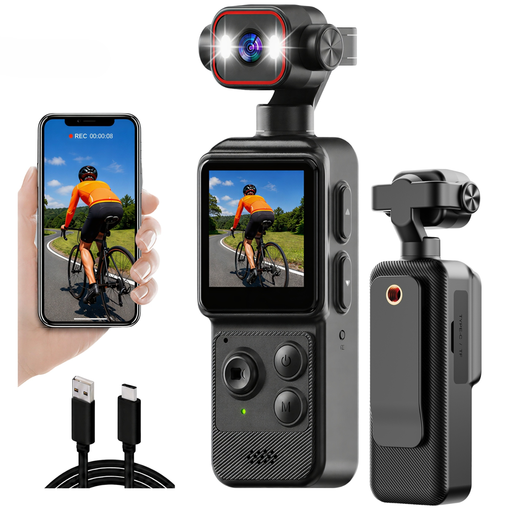
Mini Action Camera 4K with clip
The product name mentions vlogging and travel; for close-ups, check whether the model can focus at the distance you need.
The product name lists a 140° wide-angle lens, a 1.54-inch screen, app control, an LED light and a 1200 mAh battery.
View at Joybuy
 No image available
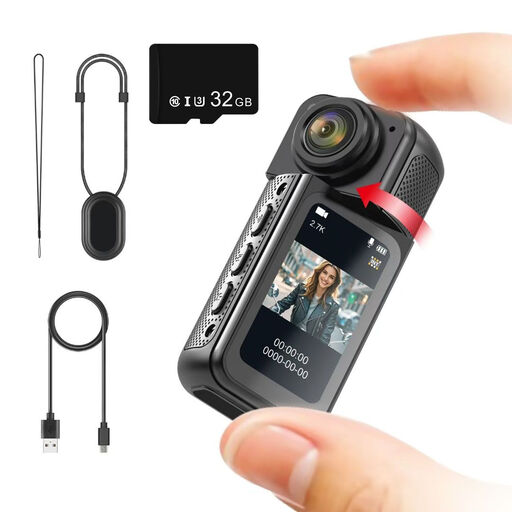
NAXSIR Mini Action Camera 2.7K
The product name describes a mini action camera; check the focusing distance before considering it for photographing individual seeds.
The product name lists a 180° rotating lens, magnetic mounting, a 1.47-inch IPS screen and an included 32 GB memory card.
View at Joybuy
 No image available
DJI Osmo Pocket 3
The product name mentions photography and video; check separately whether the camera can take the close-up you want of a dandelion seed head.
The product name lists a 1-inch CMOS sensor, 4K video at 120 fps, 3-axis stabilisation, focusing and a 2-inch rotating touchscreen.
View at Joybuy
 No image available
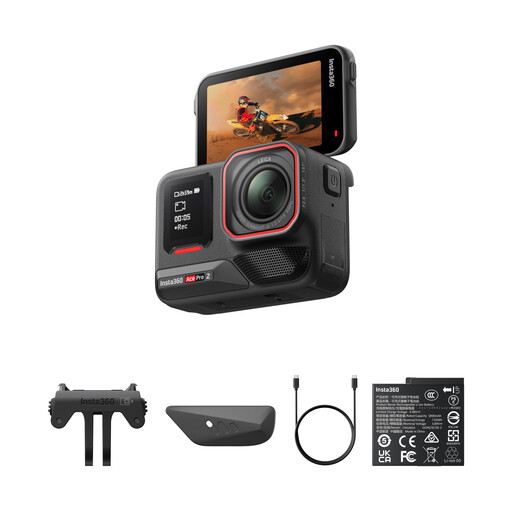
Insta360 Ace Pro 2 Dual Battery Bundle
The product name describes an action camera; before using it in wet camping weather, check the product’s limitations and assess its close-up capability separately.
The product name lists 8K, a 1/1.3-inch sensor, a dual AI chip and a bundle with two batteries.
The product information warns against exposing the camera to moisture.
View at Joybuy
Frequently asked questions
Do I need a macro lens for individual seeds?
If you want individual seeds to appear much larger in your photos, compare the magnification of the exact lens. Canon lists a maximum of 1:2 for the RF 35mm F1.8 MACRO IS STM; Nikon lists 1:1 for the NIKKOR Z MC 50mm f/2.8. A short focusing distance alone isn’t a substitute for checking magnification.
Does focus stacking help if the seed head moves?
Focus stacking combines shots taken at different focus points and is most useful when the seed head stays still enough throughout the sequence. A tripod reduces camera movement, not plant movement; if it’s windy, you could try a suitable single shot or wait for a calmer moment. The available function depends on the exact camera model and lens.
What should I check before setting off for the campsite?
Check that the lens you want is included, fits the camera body and can take the close-up you need. Also check the protection rating of both the camera and lens: OM SYSTEM lists IP53 for the OM-5 Mark II body, but that rating doesn’t automatically apply to every lens.
Can I leave the path to take a photo in any Dutch nature reserve?
Don’t assume you’re allowed to leave the paths everywhere. According to the Dutch government, provinces also determine what’s permitted in their areas; Staatsbosbeheer also advises visitors to check the signs at the entrance. Check the rules for the specific area before choosing a spot.


