Who are these cameras for?

For capturing delicate seed details

If you want to fill the frame with individual seeds, pay attention to the lens’s magnification, not just the number of megapixels. Canon Netherlands also points out that accurate focusing is important for close-ups.

For taking quick photos on a walk

If you want to keep your camera close at hand and switch from a holiday photo to a close-up without changing lenses, portability matters. The Consumers’ Association lists ease of carrying as one of the factors to consider when choosing a camera.

For switching between wide shots and details

If you want to photograph both the whole seed head and its surroundings, and individual details, assess the camera and lens as a combination: the lens partly determines how you can frame your shot.

What should you look for when buying?

Compact camera with close-up mode

A good fit if: you want to switch quickly between a holiday shot and a close-up while you’re out and about, without carrying a separate lens.

Bear in mind: the lens cannot be changed. OM Digital Solutions specifies that the Tough TG-7 can shoot from 1 cm away in close-up mode. That distance alone doesn’t determine how you can frame the whole seed head or a single seed.

Mirrorless camera with a close-up or macro lens

A good fit if: you want to choose the lens separately and care about composition and fine details.

Bear in mind: check that the right lens is included with the camera body and in the set being offered. Canon Netherlands specifies up to 0.5× magnification for the RF 35mm F1.8 MACRO IS STM; Nikon Netherlands specifies a reproduction ratio of 0.67× for the NIKKOR Z DX MC 35mm f/1.7. Nikon’s 1:1 FX-format equivalent is an equivalence, not an actual 1:1 reproduction ratio on the sensor.

What to consider What should you check? Who is this important for?
Magnification and focusing Check the maximum magnification of the actual lens and whether it can achieve the framing you want. If I want to capture individual seeds clearly, I pay attention to magnification and accurate focusing. Consumers who prioritise fine seed details account for around 40% of consumers in this holiday scenario.
Convenience on a walk Compare the size of the complete ready-to-use set and check whether you need to change lenses. When I’m out and about, I want to take a photo quickly without first fitting another lens. Consumers who prioritise being able to take their camera with them straight away account for around 30% of consumers in this holiday scenario.
Framing and composition Check whether the lens can handle both a wider shot of the seed head and the close-up you want. If I want to switch between the whole seed head with its surroundings and a small detail, control over framing is important to me. Consumers who prioritise variety in composition account for around 20% of consumers in this holiday scenario.
Changeable weather Check the conditions for the exact model and, with a mirrorless camera, for both the body and the fitted lens. If I want to take photos in changeable holiday weather too, I check how well the complete camera setup is protected. Consumers who prioritise weather protection account for around 10% of consumers in this holiday scenario.

Common buying mistakes

  • Comparing only the shortest focusing distance

    A distance in centimetres alone won’t tell you how large the whole seed head or a single seed will appear in the frame.

    Compare the framing you want and, with an interchangeable lens, the stated maximum magnification.

  • Assuming every camera body has macro capabilities

    The close-up magnifications mentioned apply to specific lenses and don’t automatically apply to every EOS R50 or Z50II offer.

    Check exactly which lens is included and whether it’s compatible with the camera.

    You may need to buy a separate lens for suitable close-up photography.

  • Reading ‘1:1 equivalent’ as true 1:1 macro

    For the NIKKOR Z DX MC 35mm f/1.7, Nikon Netherlands specifies a maximum actual reproduction ratio of 0.67×; 1:1 in FX format describes an equivalence.

    Compare reproduction ratios on the same basis and read the manufacturer’s explanation of the specification.

Camera brands to consider

OM SYSTEM

The Tough TG-7 is a compact option for holiday photography and close-ups without an interchangeable lens.

  • The manual specifies shooting from 1 cm away in close-up mode.
  • The lens cannot be changed; the stated distance alone doesn’t determine the framing you want.

Canon

The EOS R50 can be paired with a separately chosen RF close-up lens for holiday shots and detail photography.

  • Canon Netherlands specifies support for RF and RF-S lenses on the EOS R50. For the RF 35mm F1.8 MACRO IS STM, Canon specifies up to 0.5× magnification.
  • The body alone doesn’t provide that lens-specific magnification; check which lens is included with the set.

Nikon

The Z50II with the separately purchased NIKKOR Z DX MC 35mm f/1.7 is a Z DX option for close-ups and general holiday photography.

  • Nikon Netherlands specifies a 0.67× actual reproduction ratio for the lens.
  • The lens must be included with the set or chosen separately. The 1:1 FX-format designation doesn’t mean 1:1 on the sensor.

Cameras at Joybuy

Below are Joybuy cameras whose product information mentions travel photography or use on the go.
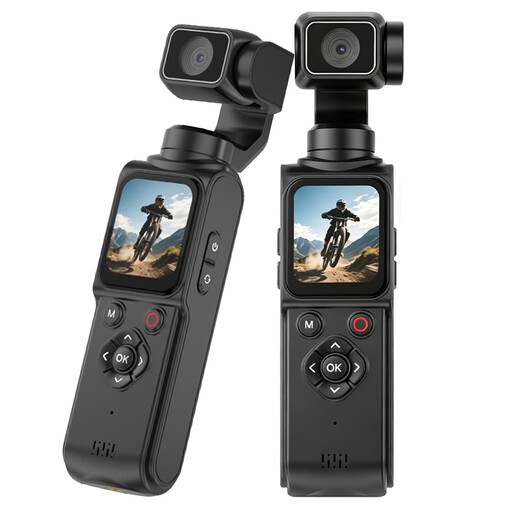
KINSI Mini Vlog Camera 4K, 64 MP

KINSI Mini Vlog Camera 4K, 64 MP

The product information lists travel photography as a use case.

The product name specifies 4K, 64 MP, a 330° rotating lens and a 1.72-inch touchscreen.

View at Joybuy
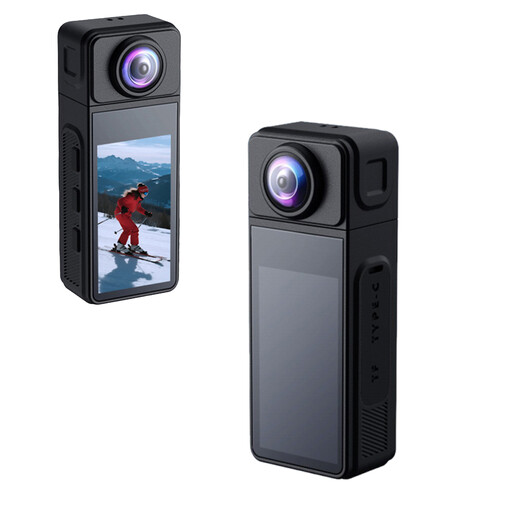
NAXSIR 2K Mini Action Camera

NAXSIR 2K Mini Action Camera

The product information mentions a photo mode and use on walks.

The product name specifies a 270° rotating wide-angle lens, a magnetic body and electronic image stabilisation.

View at Joybuy

DJI Osmo Pocket 4 Standard Combo

DJI Osmo Pocket 4 Standard Combo

The product information mentions photography and use on the go.

The product name specifies a 1-inch CMOS sensor, 4K/240fps, 3-axis stabilisation, 2× lossless zoom, 107 GB of built-in storage and a 2-inch rotatable screen.

View at Joybuy

Frequently asked questions

Do I need a 1:1 macro lens to photograph a whole dandelion seed head?

Not necessarily. First decide how much of the frame the whole seed head and its surroundings should fill. For a single tiny seed, the lens’s magnification is more relevant; 1:1 means the subject is reproduced on the sensor at life size. Greater magnification doesn’t automatically give you more depth of field.

How can I avoid blurry seeds in a close-up?

First check that you aren’t closer than the lens’s minimum focusing distance, then take test shots using different focus points and apertures. Canon Netherlands points out that accurate focusing is important in close-ups because depth of field is limited. A tripod can reduce camera shake, but it won’t keep a moving seed head still.

Does a mirrorless camera come with the macro lens I need?

You can’t tell from the camera body’s name; check what’s included in the specific set and the lens mount. Canon Netherlands specifies RF support for the EOS R50, while Nikon Netherlands lists the Z DX MC 35mm f/1.7 for Z DX cameras such as the Z50II.

What are my rights if I buy a camera online from a business in the Netherlands?

When you buy at a distance, you generally have a 14-day cooling-off period. According to the Dutch government, there is no general statutory warranty period of two years; if a product is faulty, the retailer is your point of contact. Check the terms and conditions for your specific purchase.

Can I leave the paths to take a photo in a Dutch nature reserve?

That depends on the rules for the particular area. Staatsbosbeheer advises checking the signs at the entrance; in most areas, access is via roads and paths, though local rules may differ. Check the rules before approaching a seed head away from the path.
