
Viewers seated to the side
You’re organising a screening with seats well to the left or right of the screen. Screen Innovations provides viewing-angle information for each screen material; compare it with the position of the seats at the sides.


Start with a screen material whose stated viewing angle works for the seats at the sides: lens shift moves the image, but does not widen the screen’s viewing angle. Then check whether the projector can sit off-centre using the chosen model’s optical lens shift, and take room lighting and the live source connection into account. BenQ warns that digital keystone correction can affect sharpness and the edges of the image, among other things.
You’re organising a screening with seats well to the left or right of the screen. Screen Innovations provides viewing-angle information for each screen material; compare it with the position of the seats at the sides.
You can’t place the projector on the screen’s centre line and want to know whether optical lens shift will work with your setup, without relying too heavily on digital keystone correction. Epson Netherlands and XGIMI list lens shift for specific models, with limits that vary by model.
You can’t switch off all the room lights, so you need to weigh projector brightness against the screen material and visibility from angled seats. Epson Netherlands recommends matching brightness to the viewing environment.
First, check that the screen is suitable for the seats at the sides, then work out what lens shift and connections your projector setup requires. Screen Innovations provides viewing-angle information for each screen version; compare it with the light rejection of that exact material.
| What to consider | What should you check? | Who is this important for? |
|---|---|---|
| Viewing from angled seats | Compare the viewing angle of the exact screen version with the viewing direction from the seats at the sides. | When I’m sitting in the furthest seats, I want the screen material to suit the viewing angle. Around 36% of consumers put visibility from angled seats first. |
| Projector placement | Measure the screen width, projection distance and horizontal offset; check the lens shift range and any limits on combining adjustments. | When the projector can’t sit directly in front of the screen, I want to know in advance whether the optical adjustment will work with my setup. For around 29% of consumers, off-centre placement is the top priority. |
| Picture with the room lights on | Note which lights will stay on and compare the brightness and screen material with your intended image size. | If the room lights stay on during the screening, I want to choose a screen and projector that suit the space. Around 21% of consumers prioritise a clear picture with the room lights on. |
| Live picture and connections | Check the live source’s output, the projector input you need and how the picture is processed during the broadcast. | For a live broadcast, I want to be able to connect the source directly and assess how moving images are displayed. For around 14% of consumers, the live source and connection come first. |
Lens shift moves the projected image; the viewing angle depends on the screen material. Adjusting the projector won’t widen a screen with a limited viewing angle.
First check visibility from the seats at the sides, then assess the projector position separately.
Screen Innovations’ specifications vary by version: Black Diamond 1.4 lists a 36° half-gain viewing angle, while Black Diamond Fusion lists 80°. Light rejection alone doesn’t tell you how a screen performs when viewed from the side.
For the exact version, compare both the viewing angle and the light rejection.
XGIMI states that the HORIZON 20 Max’s maximum horizontal adjustment is only available when vertical lens shift is set to 0.
Before installation, check how horizontal and vertical adjustment work together.
Gaming input lag figures don’t test how smoothly a dance broadcast is displayed.
Check the actual live source and assess image processing separately from gaming performance.
The EH-TW7000 is worth considering if you want to assess lens shift, an external live source and image processing together.
The HORIZON 20 Max is an option to compare if horizontal optical adjustment is important to you.
The TK710 is worth considering if vertical placement correction is enough, or if the projector can sit almost directly in front of the screen.
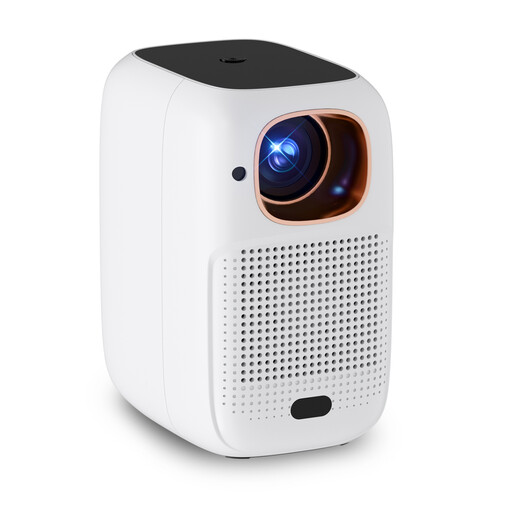
Joybuy projectors for home projection and, where stated in the product information, connection to an external HDMI source. Check whether each model’s setup, screen viewing angle and intended image size are suitable for your room.
 No image available
The portable design could be useful if you need to move the projector; check that the stated features suit your room and screen.
720P; 4K support; autofocus; 10,400 mAh battery; Dual WiFi; Bluetooth 5.0.
 No image available
HDMI compatibility could be useful if your live source has an HDMI output; check that the brightness and screen setup suit the room.
Native 1080P; 1000 ANSI Lumens; HDMI compatibility; 4K support; Whale TV OS.
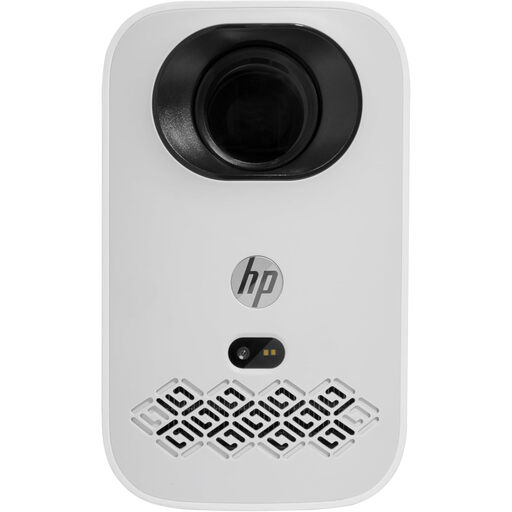 No image available
The listed HDMI connections could be useful with an external live source; check that the source output is compatible with the model.
Native 1080P; HDMI connections; Wi-Fi; Bluetooth; wireless projection; autofocus; 4K support.
 No image available
The portable design could suit you if you want to move the projector; assess the stated brightness alongside the room lighting and screen.
Full HD 1080p; Google TV; 450 ISO Lumens; 2.5-hour battery; Harman Kardon audio.
 No image available
HDMI compatibility could be useful for an external live source; check that the connections and image correction suit your setup.
Wi-Fi 6; Bluetooth; automatic screen correction; 50–200 inches; 50%–100% digital zoom; 180° rotation; HDMI compatible.
No. Keystone correction fixes the shape of an image projected at an angle; it doesn’t change the screen’s viewing angle. Choose the screen material based on the seats at the sides. BenQ notes that keystone correction can affect sharpness and image edges, among other things.
Measure the screen width and distance to the projector, then work out how far the projector will sit from the centre line. Compare those measurements with the exact model’s specifications. XGIMI states that the HORIZON 20 Max’s maximum horizontal lens shift is only available when the vertical setting is at 0.
For a lamp model, check the stated lamp life and replacement terms, and ask about repairs and spare parts. The statutory guarantee in the Netherlands is separate from any additional manufacturer’s warranty. The Dutch government states that the Netherlands has no fixed statutory guarantee period.
According to the Dutch government, when you buy remotely from a business, you generally have 14 days to change your mind; exceptions and the type of seller matter. The Netherlands has no fixed statutory guarantee period, according to the Dutch government. What you can expect from a product depends, among other things, on the product and the information provided. If a product is faulty, contact the seller.