Who is this relevant to?

Listen without disturbing others

You want to listen through wired headphones at your sit-stand desk instead of using your laptop speakers. First, check that your headphones can be connected and select the right audio output. Microsoft Support highlights this setting when using USB audio.

Find a compact connection

You’re looking for a wired connection that works with your laptop and headphones, without adding lots of equipment to your moving desktop. Fosi Audio and iFi audio describe compact USB audio options for wired headphones; check the connectors and cable routing for each model.

Control your audio at your desk

You keep your equipment at your workstation and might want a volume knob, extra connections or a suitable headphone output. FiiO and iFi audio describe desktop models with different connections and power options.

What should you look for?

Your existing headphones

Choose this if: your headphones fit and work as you want them to, and you simply want to avoid using your laptop speakers. Select your headphones as the audio output.

Bear in mind: this option won’t solve a missing connection or interference through the analogue output.

Compact USB DAC

Choose this if: you want to connect wired headphones via USB and keep your desk clear. According to Fosi Audio, the Fosi Audio DS2 has USB-C input and 3.5 mm and 4.4 mm headphone outputs.

Bear in mind: check the USB port, headphone plug and available cable space when adjusting your desk. The outputs listed do not, by themselves, confirm microphone support.

Desktop DAC

Choose this if: the device will stay on your desk and you’ll use the volume knob, extra inputs, a line output or adjustable gain.

Bear in mind: allow space for the device and its cables. The FiiO K11 needs a separate power supply, while the separate 5 V power supply for the iFi ZEN DAC 3 is not included.

USB adapter with a microphone connection

Choose this if: you want to use the microphone on a wired headset as well as listen to audio. Creative lists microphone use as a feature of the Sound Blaster PLAY! 3.

Bear in mind: check that the connections match your headset’s plug configuration.

What to consider What should you look for? Who should consider this?
The right audio output First, try your existing headphone output and select the output you want on your laptop. Microsoft Support notes that you may need to set the correct default output when using USB audio devices. If I simply want to avoid using my laptop speakers, I’ll check my current headphone connection first. Around 36% of consumers put this audio route first.
A compact connection Check that the USB connection and headphone plug are compatible. According to Fosi Audio, the Fosi Audio DS2 has a USB-C input and 3.5 mm and 4.4 mm outputs. Also allow for cable movement when adjusting your desk. If you want to keep your desktop clear, first check whether a compact connection will work with your laptop and headphones. Around 29% of consumers give this type of compact connection top priority.
Output and volume control Match the output to your headphone plug. Compare stated power figures only when the output and load are the same. For the ZEN DAC 3, iFi audio recommends setting the volume low before changing the gain. If the connection and drive requirements of my own headphones are the deciding factors, I’ll check that combination before choosing extra amplification. Around 21% of consumers put their choice of headphones first.
Controls and headset microphone Check that the model has the features you’ll use: according to FiiO, the FiiO K11 has a volume knob and RCA line output; Creative lists microphone use as a feature of the Sound Blaster PLAY! 3. If you want to use desk-mounted controls or make calls with a headset, it’s important to check the connections and plug configuration. Around 14% of consumers give these features top priority.

Common buying mistakes

  • Buying a DAC when the wrong audio output is selected

    Your laptop may keep playing sound through its speakers if the output you want isn’t selected.

    Try your existing headphones first and select them as the audio output before buying another device.

  • Assuming a 4.4 mm output fits every headphone plug

    The headphone outputs on devices such as the Fosi Audio DS2 and FiiO K11 differ, so check your headphone plug and cable.

    Compare the plug with the specific output on the model you’re considering, and don’t base your choice solely on a stated power figure.

    Check in advance whether you’ll need a suitable cable or adapter.

  • Expecting every headphone DAC to support headset calls

    A standard headphone output doesn’t confirm that there’s also a microphone input. Creative lists this feature for the Sound Blaster PLAY! 3.

    Check both the microphone connection and your headset’s plug configuration.

    Check whether your headset can be connected without an extra compatible adapter.

  • Forgetting about power and cable space for a desktop model

    According to FiiO, the FiiO K11 needs a separate 12 V/2 A power supply. According to its manual, the iFi ZEN DAC 3 can be powered via USB or a separate 5 V power supply, which is not included.

    Check what’s in the box and measure the cable route with your desk at both its lowest and highest positions.

    Allow for a power socket and enough room for the power cable, if needed.

Brands to consider

FiiO

The K11 is a desktop USB DAC and headphone amplifier for anyone who wants a volume knob, several inputs or a line output.

  • FiiO lists USB-C data input, 6.35 mm and 4.4 mm headphone outputs, and an RCA line output for the K11.
  • The K11 needs a separate 12 V/2 A power supply. Manufacturer specifications can’t predict how headphones will sound to you.

Fosi Audio

The compact DS2 is a USB-C option. The separate K5 Pro is a desktop model worth considering if you need a microphone input.

  • Fosi Audio lists 3.5 mm and 4.4 mm outputs for the DS2, and a microphone input with a 3.5 mm headphone output for the K5 Pro.
  • The DS2’s outputs don’t, by themselves, confirm microphone support. Don’t assume features of the K5 Pro are also available on the DS2.

iFi audio

The ZEN DAC 3 is a desktop USB-C DAC for anyone who wants a volume knob, several analogue outputs and adjustable gain.

  • The manual lists 6.35 mm and 4.4 mm headphone outputs, with power supplied via USB or a separate 5 V power supply.
  • The separate power supply is not included. iFi audio recommends turning the volume down before switching gain settings.

Creative

The Sound Blaster PLAY! 3 is a USB audio adapter worth considering if you also want to connect a wired headset microphone.

  • Creative lists headphone and microphone use, as well as basic operation without additional drivers.
  • Creative’s claim that it improves sound compared with built-in audio is not an independent guarantee that you’ll hear a difference with your laptop.

Topping

The DX1 II is a computer-focused USB DAC for a permanent workstation with a suitable USB power supply.

  • Topping states that the computer’s USB port supplies both data and power to the DX1 II.
  • According to Topping’s troubleshooting guidance, insufficient USB power may prevent this model from working. This doesn’t automatically apply to every USB DAC.

Joybuy products

This selection includes wired headsets and USB-C earphones with a described DAC function, not standalone desktop DACs. Consider these only if an audio solution with an integrated or included headphone option suits what you’re looking for.
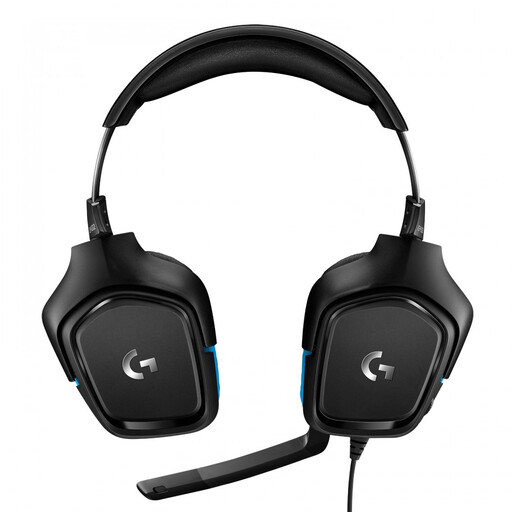
Logitech G G432 7.1 Surround Sound wired gaming headset

Logitech G G432 7.1 Surround Sound Wired Gaming Headset

An option if you’re looking for a wired gaming headset rather than a standalone desktop DAC; the described DAC function is part of the headset solution.

Logitech G HUB software is required for full 7.1 surround functionality.

View at Joybuy

Samsung EO-IC100 wired USB Type-C earphones, black

Samsung EO-IC100 Wired In-ear Headset for Calls/Music, USB Type-C, Black

An option if you’re looking for wired USB Type-C earphones with the described built-in DAC function; this isn’t a standalone headphone amplifier for your desk.

The in-line microphone and controls are useful if you also want to make headset calls and control audio from your earphones.

View at Joybuy

Frequently asked questions

Why can I still hear sound from my laptop speakers after connecting a USB DAC?

Select the USB DAC or headphones as the audio output on your laptop. Microsoft Support lists an incorrectly selected output device as a possible cause on Windows. Also check the plugs and volume. A DAC won’t automatically select the right output in every setup.

Will a DAC block the sound of my laptop fan or the noise in the room?

No, a DAC doesn’t reduce mechanical fan noise or ambient noise. Before choosing another device, distinguish between that noise and interference you can hear through an existing analogue audio connection.

What should I check when using a DAC at a sit-stand desk?

Check the USB port, headphone plug, selected audio output and cable routing with the desk both low and raised. According to FiiO, the FiiO K11 needs a separate 12 V/2 A power supply. According to its manual, the iFi ZEN DAC 3 can be powered via USB or a separate 5 V power supply, which is not included.

Does a USB DAC sold in the Netherlands have to meet product regulations?

Yes. Electrical and electronic devices sold in the Netherlands must comply with the relevant European rules. According to Business.gov.nl, the manufacturer is responsible for the applicable conformity assessment, CE marking and EU declaration of conformity. The rules that apply depend on the specific product and whether it has a separate power supply. A CE mark is not an independent quality mark.

What are my rights when buying online in the Netherlands?

According to ACM ConsuWijzer, when you buy a product online you generally have a 14-day cooling-off period from delivery, although exceptions may apply. You’re also covered by the statutory guarantee for as long as the product meets what you could reasonably expect from it. This isn’t automatically a fixed two-year period.
