Start with the headphone output you already have, and only add something if it doesn’t do the job. If your music is on a laptop or phone, a USB-powered DAC/amplifier may save you from needing a separate mains adapter, although the source must supply enough power; a battery-powered amplifier still needs a connected source. If you want to listen without a connected phone or computer, choose a player with its own storage and check the supported formats and available space.
Which solution is right for you?
Laptop listener without a spare socket
Your music is on a laptop, and you’re looking for a solution that doesn’t need a separate mains adapter if your existing headphone output isn’t up to the job. The iFi GO link Max receives audio and power via USB-C; according to the TOPPING manual, the DX1 II may still need external power and a Y-cable if the source doesn’t supply enough power.
Listener with a standalone music collection
You want to play files without a connected computer or phone. Storage capacity and supported formats are important here: Sony Netherlands lists microSD support and local audio formats for the NW-A306, along with around 18 GB of available space from the stated 32 GB of internal storage.
Listener matching the connection to their headphones
You’re comparing the plug and power requirements of your headphones with the device’s exact output. TOPPING, iFi audio and FiiO describe different connections and power options, so check the specifications of the model you’re considering.
What should you consider when choosing?
First, work out where your music is stored. Then check whether you can use the source, power supply and headphone connection together in the place where you listen.
| What to consider |
What should you look for? |
Who is this for? |
| Power without an extra socket |
Check whether USB supplies both audio and power, and whether the source provides enough power. |
If I listen from my laptop or phone and don’t want to use a socket for the amplifier, I focus on how it’s powered. Around 36% of consumers prioritise avoiding an extra socket. |
| Where your files are stored |
Decide whether you want to use a connected source; for a player, check the supported formats and available storage. |
If I want to play my music without a connected computer or phone, I look for a player with its own storage. Around 29% of consumers prioritise standalone playback of their own collection. |
| Connection and power requirements |
Compare your headphone plug with the exact output, and consider how much power your headphones need. |
If I want to connect specific wired headphones, I first check that the output suits the plug and how I plan to use them. Around 21% of consumers prioritise this connection and power match. |
| Compatibility with your source |
Check the connection and USB audio support on your phone or computer, as well as the device’s requirements. |
If I use my phone or computer as a source, I want to know whether it will work with the DAC/amplifier I’ve chosen and supply enough power. Around 14% of consumers prioritise source compatibility. |
Pitfalls to avoid when buying
-
Confusing a DAC/amplifier with a music player
A USB DAC receives audio from a connected source; the Sony NW-A306, by contrast, is a player with its own storage. A DAC on its own won’t play your local files independently.
Before buying, decide whether you want to play music from a device you already own or listen without a connected phone or computer.
-
Assuming USB power will always be enough
According to the TOPPING manual, the DX1 II may need an external power supply and a Y-cable, which isn’t included, if the source doesn’t provide enough power.
Check the power available from your source and which cables are supplied with the exact model.
-
Buying a desktop amplifier to save sockets
According to FiiO, the K11 uses an external 12V power supply, so it needs a socket.
Choose this option only if you need the extra connections and have a socket available where you listen.
-
Confusing stated storage with available space
Sony Netherlands lists 32 GB of internal storage for the NW-A306, of which around 18 GB is actually available. So you won’t be able to use the full stated capacity for your music collection.
Compare the size of your collection with the available space, and check whether a compatible microSD card would suit your plans.
Brands worth comparing
iFi audio
Worth considering if you want to compare USB-powered and battery-powered options when socket availability is a factor.
- The GO link Max receives audio and power via USB-C. iFi states that the hip-dac 3 offers up to 12 hours of battery life.
- The hip-dac 3 still depends on a connected audio source; the stated maximum battery life isn’t guaranteed with every pair of headphones or at every volume.
TOPPING
The DX1 II is a desktop DAC/amplifier worth comparing if your computer can supply USB audio and power.
- According to the TOPPING manual, the USB input supplies audio and power to the DX1 II.
- If the source doesn’t provide enough power, this model may need an external power supply and a Y-cable, which isn’t included.
Sony
The NW-A306 is a standalone player worth comparing if you want to play music without a connected phone or computer.
- Sony Netherlands lists local audio formats, a headphone output and microSD support.
- Around 18 GB of the stated 32 GB of internal storage is actually available. This is a music player, not a separate DAC/amplifier.
FiiO
The K11 is worth considering as a desktop DAC/amplifier if you need several inputs and have a socket available.
- FiiO lists USB, optical and coaxial inputs.
- The K11 uses an external 12V power supply. FiiO’s stated power output of 1400 mW applies to a 32 Ω load via the balanced output, not to every connection or pair of headphones.
Joybuy products
An option for anyone who wants to play music from a TF card through headphones, without relying on a connected computer or phone while listening.
 No image available
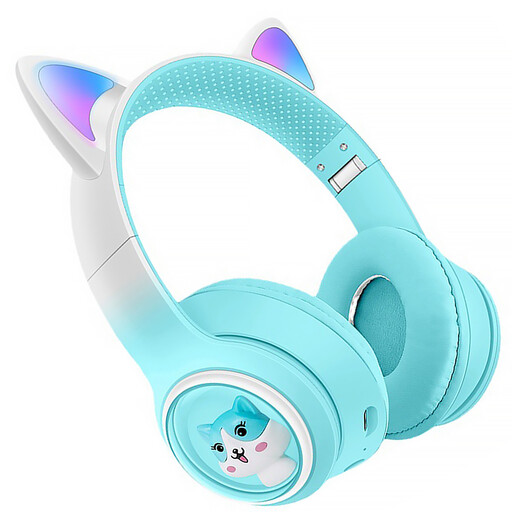
KINSI Bluetooth headphones with cat ears, RGB lighting and TF card slot
For anyone who wants to play music from a TF card through headphones with built-in music playback; this isn’t a separate DAC/amplifier.
Bluetooth, TF card slot, built-in battery and USB-C charging. The stated playback time varies depending on whether the lighting is used.
View at Joybuy
Frequently asked questions
Do I always need a headphone amplifier with my laptop?
No, not if the existing output works well with your wired headphones. Only add a device if you have a specific connection or power issue to solve; a USB DAC doesn’t store files itself.
Can I put my music files on a USB DAC?
Not on the USB DAC/amplifiers described here: they receive audio from a connected source. If you want to listen without a phone or computer, compare players with their own storage and check that they support your file formats.
How do I connect a USB-powered desktop DAC if I have limited sockets?
Connect the TOPPING DX1 II to a computer via USB, following the manual, and make sure the computer supplies enough power. If the source doesn’t provide enough power, you may need an external power supply and a Y-cable, which isn’t included; turn the volume down before playing anything.
What should I consider when it comes to a battery and a music player’s storage?
A battery-powered amplifier needs recharging after use; the iFi hip-dac 3 has separate USB-C connections for audio and charging. For a player, check the available internal storage and the compatibility of any microSD card before transferring your collection.
What consumer rights apply to online purchases in the Netherlands?
According to ACM ConsuWijzer, online purchases come with a statutory 14-day cooling-off period after delivery; exceptions may apply. If a product doesn’t perform as you could reasonably expect under normal use, you also have rights against the seller under the statutory guarantee. This is separate from any manufacturer’s warranty period.


