
Listener before setting off
Wants to find a traffic station quickly and know when the next bulletin is due. The ANWB and NPO Radio 1 provide information about stations and traffic updates.


A DAB+ radio is a good choice if your preferred station is available via DAB+ where you listen and you can find it quickly; the ANWB recommends NPO Radio 1 for traffic information. Also compare how easy the radio is to use and how clearly you can hear it from your usual listening spots, and consider the space and power supply it needs. If your preferred station is available there via FM, FM may be an alternative. For alerts about your own commute, the ANWB Onderweg app can complement the radio.
Wants to find a traffic station quickly and know when the next bulletin is due. The ANWB and NPO Radio 1 provide information about stations and traffic updates.
Wants to hear spoken updates from different spots and can assess reception and speech clarity in their own room. Sangean describes the DDR-36 as having a speech sound profile, among other features.
Is looking for a radio that fits the available space and considers portability, power supply and antenna positioning. Philips and Roberts describe models with different power options.
Start by checking whether your preferred station is available where you listen. Then compare how quickly you can find it, how clearly you can hear speech, and how much space and power the radio needs.
| What to consider | What to look for | Who it suits |
|---|---|---|
| Finding a bulletin quickly | Check that your preferred station is available and that you can easily find it again after scanning by saving it as a preset. | If I want to switch on a familiar station quickly before setting off, I focus on how easy the presets are to use. Around 36% of consumers prioritise quick access to traffic bulletins above all else. |
| Reception where you listen | Try the radio in the intended spot and scan again if necessary. Check what other reception options the model offers. | Anyone who wants to listen in a fixed spot in the kitchen will want to know whether the station comes through there. Around 29% of consumers prioritise reception where they listen. |
| Speech clarity | Compare the volume and any speech or equaliser settings from the places where you listen; settings cannot guarantee how well speech will come through in your room. | If I want to listen while cooking and at the table, speech clarity from both spots matters. Around 21% of consumers prioritise speech clarity in a shared space above all else. |
| Space and power | Check the dimensions, power options, what’s included in the box and the space needed for the antenna of the exact model. | If I have limited worktop space or want to move the radio around, its size and power options determine where I can listen. Around 14% of consumers prioritise placement and portability. |
Reception can vary depending on where you are in the house. You may need to move the radio or antenna and scan again.
Try your preferred station where you plan to listen, and follow the instructions for positioning the antenna. Also check what other reception options the chosen model offers.
The ANWB describes station-based radio bulletins and separately configurable traffic alerts for a commute.
If you’re looking for alerts specifically for your own journey, use route-specific notifications as a complement to listening to a radio bulletin.
The Roberts manual lists a USB-C cable for the Revival Petite 2, but no power adapter is included.
Check what’s included in the box and the power requirements of the model you choose, and see if you already have a suitable adapter.
You may need a suitable power adapter for the Revival Petite 2 if you don’t already have one.
Philips describes the TAR5505/10 as a kitchen radio with DAB+, FM, Bluetooth, a kitchen timer and mains or battery power. The TAR5600/00 is described as a portable model with DAB+/FM, a timer and a splash-resistant design.
Roberts describes the Revival Petite 2 as a compact DAB+/FM radio with Bluetooth, a rechargeable battery, USB-C charging and a telescopic antenna. The manual also lists preset stations.
Sangean describes the DDR-36 as a DAB+/FM tabletop radio with Bluetooth, preset stations, two speakers and an adjustable speech sound profile.
Pure describes the Evoke Spot as a compact tabletop radio with DAB+, FM and internet radio, designed for use with mains power.
Sony describes the XDR-S60DBP as a portable DAB+/FM radio with five DAB/DAB+ and five FM presets, a headphone socket and battery or mains power.
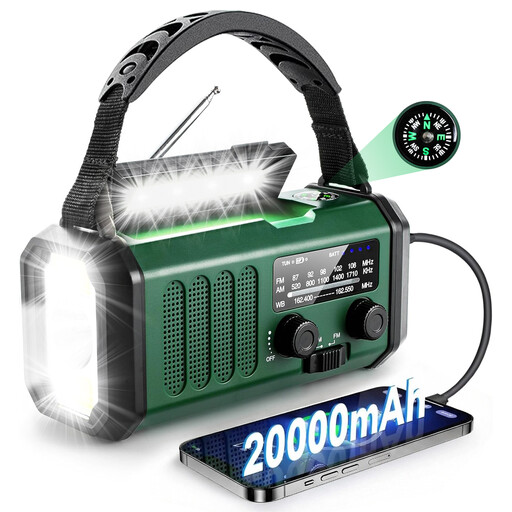
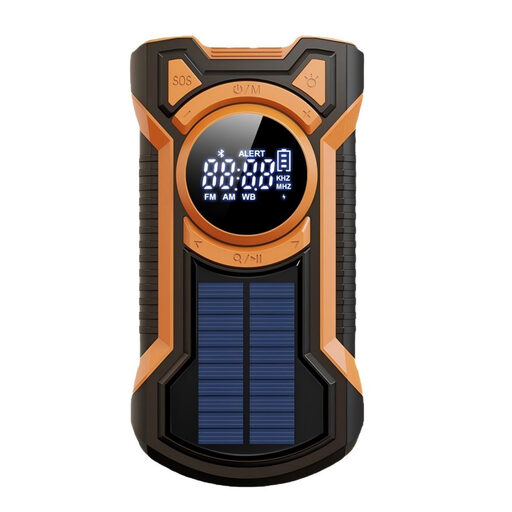
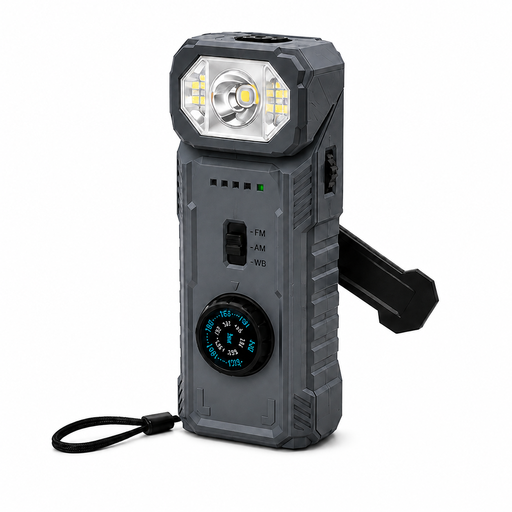
Below are portable AM/FM emergency radios. Consider them for traffic updates only if your preferred station is available via FM where you listen.
 No image available
May suit you if your preferred station is available via FM where you listen; the product name lists AM/FM.
 No image available
If your preferred traffic station is available via FM where you listen, this radio is worth considering as an FM option.
 No image available
This model is worth considering if your preferred station is available via FM where you listen.
NPO Radio 1 is one option; the ANWB lists traffic information on this station. The ANWB says bulletins are broadcast every half hour, and every 15 minutes during rush hour. Check whether you can receive the station where you listen.
Scan again and try moving the radio or antenna. The Roberts manual describes these steps when there’s no signal; the exact controls vary by radio.
Don’t assume so: a radio bulletin isn’t the same as an alert for your specific journey. The ANWB offers separately configurable traffic alerts for your commute via the ANWB Onderweg app.
No. According to the Dutch government, there is no fixed statutory guarantee period in the Netherlands; what you can reasonably expect in terms of a product’s lifespan depends on the product and the circumstances. Report a faulty product to the seller. Any manufacturer’s guarantee is in addition to this.