
Listener of a particular folk programme
You mainly want to know whether the station broadcasting your programme can be received where you plan to listen. A wider choice of stations won’t make up for it if it can’t.


First, check which station and listening method are available for your folk programme, then test reception where you plan to listen. Next, choose a radio that suits your workspace: a fixed model, a portable radio or one with internet radio. Extra features won’t make an unavailable broadcast available.
You mainly want to know whether the station broadcasting your programme can be received where you plan to listen. A wider choice of stations won’t make up for it if it can’t.
You usually listen from the same table or workbench and want to find the station easily and judge the sound from that spot.
You move the radio around the room, so you’ll need to consider its power supply, portability and reception in different spots.
First, find out whether the station broadcasts the programme via DAB+, FM or an online stream. Then test reception where you plan to listen. A 2015 report by the Dutch Authority for Digital Infrastructure highlighted uncertainty around indoor DAB+ reception, but it doesn’t tell you what reception will be like at your address today.
| What to consider | What should you check? | Who is this most important for? |
|---|---|---|
| Being able to hear the programme | Make a note of the station and check whether it broadcasts the programme via DAB+, FM or online. | I want to hear my favourite folk programme, not just have more stations to choose from. Around 36% of consumers prioritise being able to access the programme they have in mind. |
| Reception in the hobby room | Try the station you want with the aerial in the spot where you plan to listen. | If I mainly listen at my workbench, I want to know whether I can get the station there. Around 29% of consumers mainly value reception in their own listening spot. |
| Music sound from your workspace | Check the speaker setup and, if possible, listen to the radio from a similar distance. | I want to enjoy vocals and instruments from my usual spot. For around 21% of consumers, music playback is the main priority. |
| Moving the radio and using its controls | Check the power supply, any preset buttons and whether you can read the display from your usual spot. | When I move around while working on my hobby, I want to take the radio with me and find my station quickly. Around 14% of consumers mainly prioritise portability and ease of use. |
A radio doesn’t determine which programmes a station broadcasts. Availability depends on the station and how you listen.
Check the programme details and how it’s broadcast before comparing models.
Philips lists Bluetooth for the TAR5505/10 and internet radio as an additional feature for the TAR8805/10. Bluetooth alone doesn’t mean you can choose online stations on the radio itself.
If you want to play an online stream directly on the radio, look for internet radio in the specifications for the exact model.
Without built-in internet radio, you may need a separate connected device to play an online stream.
A stated power output or the manufacturer’s description won’t tell you on its own how the radio will sound from your workspace.
Check the speaker setup and, if possible, listen from a similar distance.
The Dutch product pages list DAB+, FM and Bluetooth for the TAR5505/10, and internet radio as an additional feature for the TAR8805/10.
JBL describes the Tuner 3 as a portable DAB/DAB+/FM radio with Bluetooth and preset buttons.
According to the Dutch product specifications, the Evoke Spot combines DAB+, FM, internet radio and Bluetooth.
The products below list FM radio, so they may be suitable if the station also broadcasts your programme on FM. Check how the station broadcasts and whether the exact radio model carries the required CE marking. The Dutch Authority for Digital Infrastructure states that radio equipment sold in Europe must meet the applicable European requirements and carry a CE marking.
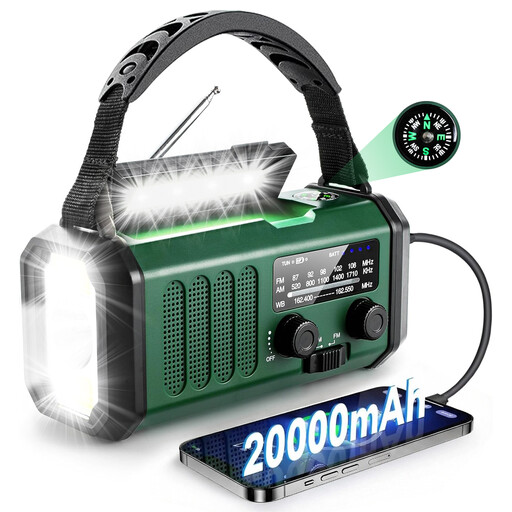 No image available
It can be used as an FM radio if the station broadcasts the programme on FM.
The product name lists AM/FM, a solar panel, a hand crank, a 14W LED light, an SOS alarm and a compass.
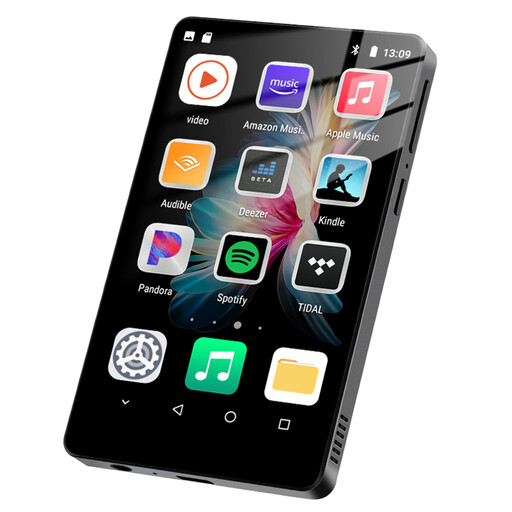 No image available
The FM radio feature is only useful if the station also broadcasts the programme on FM.
The product name lists Android 11, 2 GB RAM, 16 GB storage, expandable up to 256 GB, Wi-Fi, Bluetooth 5.0 and a built-in speaker. According to the product information, you need to use headphones as the FM aerial.
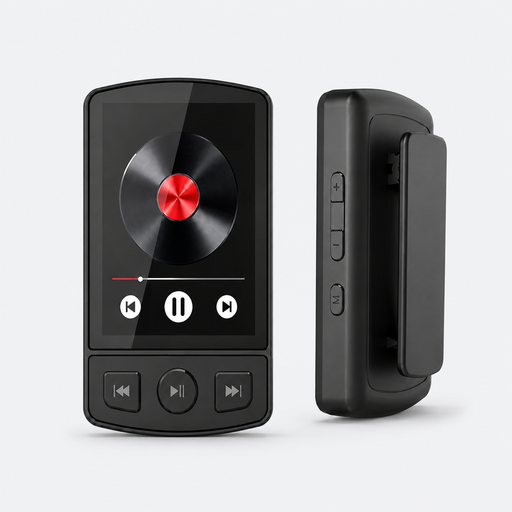 No image available
The FM radio can receive the programme you want if the station also broadcasts it on FM.
The product name lists 64 GB storage, a clip, a built-in speaker, a pedometer and voice recording.
No image available
FM radio is a possible way to listen if the station also broadcasts the programme on FM.
The product name lists a built-in speaker and support for a TF card up to 128 GB.
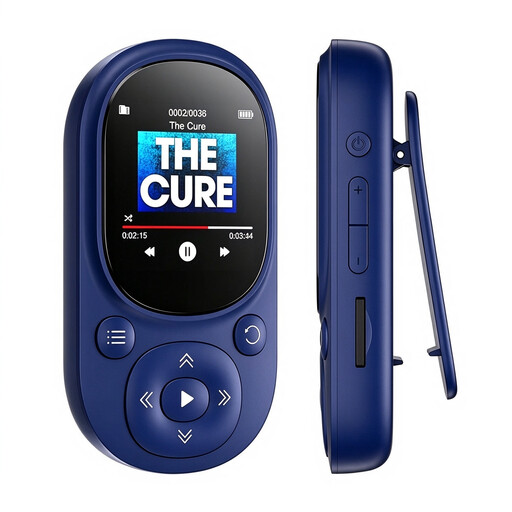 No image available
The FM radio feature may be useful if the station also broadcasts the programme on FM.
The product name lists Bluetooth 5.3, a microSD card slot up to 128 GB, voice recording and a pedometer.
No. You don’t need an internet connection to receive DAB+ over the air, but you do need one for an internet radio stream. For example, NPO describes over-the-air reception for NPO Radio 2, but check separately how your folk programme is broadcast.
Try the radio in another spot and check whether the same programme is also available on FM or through an online stream. General information about a transmitter’s coverage doesn’t confirm that you’ll get reception in your room.
The Dutch Authority for Digital Infrastructure states that radio equipment sold in Europe must meet the applicable European requirements and carry a CE marking. Check the marking on the exact model you want to buy.
No. According to the Dutch government, the seller must provide a solution if a product is faulty. The Netherlands doesn’t have one fixed statutory warranty period that applies to all products.