
Everyday crumb cleaner
You want to quickly vacuum under and between the table legs after sharing a meal. Check the shape of the tool supplied and how far you can reach from the nearest socket.


When choosing a cylinder vacuum for crumbs under a shared table, look for a tool that fits between the table legs and check the working radius in your new home. If you have a delicate hard floor, choose a suitable parquet brush. A bagged model means less direct contact with dust when you dispose of it, while a bagless model does away with replacement bags but puts you in more direct contact with dust when you empty it.
You want to quickly vacuum under and between the table legs after sharing a meal. Check the shape of the tool supplied and how far you can reach from the nearest socket.
You need a tool that’s suitable for parquet or another delicate hard floor and can also reach around table legs. Check which brush comes with the exact model variant.
You want to dispose of collected dust with as little direct contact as possible. Look for bagged models, and check the filter and availability of compatible bags too.
Choose this option: if you want to minimise direct contact with dust when disposing of it.
Bear in mind: you’ll need to replace and buy compatible dust bags.
Choose this option: if you don’t want to buy dust bags and are happy to empty the dust container yourself.
Bear in mind: you can’t avoid direct contact with dust when emptying the container.
Start by checking the space under the table and the distance to a socket. Then choose the floor tool and dust collection system that best suit your priorities.
| Concern | What to check before buying | Who is this important for? |
|---|---|---|
| Reaching crumbs around table legs | Check whether a crevice tool is included and compare the stated working radius with the sockets in the room. | If you want to quickly clean between table legs after a meal without frequently changing sockets, this is probably your top priority. Around 33% of consumers prioritise reach under the table. |
| A suitable floor tool | Check which floor tool comes with the exact model variant and whether it’s suitable for your floor. | For parquet or another delicate hard floor, you’ll need a suitable brush, not just a tool that can reach around table legs. Around 27% of consumers say the floor tool is their main consideration. |
| Minimising contact with dust | Check whether the model uses a dust bag or container, and which bags or filters are compatible with that variant. | If you’d rather dispose of collected dust along with a dust bag, the way you empty it matters more to you than avoiding bags. Around 20% of consumers give minimising contact with dust their highest priority. |
| Purchase and ongoing maintenance costs | Check the availability and cost of compatible dust bags and filters for the specific model. | If you also want to factor in recurring supplies, it’s not just the type of dust collection that matters, but the maintenance it involves too. Around 20% of consumers prioritise running costs. |
A standard household vacuum is designed for ordinary household dirt, not construction dust, bulky waste, rubble or liquids.
First, work out what’s actually under the table. For construction dust, rubble or liquids, you’ll need a suitable appliance.
The stated power doesn’t tell you whether the supplied tool will fit between the table legs or suit your floor. The Consumentenbond also lists tools, working radius and floor performance as points to compare.
Check the floor tool and accessories supplied with the exact model variant, as well as its working radius and stated power.
A bagless model means you don’t have to buy dust bags, but you can’t avoid direct contact with dust when emptying the container. The Consumentenbond describes this as a difference between dust collection with and without a bag.
Choose a dust collection system based on what matters most to you, and follow the maintenance instructions for your chosen model.
The Guard S1 Parquet Flex is a bagged cylinder vacuum supplied with a parquet tool and a flexible crevice brush. It’s designed for people who want to clean both hard floors and awkward spaces under furniture.
The Swift Power Cyclonic RO2913EA is a compact bagless cylinder vacuum for everyday dry dirt.
The Serie 6 ProHygienic BGL6HYG1L is a bagged cylinder vacuum for anyone looking for a longer stated working radius.
The PowerPro Compact FC9332/09 is a bagless cylinder vacuum with a TriActive tool and integrated brush, as described by Philips for this model.
This selection includes a spray mop with a handheld vacuum and cylinder vacuums. So start by comparing the type of appliance. For crumbs under a shared table, the crevice tools supplied and the operating radius matter too.
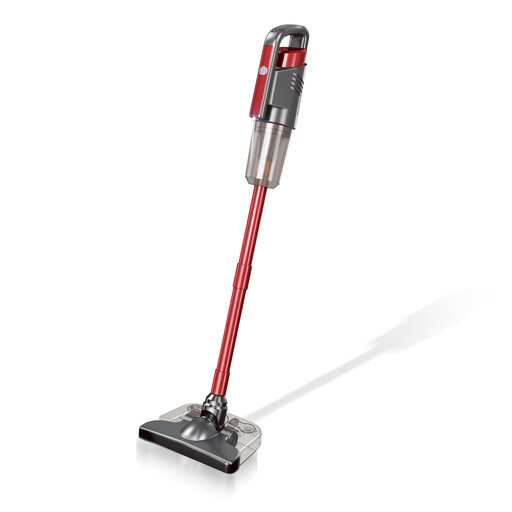 Image unavailable
The product title describes a spray mop with a handheld vacuum, not a cylinder vacuum. Only choose this appliance if the combination suits your needs.
The product description mentions a crevice tool and a 4 m cord.
The description lists hard floors and carpets as suitable surfaces.
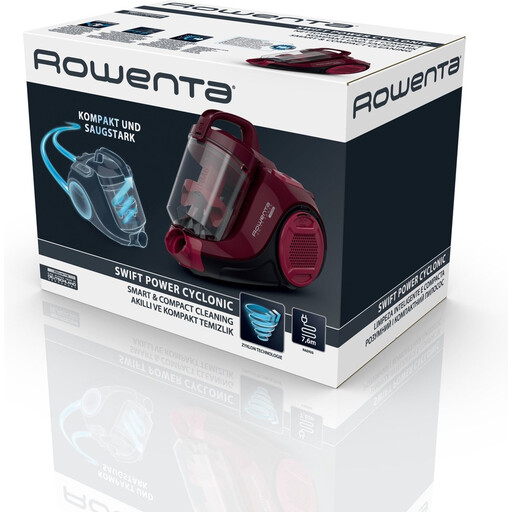 Image unavailable
The product description mentions a crevice tool for awkward spaces around table legs.
The stated operating radius is 7.6 m and the dust container has a capacity of 1.2 l.
You can’t avoid direct contact with dust when emptying the bagless container.
 Image unavailable
The flexible XL crevice tool is designed for awkward spaces; the Parquet Twister tool is listed for delicate hard floors.
The stated operating radius is 10 m and the dust bag has a capacity of 3.5 l.
You’ll need compatible HyClean Pure TU dust bags for replacements.
Use a crevice tool for narrow spaces if one is included with your model variant. For the open floor area, choose a tool suited to the surface and check what’s in the box, as accessories can vary between models.
Not with a standard household cylinder vacuum. The Consumentenbond distinguishes ordinary household dirt from construction dust, bulky waste, rubble and liquids. For this type of dirt, choose a suitable appliance and follow its instructions.
Empty the dust container and maintain the filters according to your model’s instructions. Philips recommends cleaning the inlet filters on its PowerPro vacuums whenever the dust container is emptied. Don’t automatically apply this interval to other models.
If a product is faulty under normal use, the seller must offer an appropriate solution free of charge, according to ACM ConsuWijzer. Online purchases usually come with a 14-day cooling-off period after delivery, although exceptions apply. This is separate from your rights if a product is faulty.
No. The European Commission states that the former EU energy-labelling scheme for vacuum cleaners no longer applies. Ecodesign rules are a separate matter, not a replacement energy label.