What should you look for when buying?
First check whether the exact version comes with a crevice tool. Then assess how easy it is to carry, how it collects dust and whether it’s suitable for your stair surfaces.
| What to consider |
What to look for |
Who might find this important? |
| Fluff in corners and along edges |
Check that a crevice tool is included and fits the hose or handle. |
If I need to clean narrow corners and stair edges before the handover, I want the right tool to hand. Around 40% of consumers prioritise reaching into crevices. |
| Carrying and cleaning on the stairs |
Compare the weight and check the carry handle and stated reach. |
If I need to lift the appliance up several steps, ease of handling and a reach that suits the position of my sockets are important. Around 30% of consumers prioritise portability. |
| Disposing of dust |
Check whether the model has a dust bag or container, and what replacement supplies it needs. |
After cleaning, I want to dispose of the collected dust without unnecessary direct contact. Around 20% of consumers prioritise low-dust emptying. |
| Tool for your stair surfaces |
Check the settings for hard floors or carpet, and whether you need a separate brush. |
If my stairs are carpeted or have hard treads, I want a tool that suits the surface. Around 10% of consumers prioritise the type of stair surface. |
Cylinder vacuum cleaners at Joybuy
This selection features bagged cylinder vacuum cleaners for dry fluff and dust. Check which tool is included with each version and whether it suits your stairs.
 No image available
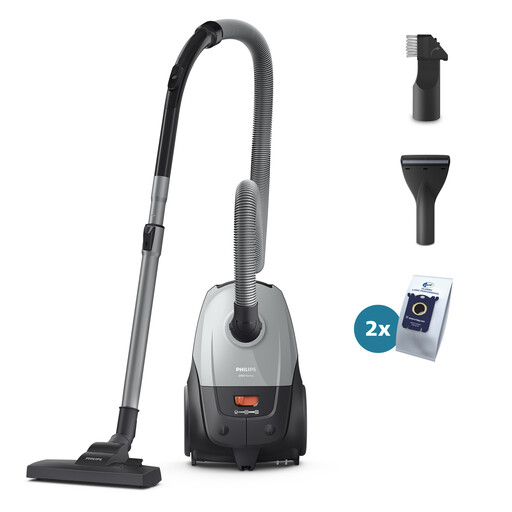
Philips 2000 Series XD2142/12
An option for picking up fluff from narrow corners, with dust collected in a bag for disposal.
The product description lists an integrated 2-in-1 crevice tool and a floor head with settings for hard floors and carpet.
800 W; stated weight 3,74 kg; HEPA filter and upholstery tool.
Uses S-Bags; check which replacement bags are compatible. Do not use for liquids.
View at Joybuy
 No image available
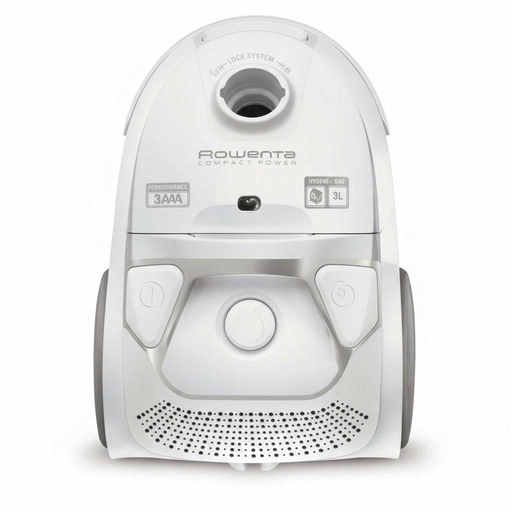
Rowenta RO3927 Compact Power
An option for dry fluff along edges and in corners; the product details list an included crevice tool.
750 W; 3 l dust bag; stated reach of 8,80 m and weight of 3,85 kg.
The standard brush has two settings for different floors. Replacement dust bags are required. Do not use on wet floors or for liquids.
View at Joybuy
 No image available
Miele Guard S1 Parquet Flex
An option for narrow corners and hard stairs: the product details list a flexible XL crevice nozzle and a Parquet Twister for hard floors.
890 W; stated operating radius of 10 m and weight of 5,70 kg; 3,5 l dust bag.
Replacement dust bags are required. Do not use for fine dust such as plaster or cement dust.
View at Joybuy
Frequently asked questions
Can I use an ordinary cylinder vacuum cleaner to remove construction dust or wet mess from the stairs?
Use an ordinary household cylinder vacuum cleaner for dry, everyday fluff and household dust, not for liquids or coarse construction debris. Consumentenbond recommends a suitable alternative appliance, such as a wet and dry vacuum, for construction dust, rubble and liquids.
Which tool do I need for fluff in stair corners?
A crevice tool is designed for narrow spaces. Check that it’s included with the exact version and fits the hose or handle; a large floor head won’t reach every corner.
Is a bagged or bagless vacuum cleaner more practical?
Choose a bagged model if limiting direct contact with dust when disposing of it matters to you; a bagless model means you won’t need to buy replacement bags. Consumentenbond says changing a bag involves less contact with dust than emptying a dust container.
Do I automatically get only two years of legal protection for a new vacuum cleaner in the Netherlands?
No. According to the Dutch government, there’s no fixed time limit for statutory protection in the Netherlands. The product must be fit for purpose, depending on what you can reasonably expect from it. If something is faulty, contact the seller; a manufacturer’s or additional warranty doesn’t replace your statutory rights.
Does a new cylinder vacuum cleaner need a European vacuum cleaner energy label?
The European Commission says that the energy labelling scheme for vacuum cleaners has been withdrawn. Ecodesign requirements are a separate scheme for vacuum cleaners that fall within its scope, so the absence of an energy label isn’t, in itself, a reason to reject a model.


