
Removing fluff from stair corners
Your main priority is reaching fluff along the risers and in the corners. The Consumers’ Association recommends specialist crevice tools; check that the right tool is included with the model you choose.


For fluff in stair corners, first choose a cylinder vacuum cleaner supplied with a crevice tool that fits the corners of your stairs. Then weigh up the machine’s carrying weight and operating radius against the location of your sockets and the number of floors. According to the Consumers’ Association, a bag means less direct contact with dust when you throw it away, while a bagless model doesn’t need replacement bags but does need emptying and maintenance. Don’t use a regular household vacuum cleaner for construction dust, rubble or liquids; the Consumers’ Association advises against it.
Your main priority is reaching fluff along the risers and in the corners. The Consumers’ Association recommends specialist crevice tools; check that the right tool is included with the model you choose.
You regularly carry the machine up the stairs or move it to another socket. Compare the vacuum cleaner’s weight with its stated operating radius; a longer reach won’t make a heavy machine any lighter.
You want to avoid direct contact with the dust you’ve collected when throwing it away. According to the Consumers’ Association, a dust bag means less direct contact than emptying a dust container; also check how to maintain the filters.
| What to consider | What should you check? | Who is this most important for? |
|---|---|---|
| Fluff in stair corners | Check which crevice tool is included and whether it fits the corners of your stairs. | After a move, I want to tackle fluff along the risers and edges without trying to make do with a floor brush; around 36% of consumers prioritise reaching into corners. |
| Carrying it up and down the stairs | Compare the machine’s weight and stated operating radius for the exact model. | When I’m cleaning several floors, I don’t want moving the vacuum cleaner to make the job unnecessarily difficult; around 29% of consumers give ease of handling on the stairs top priority. |
| Contact with dust when emptying | Check whether the model has a dust bag or dust container, and how the manual says to empty it. | I want as little direct contact as possible with the dust I’ve collected when throwing it away; around 21% of consumers prioritise this. |
| Ongoing maintenance | Check which dust bags and filters fit, and how to maintain the dust container or filters. | I also want to know what I’ll need to keep using and maintaining the vacuum cleaner after the post-move clean; around 14% of consumers give consumables and maintenance top priority. |
Construction dust, rubble and liquids aren’t suitable for a regular household vacuum cleaner.
Sort out the dirt first. Don’t use a regular household vacuum cleaner for construction dust, rubble or liquids; choose a machine designed for that type of mess.
A crevice tool is designed for narrow spaces. According to the European Commission, higher power consumption doesn’t automatically mean better cleaning performance.
Check that a crevice tool is included with the exact model and that it’s suitable for your stairs; don’t base your choice on the power rating alone.
A bagless model needs its dust container emptied and its filter maintained; with a bagged model, you’ll need to keep buying compatible bags.
Check how often the dust container and filters need maintaining for the exact model, and which replacement parts are compatible.
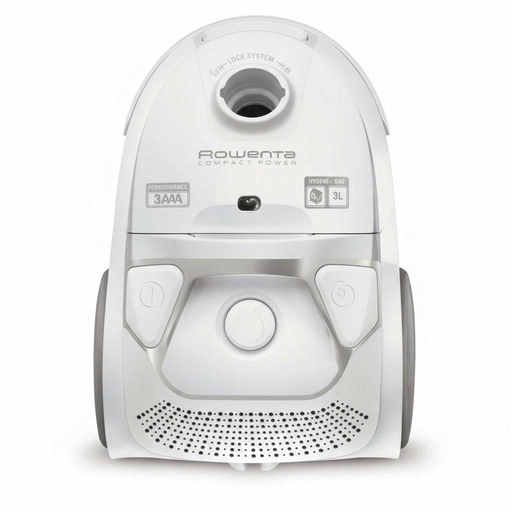
For the Compact Power RO3923, Rowenta lists a supplied 2-in-1 crevice tool and an operating radius of 8,80 m.
For the Serie 4 ProHygienic BGB41HYG1H, Bosch lists an integrated crevice and upholstery nozzle, an operating radius of 11 m and a machine weight of 4,5 kg.
The PowerPro Compact FC9332/09 is a bagless cylinder vacuum cleaner. Philips lists an integrated brush for furniture and flat surfaces.
For the Guard L1 AllFloor Flex, Miele lists a flexible crevice brush and a 2-in-1 nozzle for furniture and crevices.
These Joybuy picks are bagged cylinder vacuum cleaners for tackling fluff in stair corners. Alongside the crevice tool, consider the machine’s carrying weight and operating radius.
 No image available
The flexible XL crevice nozzle could be useful for picking up fluff from hard-to-reach stair corners; check that it fits your stairs.
 No image available
The supplied crevice tool could be useful for picking up fluff in stair corners; check that its shape fits the corners of your stairs.
Start with a crevice tool supplied with your chosen model that fits into the corner. For fluff on the upholstery of a carpeted step, an upholstery nozzle may be more suitable; check whether that accessory is included with each model too.
Not with a regular household vacuum cleaner: the Consumers’ Association advises against using one for construction dust, bulky waste, rubble and liquids. First work out what kind of mess you’re dealing with and use a suitable machine; the Consumers’ Association also suggests hiring one for larger or wet messes.
Follow your model’s manual to check whether the dust bag or container is full, the filter is blocked, or the nozzle or hose is obstructed. Let a washed filter dry completely before putting it back. The Consumers’ Association points out that clogged filters can reduce performance.
No. Higher power consumption doesn’t automatically mean better cleaning performance. The European Commission makes this distinction; for stair corners, also check which nozzle is included and whether it’s suitable for the task.
No. According to the European Commission, the former EU rules on energy labels for vacuum cleaners no longer apply. Ecodesign requirements are a separate matter, so don’t treat an old energy label as a current mandatory buying requirement.