
Cleaning skirting boards and crevices
After moving, you mainly want to remove dust from the narrow gap along the skirting board. So look for a suitable crevice tool supplied with the exact vacuum model.


For household dust along skirting boards, a cylinder vacuum cleaner with a suitable crevice tool is a sensible choice. The floor head is for the rest of the floor and does not replace that attachment. Choose between a dust bag, which you throw away along with the dust, and a dust container that you empty yourself, and check the accessories supplied with the exact model variant. If you’re dealing with fine building dust rather than household dust, first check whether the manufacturer says the model is suitable for it.
After moving, you mainly want to remove dust from the narrow gap along the skirting board. So look for a suitable crevice tool supplied with the exact vacuum model.
What matters most to you is how you dispose of the collected dust. A dust bag and a dust container that you empty yourself call for different emptying and maintenance routines.
You want to clean your new hard floor as well as the skirting boards. So compare the floor head supplied with the type of flooring you have at home.
Start by checking for a suitable crevice tool for the edge along the skirting board. Then consider how you want to dispose of the dust and which floor head is right for the rest of your floor.
| What to consider | What should you check? | Who should consider this? |
|---|---|---|
| Skirting board edges and crevices | Check whether the exact model variant comes with a suitable crevice tool and whether it can reach the narrow gap. | If I mainly want to remove dust from the gap between the floor and skirting board, I check the crevice tool first; around 39% of consumers prioritise reach along skirting boards. |
| Dust collection | Choose between a dust bag and a dust container. For a bagged model, check which replacement bags fit. | Do I want to throw away the collected dust with the bag, or am I happy to empty a container? Around 23% of consumers prioritise how they dispose of dust. |
| Floor head | Compare the floor head supplied with your flooring, and check whether the model also comes with a separate parquet brush. | If I mainly want to clean my hard floor as well as the skirting boards, I check which floor head is included; around 23% of consumers make the floor their main consideration. |
| Operating range and maintenance | Compare the stated operating range and read how to maintain the bag or container, filters, hose and attachments. | When cleaning several rooms, I want to know how often I’ll need to change sockets and what maintenance is required; around 15% of consumers prioritise operating range and maintenance. |
A parquet brush is designed for floors, while the narrow gap along a skirting board calls for a suitable crevice tool.
Check the accessories listed for the exact model variant before ordering; don’t rely on the name of a floor head.
A dust container needs to be emptied regularly. A full container or blocked filters can reduce performance, as explained by the Consumers’ Association.
Compare emptying the container with replacing a suitable dust bag, and follow the model’s maintenance instructions.
Allow time to empty the container and maintain the filters.
A product line can include several variants, so check the full model code and variant before comparing accessories or product specifications.
Compare the product name and accessories supplied with the exact variant you want to buy.
The Serie 4 ProHygienic BGB41HYG1H is a bagged cylinder vacuum cleaner with an integrated crevice and upholstery nozzle.
According to AEG, the CLEAN 6000 ÖKO AB61C2OKO combines a dust bag, a 3-in-1 tool with a crevice nozzle and a separate parquet nozzle.
The Guard S1 Parquet Flex in Brilliant White is a bagged cylinder vacuum cleaner with a parquet brush; Miele also lists a flexible crevice brush.
The PowerPro Compact FC9332/09 is a bagless cylinder vacuum cleaner with an emptyable dust container.
These Joybuy picks are household vacuum cleaners for floor cleaning, including both bagless and bagged models. Check whether each variant includes a suitable crevice tool, especially if cleaning skirting board edges is your main task.
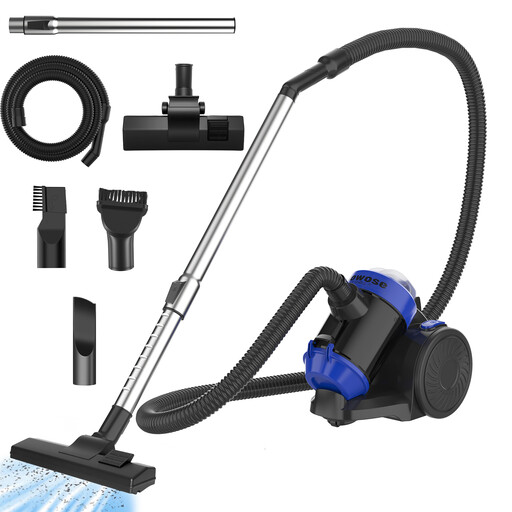 No image available
The stated bagless collection and crevice tool make this model worth considering if you don’t want to use dust bags and also need to reach skirting board edges.
The product information lists a power rating of 1200 W, a 4 m cord, a 1.5 l dust container and a crevice tool.
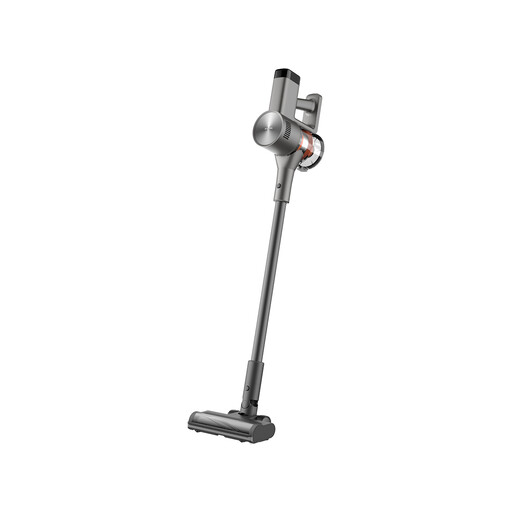 No image available
This cordless model may suit you if you want a dust container; check whether this variant includes a crevice tool before choosing it for skirting board edges.
The product name lists 280 AW, a 700 W motor, a 0.8 l dust container and an LED brush.
 No image available
The stated dust bag and crevice tool make this cylinder vacuum cleaner worth considering if you want to clean dust from skirting board edges and prefer to collect it in a bag.
The product information lists a 3 l dust bag, a metal telescopic tube and a crevice tool. Dust pick-up on hard floors is rated A.
According to the product description, this model is not designed for fine dust such as plasterboard dust or ash. Don’t use it on damp floors or to vacuum liquids.
 No image available
The stated flexible crevice nozzle and Parquet Twister are useful if you want to clean both skirting board edges and hard floors.
The product information lists a 3.5 l dust bag, a 10 m operating radius, a power rating of 890 W and a Parquet Twister floor head.
According to the product description, this model is not designed for fine dust such as plaster or cement.
First check whether the exact variant includes a suitable crevice tool. For larger floor areas, use a head that suits your flooring; according to the Consumers’ Association, a standard nozzle can be used on both hard floors and carpets.
Check the bag or container, filters, nozzle and hose as instructed in the manual. The Consumers’ Association notes that a bag or container that’s too full, or blocked filters, can reduce performance. Let a cleaned filter dry completely before using the appliance again.
A bagged model needs compatible replacement bags; a bagless model requires you to empty and maintain the dust container. According to the Dutch government, if a product is faulty, the retailer is your point of contact for a solution. For eligible distance sales, you’ll often have a 14-day cooling-off period.
According to the Dutch government, you can hand in an old household appliance when buying a new, similar appliance, at a collection point or at your local council recycling centre. If you buy a similar appliance, the shop is required to take back your old one.