
Cleaning narrow edges
Your main aim is to reach dry sand between the shoe rack, wall and skirting board. A well-fitting crevice tool may matter more than extra features.


Start by checking whether the supplied crevice tool fits between your shoe rack and the wall, and whether the floorhead is suitable for your flooring. Then choose between a dust bag and a dust container based on how you want to dispose of the collected sand. No general product claim proves how well a specific model will pick up sand in this particular spot.
Your main aim is to reach dry sand between the shoe rack, wall and skirting board. A well-fitting crevice tool may matter more than extra features.
You want to clean the entrance without dragging an unsuitable or dirty floorhead over parquet or laminate.
You’re considering how to get rid of the collected sand and dust afterwards, and comparing a dust bag with an emptyable dust container.
First, check whether you can reach the narrow edge and whether the floorhead suits your flooring. Then choose the dust disposal option you prefer.
Suited to you if: you’d rather dispose of collected dirt in a dust bag.
Bear in mind: you’ll need compatible replacement bags; the crevice tool and floor brush remain key for this job.
Suited to you if: you don’t want to buy replacement dust bags.
Bear in mind: you’ll need to empty the dust container and maintain the filters as instructed by the manufacturer.
| What to consider | What to check before buying | Who should pay extra attention? |
|---|---|---|
| Sand beside the rack and skirting board | Check whether a crevice tool is included and whether it physically fits between the rack and the wall. | If I mainly need to reach the narrow edge, I want to know whether the tool will fit along it. Around 36% of consumers prioritise access to this edge. |
| Protecting the floor | Check whether the supplied floorhead is suitable for your flooring and free from trapped sand. | On parquet or laminate, I want to use a suitable, clean floorhead. Around 29% of consumers prioritise protecting the floor. |
| Disposing of dust and sand | Check how the dust bag or container is removed and which parts need maintenance. | I want to know in advance how to dispose of the collected dirt and whether I’ll need to empty a dust container. Around 21% of consumers prioritise how easy it is to empty. |
| Running costs and ease of handling | Compare the operating radius, weight and storage requirements; for a bagged model, check which type of bag it takes. | If I want to use the vacuum cleaner for other jobs later, I’ll consider how easy it is to handle and store, and whether the right replacement bags are available. Around 14% of consumers prioritise this combination. |
A power rating or claim about fine dust particles doesn’t tell you directly how much dry sand a model will pick up beside your shoe rack.
Where possible, compare results for hard floors, crevices and skirting boards, and check which tools are actually included.
The Consumers’ Association (Consumentenbond) says that a clean standard floorhead can sometimes fit better and be more comfortable to use. Dirt stuck to a floorhead can also be a concern on delicate flooring.
Check which floorhead is suitable for your flooring and clean it before use. If needed, use a suitable crevice tool for the narrow edge.
A bagless vacuum cleaner has a dust container that needs emptying; a bagged model needs compatible replacement bags. Both types require filter maintenance in line with the instructions.
Before buying, check how the bag or container is emptied and what maintenance the model requires.
With a bagged model, remember to factor compatible replacement vacuum cleaner bags into your running costs.
The features below apply to the product ranges and versions mentioned; they don’t guarantee how well they’ll pick up sand in your particular spot.
The Guard S1 Parquet Flex is a bagged cylinder vacuum cleaner supplied with a parquet brush and an extra-long flexible crevice tool. This could be useful if the edge beside your rack is difficult to reach.
According to Bosch, the Serie 4 BGB41RD3H has an integrated crevice tool and comes with a parquet brush.
The Compact Power RO3953EA comes with a 2-in-1 crevice tool and a parquet brush.
The PowerPro Compact FC9332/09 is a bagless cylinder vacuum cleaner with a TriActive nozzle.
These Joybuy picks may help you compare different ways of dealing with dry sand beside a shoe rack. Pay particular attention to the crevice tool, suitability for your flooring and how you’ll dispose of the dirt.
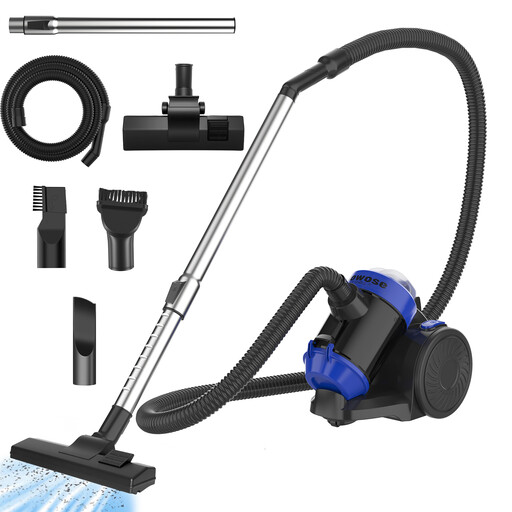 Image unavailable
The description mentions a crevice tool for hard-to-reach places, which may be useful for a narrow edge beside a shoe rack.
The product description lists a 4 m cord, a 1.5 l dust container, cord rewind and crevice and brush tools. It also says the model is suitable for hard floors.
 Image unavailable
The flexible XL crevice tool is designed for narrow spaces, while the Parquet Twister floorhead is designed for hard floors. Check that the tools suit your flooring and fit the space beside your rack.
For this version, Miele lists a power rating of 890 W, a 3.5 l dust bag, a 10 m operating radius and four electronic suction power settings. These features aren’t an independent measure of how well it picks up sand in this spot.
Not necessarily. On parquet or laminate, the main thing is to use a suitable, clean floorhead. According to the Consumers’ Association, a well-cleaned standard floorhead can sometimes fit better and be more comfortable to use than a separate parquet brush. If needed, use a suitable crevice tool for a narrow gap.
Check that the sand is dry, remove any dirt stuck to the floorhead, and follow the instructions for the bag, dust container and filters. The European Commission advises maintaining filters in line with the manufacturer’s instructions. Miele advises against using its vacuum cleaners to pick up liquids or damp dirt.
According to ACM ConsuWijzer, a product must meet the standards you could reasonably expect when used normally. If it becomes faulty too soon, the seller is responsible for providing an appropriate remedy under your statutory rights; a manufacturer’s warranty doesn’t replace those rights. There is no single fixed statutory warranty period for every vacuum cleaner.
No. The European Commission states that the rules for energy labels on vacuum cleaners no longer apply. However, according to the Commission, ecodesign requirements still apply to mains-powered vacuum cleaners, so don’t treat an old energy label as a current mandatory comparison measure.