First, measure the clearance and depth under your bed: a compact body doesn’t mean the floorhead and tube will fit underneath. Then compare the floorhead supplied, storage space for all the parts and the operating radius. Choose a model with a dust bag if you want to minimise contact with dust when emptying it, or a bagless model if you’d rather avoid dust bags and are happy to empty the dust container and maintain the filter. The Consumers’ Association (Consumentenbond) points out that replacing a dust bag generally involves less contact with dust than emptying a dust container.
Who is this choice for?
Renter with a low bed
Wants to remove dust and fluff from under the bed without constantly moving furniture. The fit of the floorhead and tube matters more than the dimensions of the vacuum body alone. The Consumers’ Association also recommends checking the floorhead when choosing a vacuum.
Someone with limited cupboard space
Looking for a cylinder vacuum that’s easy to store and move after use. The Consumers’ Association notes that a compact vacuum is easier to store and move.
Someone sensitive to dust
Wants to minimise direct contact with dust when disposing of what the vacuum has collected. The Consumers’ Association explains that replacing a dust bag generally involves less contact with dust than emptying a dust container.
What should you look for when buying?
| What to consider |
What to check before you buy |
Which consumers pay particular attention to this? |
| Reach under the bed |
Measure the clearance and depth; check the shape of the supplied floorhead and how it connects to the tube. |
If I want to remove dust and fluff without moving the bed, I check that the floorhead and tube fit through the opening. Around 40% of consumers give reach under the bed top priority. |
| Storage in a small home |
Compare the dimensions of the body and check how the hose, tube and floorheads can be stored. |
With limited cupboard space, I need room for the hose and loose parts too, not just the machine itself. Around 25% of consumers put storage first. |
| Low-dust emptying |
Check how the dust bag or container is removed and what filter maintenance is required. |
If I want to minimise contact with vacuumed-up dust, I weigh up emptying a dust container against replacing a dust bag. Around 17% of consumers give low-dust emptying top priority. |
| Ongoing costs and maintenance |
Check which type of dust bag or filter fits, and compare the maintenance instructions. |
If I don’t want to keep buying dust bags, I bear in mind that I’ll need to empty a dust container and maintain the filters. Around 18% of consumers prioritise running costs and maintenance. |
Common buying mistakes
-
Assuming ‘compact’ means ‘fits under the bed’
A compact body doesn’t tell you whether the floorhead and tube will fit through the opening under your bed.
Measure the clearance and check the supplied floorhead and tube connection before choosing.
If the supplied floorhead doesn’t fit, you may need to buy a suitable extra attachment.
-
Assuming bagless means maintenance-free
A dust container needs emptying and filters need maintenance. A full dust container or dust bag can also reduce suction.
Compare how each model is emptied and follow the maintenance instructions for that specific model.
Allow time for emptying and filter maintenance; any replacement costs vary by model.
-
Assuming different versions in the same range are identical
Models in the same range can come with different floorheads, which may be important for your floors and bed.
Check the full model number and what’s in the box, not just the range name.
Brands to consider
Bosch
The Serie 2 BGLS2BA3H is an example of a compact cylinder vacuum with a dust bag.
- Bosch Netherlands lists dimensions of 237 × 290 × 367 mm and an operating radius of 8 m for this model.
- These specifications don’t tell you whether the floorhead will fit under your bed; this model needs dust bags.
Philips
The PowerPro Compact FC9332/09 is a compact, bagless cylinder vacuum.
- Philips lists a TriActive floorhead and a removable dust container for this version.
- Check whether the floorhead will fit under your bed and bear in mind that you may come into contact with dust when emptying it. The manufacturer’s claims about dust pick-up aren’t an independent test of cleaning under a bed.
Miele
Miele describes the Guard S1 range as a compact series of cylinder vacuums with dust bags, designed for smaller spaces.
- Miele lists an operating radius of 10 m and an adjustable tube for the Guard S1 in Obsidian Black.
- The parts supplied vary between versions, so don’t assume that one version comes with the same accessories as another.
Rowenta
The Swift Power Cyclonic RO2913EA is a compact, bagless cylinder vacuum.
- Rowenta lists an operating radius of 7,6 m and a supplied 2-in-1 crevice tool for this version.
- The specifications don’t confirm that the floorhead will fit under a low bed; performance descriptions are manufacturer claims.
Product pick at Joybuy
This product pick focuses on a compact, bagless cylinder vacuum. Check for yourself whether the supplied floorhead and tube will fit under your bed.
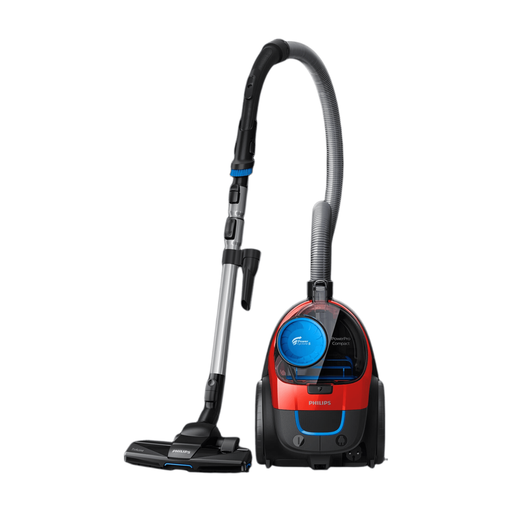 Image unavailable
Philips PowerPro Compact FC9330/09
This bagless model is a good choice if you don’t want to buy dust bags. Before buying, check that the supplied floorhead and tube will fit under your bed.
The dust container needs to be emptied and the filter cleaned regularly.
Joybuy
Frequently asked questions
How can I tell whether a vacuum will fit under my bed?
Measure the clearance and the depth you want to reach. Compare these measurements with the actual position of the supplied floorhead and tube; the dimensions of the vacuum body alone won’t tell you whether it will fit.
How should I maintain my vacuum if it isn’t picking up as well?
Follow the model’s instruction manual: replace a full dust bag or empty the dust container promptly, maintain the filters as instructed, and check the floorhead and hose for blockages.
What costs and rights should I consider after buying?
Check which dust bags or filters fit your model. The Dutch government says that consumer purchases in the Netherlands are covered by statutory warranty. If a product doesn’t meet the terms of the agreement, the seller must provide a solution. Any manufacturer’s warranty is in addition to this. For distance purchases, you generally have a 14-day cooling-off period, subject to legal exceptions.


