
Someone with hard-to-reach chair legs
You want to remove fluff behind chairs without constantly moving furniture. The shape of the crevice tool, the hose and the available manoeuvring space all matter.


Start with a cylinder vacuum cleaner that has a crevice tool suited to the space behind your chairs. A flexible attachment can help you work around chair legs. A bagged model limits contact with the collected dust when you change the bag, while a bagless model doesn’t need bags but does require you to empty and maintain the dust container. Also compare the noise level, reach and storage space with your shared living area in mind.
You want to remove fluff behind chairs without constantly moving furniture. The shape of the crevice tool, the hose and the available manoeuvring space all matter.
You want as little contact with dust as possible when disposing of what you’ve vacuumed up. The choice between a dust bag and a dust container is an important factor.
You need to consider noise, reach and storage in shared spaces, as well as agreeing who will replace bags or maintain the filter.
Choose this if: you want to minimise contact with collected dust when disposing of it.
Bear in mind: you’ll need to replace the dust bag periodically and check that you’re using the right type.
Choose this if: you don’t want to use dust bags and are happy to maintain the container and filters yourself.
Bear in mind: it’s harder to avoid contact with dust when emptying the container.
The most important feature depends on your household. Consider the attachment, dust collection and use in shared spaces together.
| What to consider | What should you look for? | Who is this important for? |
|---|---|---|
| Reach behind chairs | Check whether a supplied crevice tool fits into the gap and whether the hose and attachment can manoeuvre around chair legs. | If I want to reach fluff behind or between chairs without moving furniture, I prioritise an attachment that fits the space. Around 36% of consumers put reach behind chairs at the top of their list when buying. |
| Contact with dust when emptying | Compare a dust bag with a dust container and check how the chosen option needs to be emptied or replaced. | If you want to minimise contact with collected dust when disposing of it, pay particular attention to how it’s emptied or replaced. Around 29% of consumers put minimising contact with dust at the top of their list when buying. |
| Use in shared spaces | Check the stated noise level and reach. Only compare noise figures when they’re based on the same measurement method. Bosch Netherlands lists 75 dB(A) for the BGB41BA1 on its normal setting. | If I want to be considerate of my housemates and use the vacuum cleaner in shared spaces, noise and ease of handling matter to me. Around 21% of consumers prioritise quiet, practical use in a shared home. |
| Bags and maintenance | Check which type of bag fits the model and what the manual says about maintaining the container, filter and attachment. | If you want to keep replacement supplies and maintenance tasks straightforward, consider both the bags and the care required for the dust collection system. Around 14% of consumers make this their top priority when buying. |
An upholstery brush isn’t necessarily suitable for reaching behind chair legs or into a narrow gap.
Check which attachments come with the model and compare their shape with the space you want to clean.
A full container or blocked filter can reduce performance. Emptying the container can also mean more contact with dust than replacing a dust bag.
In a shared home, agree who will empty the container and look after the filters. Follow the manual for your chosen model when cleaning and replacing parts.
Emptying the container and maintaining the filters require regular attention.
A bagged vacuum cleaner needs replacement bags of the right type, so its dust collection system isn’t maintenance-free.
Before buying, check which type of bag fits the exact model and agree who will replace it.
The bagged Guard L1 AllFloor Flex is worth considering if a flexible attachment is important for reaching awkward spots.
The bagged BGB41BA1 is a useful comparison if you want to assess the supplied accessories and stated reach.
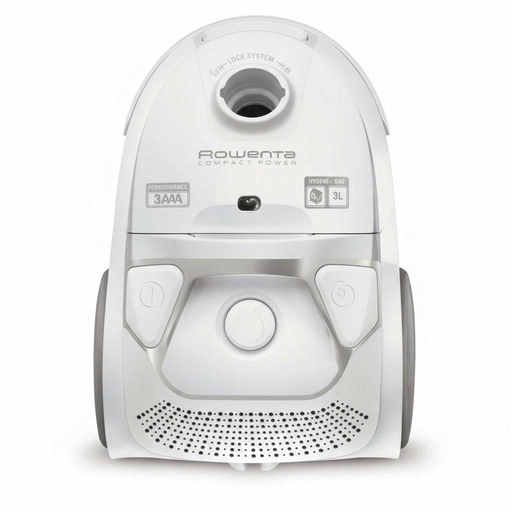
The bagged Compact Power RO3953 is worth considering if a compact design and a separate crevice tool suit your space.
The PowerPro Compact FC9332/09 is a bagless alternative to consider if you don’t want to use dust bags.
These are bagged cylinder vacuum cleaners for anyone looking to combine a crevice tool with bagged dust collection.
 No image available
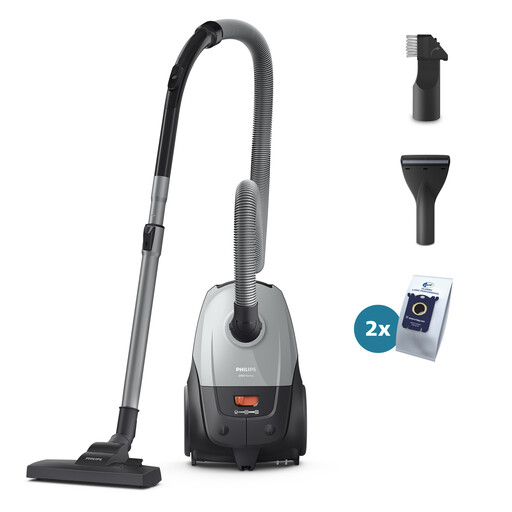
The product information lists a crevice tool; check that its shape suits the gap behind your chairs.
800 W, HEPA filter, stated reach of 9 m, upholstery nozzle and S-Bags included.
As a bagged vacuum cleaner, this model needs compatible replacement bags.
 No image available
The product information lists a crevice tool; compare its shape with the narrow space behind your chairs.
3 l dust bag, telescopic metal tube and automatic cord rewind.
As a bagged vacuum cleaner, this model needs compatible replacement bags.
 No image available
The product information lists a flexible XL crevice tool for tight spaces; check that it fits the gap and can work around obstacles behind your chairs.
3,5 l dust bag, stated operating radius of 10 m and a Parquet Twister brush.
As a bagged vacuum cleaner, this model needs compatible replacement bags.
Start with a crevice tool if the floor head won’t fit into the gap. A flexible attachment can help you work around obstacles. Check which accessories come with the model and whether their shape suits the space.
Agree who will replace the dust bag or empty the container, and who will check the filters, attachment and hose. Follow the manual for your specific model, as not all filters are maintained in the same way.
Yes. Remember to maintain the filters and attachment too. A full container or blocked filter can reduce performance, so check your model’s manual for the maintenance steps.
When you buy online from a business, you generally have a 14-day cooling-off period. You’re also entitled to a product that works as it should; the Netherlands doesn’t have a fixed statutory warranty period. If a product is faulty, the retailer is your point of contact. The Dutch Government explains these rules for purchases in the Netherlands.