
Quick clean-up by the door
You want to vacuum up dry sand and grit during a short break, then put the vacuum away straight afterwards. Focus on the floorhead, how easy the vacuum is to get out and whether it has a park position.


For ordinary dry sand and grit, a cylinder vacuum cleaner with a suitable floorhead and a handy park position is a sensible choice for quick clean-ups. Choose a model with a dust bag if you want less contact with dust when disposing of it. A bagless model means you don’t need to buy dust bags, but you will need to empty the dust container. If you’re dealing with coarse debris or potentially hazardous work dust, assess that job separately: an ordinary vacuum cleaner or just any wet and dry vacuum isn’t automatically suitable.
You want to vacuum up dry sand and grit during a short break, then put the vacuum away straight afterwards. Focus on the floorhead, how easy the vacuum is to get out and whether it has a park position.
You want to minimise contact with dust when disposing of the vacuumed-up dirt. Compare a sealed dust bag with emptying a dust container, and treat potentially hazardous work dust as a separate use case.
You start by the doorway, but also cover more floor during the same cleaning session. Consider reach, capacity and weight, and only compare weights when they have been measured in the same way.
Start with your floor and the type of dirt. Then check whether the reach, storage and dust disposal method suit your quick clean-ups.
| What to consider | What should you check? | Who should pay particular attention? |
|---|---|---|
| Grit on your floor | Check whether the supplied attachments are suitable for your hard floor, crevices and any doormat. The Consumentenbond assesses crumbs on hard floors, dirt in crevices and dirt along skirting boards as separate test categories. | If I mainly want to pick up dry grit from my own floor, I want to know whether the floorhead is suitable for the floor and the edge of the doorway. Around 36% of consumers say picking up grit from their own floor is their top priority. |
| Quick to get out and put away | Measure the distance to the socket and check the cable length, park position and storage space. Only compare weights measured on the same basis. | For quick clean-ups between jobs, I want to be able to get the vacuum out quickly and put it away easily afterwards. Around 29% of consumers say quick clean-ups between jobs are their top priority. |
| Dust disposal | Compare throwing away a sealed bag with emptying a dust container. According to the Consumentenbond, you come into less contact with dust when throwing away a dust bag than when emptying a dust container. | If I want to limit contact with dust when emptying the vacuum, I look for a system that doesn’t require me to tip the collected dirt out of a dust container. Around 21% of consumers say reducing dust contact during disposal is their top priority. |
| Dust bags and maintenance | Before buying, check the correct type of dust bag and filter, and follow the chosen model’s manual for maintenance. | I’d rather not buy replacement dust bags, and I’m happy to maintain the dust container and filters. Around 14% of consumers say avoiding dust bags is their top priority. |
A power rating alone doesn’t tell you how well a vacuum cleaner will pick up dry grit from your floor. The Consumentenbond treats hard floors, crevices and skirting boards as separate test categories.
Choose an attachment that suits your floor and, where available, compare results for the relevant floor and type of dirt. Read manufacturers’ claims in the context of the stated test conditions.
A bagged vacuum cleaner also needs compatible replacement bags. Some models also have filters that need maintaining or replacing.
Before buying, check the exact type of bag and filter required, and make sure they’re available for your chosen model.
You’ll need to replace compatible dust bags and, depending on the model, filters.
A machine that can pick up coarse dirt hasn’t necessarily been proven suitable for silica dust or other hazardous work dust. The Arboportaal explains that employers must assess potential exposure to silica dust separately for employees.
If you’re dealing with work dust, first establish where it comes from and which measures apply to the task. Don’t choose a vacuum based only on a wet and dry label or the size of its container.
The Serie 2 BGBS2BA2 is a bagged cylinder vacuum cleaner with a reach and supplied attachments that may suit quick clean-ups by the door.
The Guard S1 Flex is a bagged cylinder vacuum cleaner with a system for parking the suction tube temporarily.
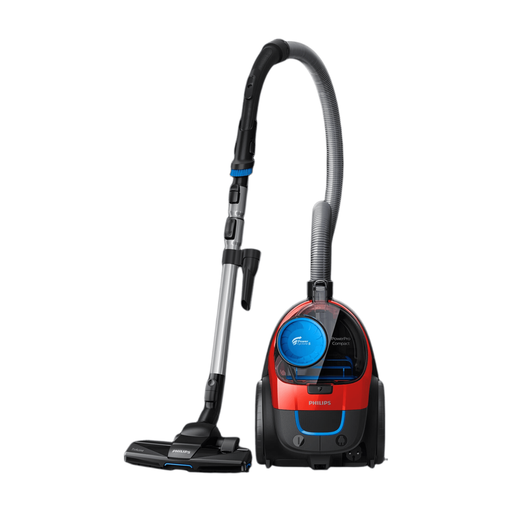
The PowerPro Compact FC9332/09 is a bagless cylinder vacuum cleaner for anyone who doesn’t want to use dust bags.
The 5000 AB51C1DB is a bagged cylinder vacuum cleaner with a crevice nozzle and several parking positions.
The professional NVR160-11 may suit a cleaning session that covers more than just the doorway.
A wet and dry vacuum is a separate option for heavier-duty cleaning jobs that an ordinary household vacuum cleaner isn’t designed for.
This Joybuy selection is for anyone looking for a bagless vacuum cleaner for floor care and dry grit by the door.
 No image available
The bagless design suits anyone who wants to avoid replacement dust bags, but bear in mind that you’ll need to empty the dust container. According to the Consumentenbond, throwing away a sealed dust bag involves less contact with dust than emptying a dust container.
Check which floor and crevice attachments come with the vacuum cleaner. The Consumentenbond assesses crumbs on hard floors, dust in crevices and dust along skirting boards separately; a single power specification isn’t a substitute for comparing these results.
Follow the manual for your exact model. AEG says that filter locations and maintenance can vary between series, so check the model-specific instructions for cleaning or replacing the filters.
For online consumer purchases, ACM ConsuWijzer says you generally have a statutory cooling-off period of up to 14 days after delivery. Separately, statutory consumer guarantees apply if a product doesn’t perform as you could reasonably expect under normal use. Contact the seller about this. Also check in advance which type of bags and filters the model takes.
No. According to the European Commission, there is no current energy labelling legislation for vacuum cleaners. The former regulation (EU) 665/2013 no longer applies, so don’t treat an old label as a current, mandatory basis for comparison.
Don’t assume so. The Arboportaal explains the risks of silica dust and employers’ obligation to assess potential employee exposure in the risk assessment and evaluation (RI&E). The appropriate control measures depend on the work being carried out, so you’ll first need to establish where the grit comes from.