
Buyer with a small storage cupboard
You want to clear up dry household dust and crumbs after unpacking, and store the appliance with its hose and tube in a small cupboard. Measure the space available and compare it with the complete set-up.


For everyday dry household dust and crumbs after unpacking, a compact cylinder vacuum cleaner with or without a bag could be a good fit, as long as the complete set-up fits in your cupboard. The Dutch Consumers’ Association says a dust bag limits contact with dust when you dispose of it; a dust container means you don’t need to buy bags, but you will need to empty and maintain it. For fine construction dust, coarse rubble and liquids, check which type of appliance is suitable rather than considering storage space alone.
You want to clear up dry household dust and crumbs after unpacking, and store the appliance with its hose and tube in a small cupboard. Measure the space available and compare it with the complete set-up.
You want to touch as little dust as possible when disposing of it. The Dutch Consumers’ Association explains that changing a dust bag involves less contact with dust than emptying a dust container.
You want to avoid having to buy dust bags regularly and are happy to empty and maintain a dust container.
The considerations below apply to everyday dry household mess after unpacking. For fine construction dust, coarse rubble or liquids, the Dutch Consumers’ Association recommends choosing an appliance type suited to that kind of debris.
| What to consider | What should you check? | Who is this most relevant to? |
|---|---|---|
| Storing the complete appliance | Compare your cupboard’s dimensions with the vacuum cleaner’s dimensions and storage position, including the hose, tube and nozzles. | If I have limited cupboard space, I want to be able to store the whole appliance, including the hose and tube. Around 36% of consumers say storage is their main concern when buying. |
| Suitable for the debris | Work out what is on the floor and check the manual for the specific appliance. | If I’m unsure what kind of debris I’m dealing with after unpacking, I want to know first which type of appliance can handle it. Around 29% of consumers give suitability for the debris the highest priority. |
| Contact with dust when emptying | Compare a dust bag with a dust container and check which compatible dust bags fit the model. | I want to touch as little dust as possible when disposing of it, so I look at how the debris is collected. Around 21% of consumers prioritise limiting contact with dust. |
| Dust bags and maintenance | Check the dust capacity, how to empty the container and what filter maintenance is required. | If I’d rather not buy dust bags, I’m happy to empty the container myself and maintain the filter. Around 14% of consumers give avoiding dust bags the highest priority. |
Fine construction dust, coarse rubble and liquids are not the same as ordinary household dust and crumbs. For jobs like these, the Dutch Consumers’ Association recommends a wet and dry vacuum cleaner or a multi-purpose vacuum cleaner as a more suitable appliance type.
Work out what kind of debris you need to clean up before choosing a household vacuum cleaner, and check the appliance manual.
You may need a different, suitable appliance for the job.
The hose, tube and nozzles also need somewhere to go, so the dimensions of the body alone won’t tell you whether everything will fit in the cupboard.
Measure the space available and check how the exact model can be stored with its accessories.
A dust container needs emptying, and filters need maintenance. According to the Dutch Consumers’ Association, emptying a dust container can involve more contact with dust than changing a dust bag.
Weigh up avoiding the cost of bags against emptying the container and maintaining your chosen model.
The Serie 2 range lets you compare a model with a bag and one without.
The PowerPro Compact FC9332/09 is a bagless cylinder vacuum cleaner.
The Compact Power XXL RO4B11EA is a bagless cylinder vacuum cleaner with a relatively large dust container, according to Rowenta.
AEG describes the 5000 series as a range of bagged cylinder vacuum cleaners with on-board accessories.
The Classic C1 is an example of a bagged cylinder vacuum cleaner with a telescopic tube and crevice nozzle.
These Joybuy products are bagged cylinder vacuum cleaners for dry household debris. Compare their full dimensions and included parts with your available storage space.
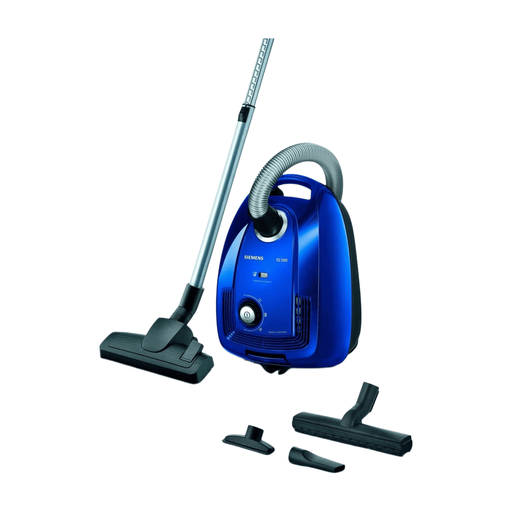 No image available
Worth comparing if you want to clean up dry household dust and crumbs with a bagged cylinder vacuum cleaner. Check that the complete set-up will fit in your cupboard.
 No image available
Worth comparing if you’re looking for a bagged cylinder vacuum cleaner for dry household debris. The product information warns against fine dust such as plaster or cement dust; check the manual for its intended use.
The product name specifies a 3.5 l dust bag, a 10 m operating radius and a Parquet Twister Brush.
No, it depends on the type of debris. For fine construction dust, coarse rubble and liquids, the Dutch Consumers’ Association recommends a wet and dry vacuum cleaner or a multi-purpose vacuum cleaner rather than a standard vacuum cleaner. Check the instructions for the specific appliance.
According to the Dutch Consumers’ Association, disposing of a dust bag involves less contact with dust than emptying a dust container. A bagless model means you don’t need to buy dust bags, but you will need to empty the container and maintain the filter.
Empty the dust container or replace the bag according to the model’s instructions. If the sound changes or performance drops, check the container or bag and see whether the floorhead, tube, hose or filters are blocked.
No. The European Commission points out that higher power consumption doesn’t always mean better cleaning performance. The former EU regulation on energy labelling for vacuum cleaners has been annulled, so assess how suitable the appliance is for your needs and look for reliable information about the exact model.
For a standard online purchase, you generally have a 14-day right to withdraw from the contract after delivery, as explained by the European Union’s Your Europe website; check the applicable terms and any return costs. If a product develops a fault sooner than expected under normal use, you can make a claim under your statutory guarantee against the seller. ACM ConsuWijzer explains that there is no fixed limit of just two years for this in the Netherlands.