
Anyone wanting to remove lint from narrow stair corners
Look for a small crevice tool for corners and edges. The Consumentenbond describes this type of tool for narrow spaces. Check that it’s included with the exact model you’re considering.


To remove lint from stair corners, start by choosing a cylinder vacuum cleaner with a suitable crevice tool. Then check whether its cord, reach and weight will work well on your stairs. A bagged model is a good choice if you want to minimise contact with dust when emptying it. A bagless model means you won’t need to buy vacuum bags, but you will need to empty the dust container.
Look for a small crevice tool for corners and edges. The Consumentenbond describes this type of tool for narrow spaces. Check that it’s included with the exact model you’re considering.
If you need to move or lift the vacuum cleaner, its reach and weight matter as well as the tool. For example, Bosch lists separate weights for the vacuum cleaner alone and its net weight for model BGB41HYG1H.
How you dispose of dust may also influence your choice: the Consumentenbond describes the difference between replacing a vacuum bag and emptying a dust container.
Choose this option if: you want to minimise contact with dust when disposing of it. The Consumentenbond explains the difference between a vacuum bag and a dust container.
Bear in mind: vacuum bags need replacing, which means ongoing costs.
Choose this option if: you don’t want to buy vacuum bags and don’t mind emptying a dust container.
Bear in mind: according to the Consumentenbond, it’s harder to avoid contact with dust when emptying the container.
| What to consider | What to check | Who is this important for? |
|---|---|---|
| Corners and stair edges | Check that the crevice tool is included with the exact model; a floor brush is a different attachment. The Consumentenbond recommends a crevice tool for narrow spaces. | If you mainly want to reach lint along edges and in narrow corners, the right small tool will help; around 36% of consumers prioritise reaching into corners. |
| Reach and handling | Compare the reach with the location of your plug socket, and check what the stated weight includes. For BGB41HYG1H, Bosch lists 4,5 kg for the vacuum cleaner alone and a net weight of 5,9 kg. | If you need to move or lift the vacuum cleaner around the stairs, consider both its reach and the weight you’ll have to carry; around 29% of consumers are most concerned about ease of handling. |
| Emptying the dust | Consider whether you’d rather replace a vacuum bag or empty a dust container. According to the Consumentenbond, the amount of contact with dust differs between these collection methods. | If you want to minimise contact with dust when disposing of it, factor in the collection method; around 21% of consumers prioritise this. |
| Ongoing costs and maintenance | Check which type of vacuum bag or filter the model uses, and follow the manufacturer’s maintenance instructions. The Consumentenbond recommends maintaining filters to prevent blockages. | If you’re mainly concerned about bags and maintenance over time, compare the supplies needed for the exact model; around 14% of consumers consider this their main priority. |
Wattage on its own doesn’t tell you whether the tool will reach into a stair corner. Accessibility and the attachments included are separate things to consider.
Check the accessories list for the exact model and see whether it includes a crevice tool.
With a bagless vacuum cleaner, you empty a dust container. The Consumentenbond explains that it’s harder to avoid contact with dust than when replacing a vacuum bag.
Choose between a vacuum bag and a dust container based on whether you’d rather minimise contact with dust or avoid buying vacuum bags.
For the Bosch BGB41HYG1H, Bosch lists 4,5 kg for the vacuum cleaner alone, as well as a net weight of 5,9 kg. These figures refer to different things.
Compare like-for-like weight figures and consider whether you’ll need to lift the cylinder vacuum cleaner while cleaning.
The Serie 4 BGB41HYG1H is an example of a bagged cylinder vacuum cleaner.
The PowerPro Compact FC9333/09 is an example of a compact bagless cylinder vacuum cleaner.
The Compact in Marine Blue is an example of a bagged cylinder vacuum cleaner.
The Swift Power Cyclonic RO2913 is a bagless model that Rowenta describes as compact.
The CLEAN 6000 ÖKO AB61C2OKO is an example of a bagged cylinder vacuum cleaner.
This selection includes bagless and bagged models for household use. Check whether the crevice tool you need is included with each model.
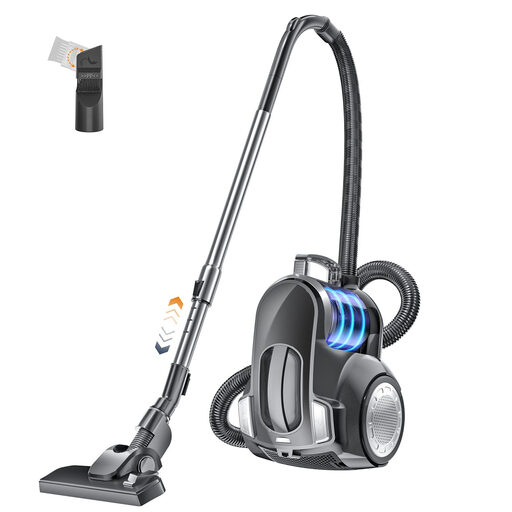 Image unavailable
A bagless design suits anyone who doesn’t want to buy vacuum bags; for stair corners, check that the model comes with a suitable crevice tool.
1200 W; 2.5 l dust container; 5.5 m cable; listed for hard floors and carpets.
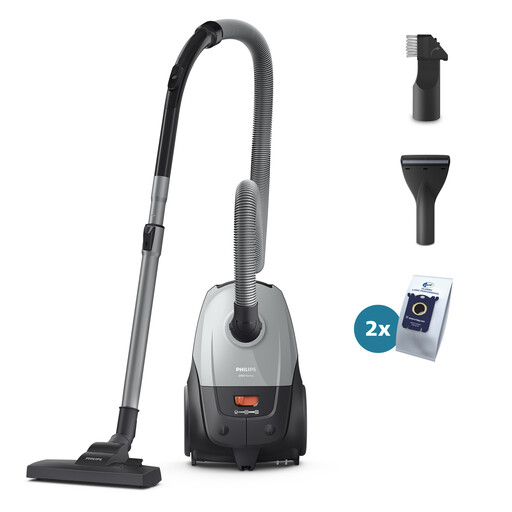 Image unavailable
The included 2-in-1 crevice tool makes this model worth considering for narrow spaces; check that the accessories are suitable for your stairs.
800 W; 9 m operating radius; product weight 3,74 kg; HEPA filtration; integrated crevice tool and upholstery tool; S-bags included.
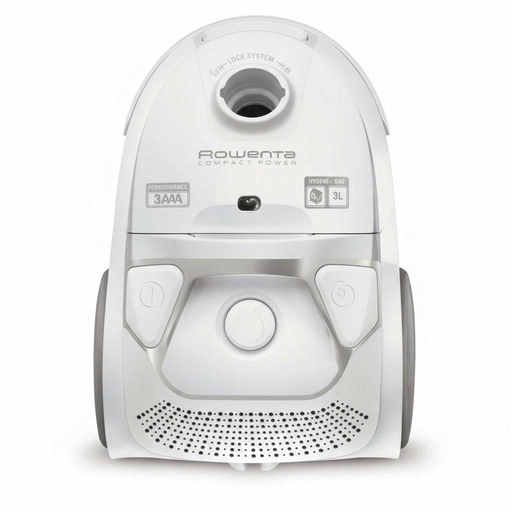 Image unavailable
According to the product information, this model has a vacuum bag and a crevice tool. Check that the included accessories are suitable for the narrow corners on your stairs.
750 W; 3 l vacuum bag; 8,8 m operating radius; product weight 3,85 kg; telescopic metal tube.
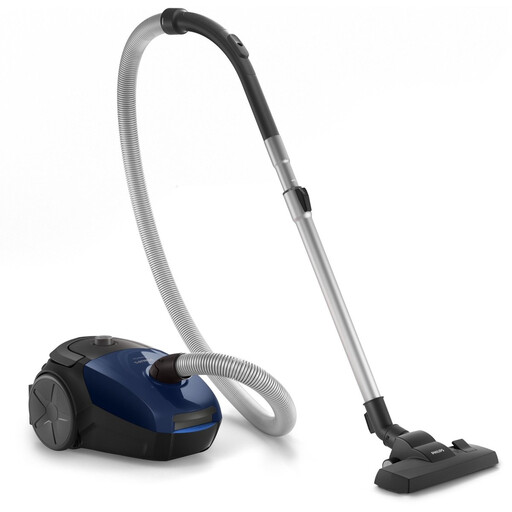 Image unavailable
A vacuum bag suits anyone who prefers this way of disposing of dust; for lint in stair corners, check that the right small nozzle is included.
750 W; 3 l capacity.
 Image unavailable
The included crevice tools make this model worth considering for narrow stair corners; check that the model and attachments suit your needs.
890 W; 3.5 l vacuum bag; 10 m operating radius; product weight 5,70 kg; four suction power settings; crevice tool and flexible XL crevice tool.
Look for a crevice tool for narrow spaces and check that it’s included with your exact model. The Consumentenbond recommends this type of tool for crevices and other narrow spaces; a different tool may be better for the flat steps.
Check whether the bag or container is full, inspect the filters and check the tool, hose and tube for blockages. Follow your model’s instructions for cleaning or replacing parts, and let a washed filter dry completely before putting it back.
With a bagged model, you’ll need to allow for replacement bags. According to the Dutch government, there is no fixed statutory warranty period in the Netherlands; the expected lifespan varies by product. When you buy, also check the terms of any manufacturer’s warranty.