
Cleaning under stools
You want to clean between the legs and reach beneath the seat with the nozzle. So look not only at the vacuum itself, but also at the nozzle's shape and how easily it can move around.


When choosing a cylinder vacuum cleaner for crumbs under stools, first look for a nozzle that fits between the legs and can reach beneath the seat; then check whether the vacuum, hose, tube and attachments will fit in your cupboard. A bagless model means you won't need to buy dust bags, but you will need to empty the dust container. With a bagged model, you can throw the contents away with the bag, but you'll need to replace it.
You want to clean between the legs and reach beneath the seat with the nozzle. So look not only at the vacuum itself, but also at the nozzle's shape and how easily it can move around.
You want to store the cylinder vacuum cleaner with its hose, tube and nozzles without having to clear a lot of cupboard space. Make room for all the separate parts, not just the vacuum itself.
You care about how you dispose of the collected dirt. The choice between a dust bag and a dust container matters here; the name of a filter alone doesn't tell you how much dust the complete vacuum releases.
Suitable if: you don't want to buy dust bags and can empty the dust container regularly.
Things to consider: you're more likely to come into contact with the collected dirt when emptying it; the container and filters need maintenance.
Suitable if: you want to dispose of the collected dirt with the bag or minimise contact with dust.
Things to consider: you'll need to buy compatible replacement bags. Also check that the nozzle and complete set-up will work with your stools and fit in your cupboard.
| What to consider | What to look for | Who is this important for? |
|---|---|---|
| Reach under stools | Measure the clearance and space between the legs; check whether the tube can lie flat and whether a suitable crevice nozzle is included. | If I want to reach crumbs under and between my stools, the nozzle needs to fit and stay close to the floor. Around 36% of consumers say reach under stools is their top buying priority. |
| Storage in a small cupboard | Measure the cupboard opening and the available height, width and depth. Allow for the hose, tube, cord and nozzles, not just the vacuum itself. | When my cupboard has limited space, I want to be able to store the complete vacuum and all its parts. Around 29% of consumers say ease of storage is their top priority. |
| Contact with dust | Compare a bagged model with one that has a dust container, and check how you empty it and which filters need maintaining. | If I want to minimise contact with collected dust, how I empty the vacuum is an important factor. Around 21% of consumers say low-dust emptying is their main buying priority. |
| Maintenance and running costs | Check which bags or filters are compatible with the exact model and follow the maintenance instructions. | When I mainly want to know what ongoing maintenance involves, I compare replacing bags with emptying a container and maintaining filters. Around 14% of consumers put maintenance and running costs ahead of their other buying needs. |
The stated dimensions of the vacuum may not include the space needed to store the hose, tube and separate nozzles.
Measure the cupboard and its opening, then check how all the parts can be stored together.
According to the Consumers' Association, a turbo brush offers no benefit for this task on hard floors.
First check whether a suitable floor nozzle and a crevice nozzle can reach the floor and the narrow spaces between the legs.
A dust container needs emptying and filters need to be maintained according to the instructions. Bagged models need replacement bags.
Check which bags or filters are compatible with the exact model and what the maintenance instructions recommend.
The Serie 2 BGC05AAA1 is a bagless option to compare if storage space is limited.
The PowerPro Compact FC9330/09 is a bagless option with a TriActive nozzle.
The Compact Power XXL RO4B50 is a bagless option to compare for dust container capacity and included attachments.
The 6000 AB61C1OKO is a bagged vacuum cleaner with a crevice nozzle.
The Classic C1 Flex is an example of a bagged cylinder vacuum cleaner with a flexible crevice tool.
These models include a bagged cylinder vacuum cleaner and a bagless option. Compare the nozzle, how you empty it and the space needed for the complete vacuum.
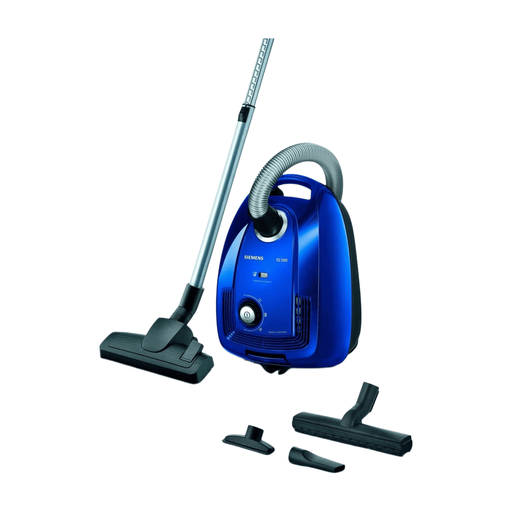 No image available
An option to compare if you want to use a crevice nozzle and dispose of the collected dirt in a dust bag.
The product information lists a crevice nozzle, telescopic tube and parking aid. The washable dust bag has a 4 l capacity; let it dry completely after washing before putting it back.
The stated dimensions of the vacuum are 26,5 × 41 × 29,5 cm. Also measure the space needed for the hose and separate attachments.
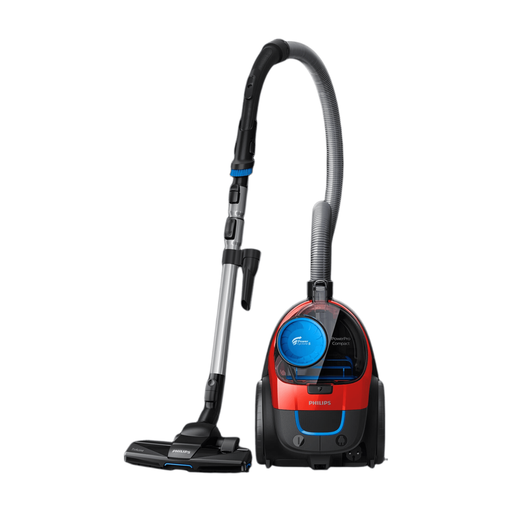 No image available
A bagless option to compare if you want to clean up dry crumbs from hard floors and empty a dust container instead of replacing a dust bag.
Philips lists a TriActive nozzle for hard and soft floors. The product information gives a 1.5 l dust container, a 6 m cord and a power rating of 900 W.
The stated dimensions of the vacuum are 41 × 28,1 × 24,7 cm. Check that the complete set-up, including the hose and attachments, will fit in your cupboard.
A crevice tool is designed for narrow spaces between the legs. Use a suitable floor nozzle on the floor and check that it stays in contact with the floor beneath the stool. According to the Consumers' Association, a turbo brush offers no benefit on hard floors.
Measure the cupboard opening and the available height, width and depth, then compare these with the vacuum's dimensions. Remember to allow for the hose, tube and separate nozzles too: the vacuum's dimensions alone don't tell you how much space the complete set-up will need.
Choose based on how you want to dispose of the collected dirt and which type of maintenance suits you. With a bagged model, you throw away the bag and its contents, but you'll need to buy replacement bags; with a bagless model, you empty the dust container and maintain the filters.
No. According to the European Commission, a higher electrical input doesn't always mean better cleaning performance. For crumbs under stools, also consider the nozzle and whether it stays in contact with the floor beneath the stool.
Empty the dust container or replace the bag in good time, check the nozzle and hose for blockages, and clean or replace filters according to the model's instructions. Let a washed filter dry completely before putting it back.