
Unpacking with a whole room to clean
You simply want to pick up dust and small crumbs from the floor before rearranging the room. Your floor type and a suitable nozzle are important first considerations, as the Consumentenbond also points out.


Clear away larger pieces of packaging by hand first, then use a standard cylinder vacuum cleaner for the household dust and small dry particles left behind. Choose a nozzle to suit your floor and the areas you want to reach. A dust bag limits contact with collected dust when you empty it, while a bagless model needs no replacement bags but does need to be emptied and maintained. Don’t use a standard cylinder vacuum cleaner for construction dust, rubble or liquids.
You simply want to pick up dust and small crumbs from the floor before rearranging the room. Your floor type and a suitable nozzle are important first considerations, as the Consumentenbond also points out.
You want to minimise contact with collected dust when disposing of it. The Consumentenbond describes the choice between a dust bag and a dust container as an important consideration.
You want to clean along skirting boards, around furniture and behind any remaining boxes. Check whether a crevice tool is included and whether the stated reach is suitable for the room.
Start with your floor type and the nozzle to match. Then decide whether you would rather limit contact with dust when emptying the vacuum or avoid buying replacement bags.
| What to consider | What to look for | Who is this important for? |
|---|---|---|
| Floor and floor nozzle | Check whether the nozzle is suitable for your hard floor or carpet and which floor brush is included. | If I want to clean the floor after unpacking, I look for a nozzle that suits my flooring. Around 40% of consumers in this situation put floor cleaning first. |
| Collecting and disposing of dust | Choose between a dust bag and a dust container. For a bagged model, check which type of replacement bag fits; for a bagless model, find out how to maintain the container and filters. | If you want to minimise contact with collected dust when emptying the vacuum, focus on a bagged model. Around 30% of consumers put low-dust emptying first. |
| Corners and reach | Check whether a crevice tool is included and compare the stated operating radius with the distances in the room. | If there’s dirt along skirting boards or behind furniture, I want to know whether the nozzle will fit and the cable will reach far enough. Around 20% of consumers put reach first. |
| Ongoing costs and maintenance | Check which dust bags or filters are compatible with the model and follow its maintenance instructions. | If you’d rather not keep buying dust bags, you could consider a bagless model and factor in emptying the container. Around 10% of consumers put ongoing costs first. |
Standard cylinder vacuum cleaners are designed for household dust and small bits of dirt, not construction dust, rubble or bulky waste.
Remove larger pieces of packaging by hand and separate ordinary household dust from construction dust and bulky waste before you start.
A dust bag keeps dirt contained and limits contact with dust when you dispose of it, but it needs replacing. A bagless dust container means no replacement bags, but you will need to empty it.
Choose based on what matters more to you: less contact with collected dust or not having to buy replacement bags.
A parquet brush or crevice tool may vary between model versions. Without the right nozzle, the vacuum cleaner may not be ready to use on your floor or in the narrow spaces you want to clean.
Check the contents of the box for the full model number before you buy.
Bosch offers bagged and bagless cylinder vacuum cleaners, with accessories and features that vary by model.
The Guard S1 Parquet Flex is a bagged cylinder vacuum cleaner with a parquet brush and flexible crevice tool.
AEG has a range of bagged cylinder vacuum cleaners, including compact 5000 and larger 8000 models.
Philips offers the bagless FC9332/09, among other models, as well as the bagged cylinder vacuum cleaner XD3110/09.
This selection focuses on bagged cylinder vacuum cleaners for ordinary dry household dust and small bits of dirt, with hard floors and narrow spaces in mind.
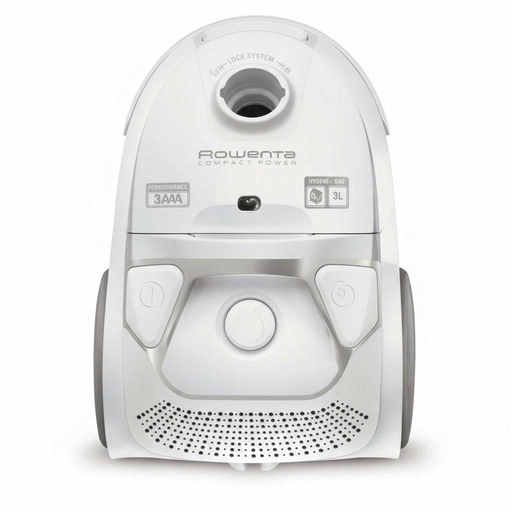 No image available
A good fit if you want to clean up ordinary dirt from hard floors and need a crevice tool for narrow spaces.
3 l dust bag; stated operating radius of 8,8 m; two-position floor nozzle; crevice tool and telescopic tube.
Not intended for damp floors, water, aggressive chemical liquids, plasterboard dust or fireplace ash.
 No image available
A good fit if you’re looking for a parquet nozzle for hard floors and a flexible tool for narrow spaces.
3,5 l dust bag; stated operating radius of 10 m; Parquet Twister brush and flexible XL crevice nozzle.
Not intended for liquids, hot ash or fine dust such as plaster or cement dust.
No. Use a standard cylinder vacuum cleaner for household dust and small bits of dirt, not bulky waste, rubble or construction dust. Remove larger pieces of packaging first. For coarser dirt, the Consumentenbond recommends a suitable multi-purpose vacuum cleaner as an alternative.
Check that the included floor brush suits your flooring, and use a crevice tool for narrow spaces along skirting boards or furniture. Check the contents of the box for the exact model before you buy.
First check whether the bag or container is full, and whether the nozzle, hose or filters are blocked. Clean or replace parts according to the manual. If you wash a filter, make sure it is completely dry before using the vacuum cleaner again.
When you buy from a business, you’re entitled to a product that is fit for purpose. According to the Dutch government, there is no fixed statutory warranty period in the Netherlands, and the retailer is your point of contact if something goes wrong. For online purchases from a business, a 14-day cooling-off period applies in many cases. Check the relevant terms and exceptions.