
Vandaag of morgen in huis

Kwaliteit gegarandeerd

Welkomstaanbiedingen ontgrendelen: GRATIS bezorging | Tot 80% korting | Gratis 30 dagen JoyPlus-proefperiode
Download de app
Cycling glasses protect your eyes from wind, dust, insects and bright sunlight while you’re road cycling, mountain biking or enjoying a leisurely ride. But a dark lens alone doesn’t tell you much about quality. A pair might look great in the product photo, yet during a long ride they could slip, fog up or fail to deliver enough contrast.
As a Joybuy Product Recommendation Officer, I focus on verifiable specifications: lens material, UV protection, fit, weight and intended use. Below, you’ll find out what to look for and which models suit different cycling scenarios.
A dark lens feels more comfortable in bright light, but it doesn’t automatically mean UV radiation is adequately blocked. Look for UV400 protection in the product information and check whether it’s listed as a specification or certification. According to the product descriptions of the models mentioned, the lenses offer UV400 protection; this is a manufacturer’s claim and not a general guarantee for every individual pair.
An aerodynamic frame or large lens might look appealing, but the fit determines whether the glasses remain usable. Pay attention to:
Cycling glasses with an anti-slip fit are especially relevant when you’re sweating, riding over bumps or tackling longer distances.
According to manufacturers’ product descriptions, polarised cycling glasses reduce annoying reflections from road surfaces, water and metal objects. That can be pleasant on sunny roads, but the lens can be relatively dark. The Revoray Y1 models, for example, are stated to have a visible light transmission of around 15.2%.
A photochromic cycling glass adjusts its tint according to the amount of UV light, according to the manufacturer. This is practical for changeable weather, wooded routes and alternating shade and sun. However, inside a car the lens may not darken as much because a windscreen blocks UV light.
UV400 refers to protection against UV radiation up to a wavelength of 400 nanometres. Check whether the product page explicitly mentions this. Also look at warnings and conformity information. Cycling glasses are not intended for direct viewing of the sun, a solar eclipse, welding arcs or activities such as grinding and machining.
Polycarbonate, often referred to as PC, is lightweight and is used in this product category for impact-resistant lenses. TAC lenses consist of multiple layers and are often combined with a polarising film. The terms impact-resistant and unbreakable do not mean the same thing. According to the manufacturers’ safety information, the lenses mentioned are not unbreakable and are not suitable as protection against heavy impact.
For mountain biking on unpaved trails, cycling glasses with impact-resistant lenses are a logical choice. Always check the product listing for a specific standard. The Revoray Y1 models, for example, state ANSI Z87.1 as a performance standard. This is a product specification from the seller; do not use the glasses for work where certified eye protection is mandatory.
Lightweight cycling glasses don’t automatically prevent pressure points, but a low weight does help with prolonged wear. In the available product information, weights range from approximately 25.5 grams to 33 grams.
A wider, curved lens can provide extra coverage at the sides. OutdoorMaster states that several models offer around 20% wider peripheral vision. Because this is a manufacturer’s claim, the actual experience depends on your face shape and adjustment. Ventilation openings can help limit condensation, but in cold, wet Dutch weather, fogging cannot be completely ruled out.
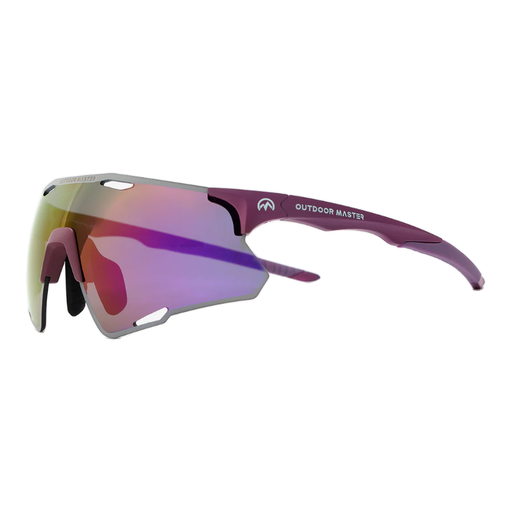
Why This Fits Their Persona: A practical choice for recreational cyclists who want less glare on sunny days and don’t want a heavy frame.
The product description mentions polarised polycarbonate lenses, UV400 and ventilation. Adjustable nose pads help correct a loose fit.
TR90 frame, weight of approximately 25.5 grams and includes a storage case with cleaning cloth.
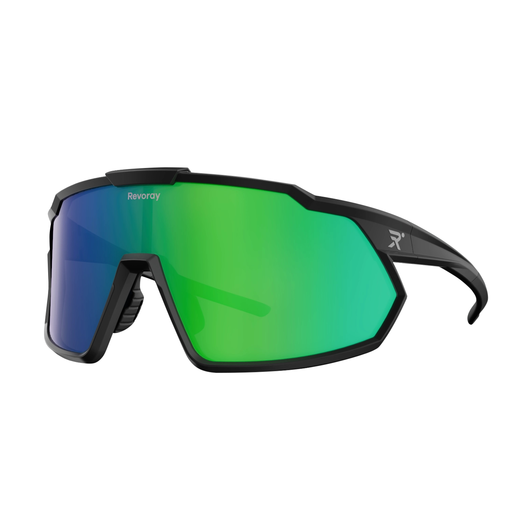
Why This Fits Their Persona: Suits road cyclists who mainly ride on open, sunny roads and prefer a fixed, dark lens.
The combination of adjustable silicone nose pads and anti-slip temples limits movement. The stated light transmission of around 15.2% makes the lens primarily suited to bright weather.
TAC polarised lens, UV400, approximately 33 grams and, according to the product information, tested to ANSI Z87.1.
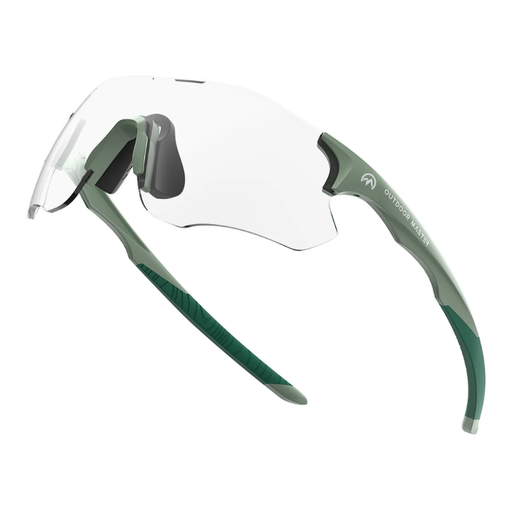
Why This Fits Their Persona: Suitable for rides through woodland, polder and open terrain, where light levels can change during a single trip.
According to the product description, the lens colour changes from category 0 to category 3 based on UV exposure. Check beforehand whether that suits your route and riding time.
TR90 frame, UV400, impact-resistant HD lens and anti-slip gel for the fit.
Browse a current selection of cycling glasses and mountain bike glasses with different lens and fit options.
Rinse off dirt with clean water first before wiping the lens. Use a soft microfibre cloth and avoid alcohol, harsh cleaners and paper tissues. Store the glasses in a hard or protective case, not loose in a cycling bag with keys or tools.
Replace the glasses when the lens is deeply scratched, cracked or visibly distorted. An exact lifespan cannot be determined in advance: frequency of use, cleaning and storage all make a difference. A coating is also no guarantee against scratches.
Not always. Polarisation can reduce reflections from wet tarmac, water and vehicles, but a dark lens is less suitable in twilight or heavily overcast weather. In changing light conditions, consider a photochromic cycling glass instead.
UV400 is an important specification to check when you cycle outdoors. Also look at the safety warnings and conformity information. Cycling glasses do not replace specialist eye protection for work or extreme light sources.
Make sure ventilation openings are not blocked, don’t wear the glasses too close to your face and keep the lens clean. In cold, damp weather, condensation can still occur. A ventilated lens helps limit this according to the product description, but does not prevent it in all conditions.
