
Vandaag of morgen in huis

Kwaliteit gegarandeerd

Welkomstaanbiedingen ontgrendelen: GRATIS bezorging | Tot 80% korting | Gratis 30 dagen JoyPlus-proefperiode
Download de app
A good cutting board is the foundation of any kitchen. Yet, it's a product that's often an afterthought. The result? A board that warps after a few months, is covered in deep scratches that are hard to clean, or dulls your favorite knife. Before you buy a new cutting board, it's wise to consider a few common pitfalls.
Many boards are promoted with claims like "antibacterial," but what does that mean in practice? Another disappointment is a beautiful wooden cutting board that splits or warps after the first wash. The size is also often underestimated, leaving you with a board that's too small for your daily prep work, or an awkwardly large one that won't fit in any of your kitchen cabinets.
This guide will help you see through the marketing hype and choose a board that truly fits your cooking style.
The choice of material has the biggest impact on the use, maintenance, and lifespan of your cutting board. Each material has its own pros and cons.
A wooden cutting board or bamboo cutting board is often a popular choice for its look and feel. Wood is relatively soft on your knives, helping them stay sharp longer. Certain types of wood, like bamboo, naturally have a dense structure.
A plastic cutting board is the pragmatic choice for many households. They are affordable, lightweight, and generally dishwasher-safe, which makes cleaning easy.
Besides the classics, you'll increasingly see boards made of stainless steel or composite materials. Stainless steel is extremely hygienic and durable but can dull your knives quickly. Materials like wheat straw are sometimes used as a more eco-friendly alternative to traditional plastic.
Beyond the material, a few practical features can make the difference between a convenient and an inconvenient cutting board.
To help you with your choice, we've highlighted a few cutting boards that suit different users.
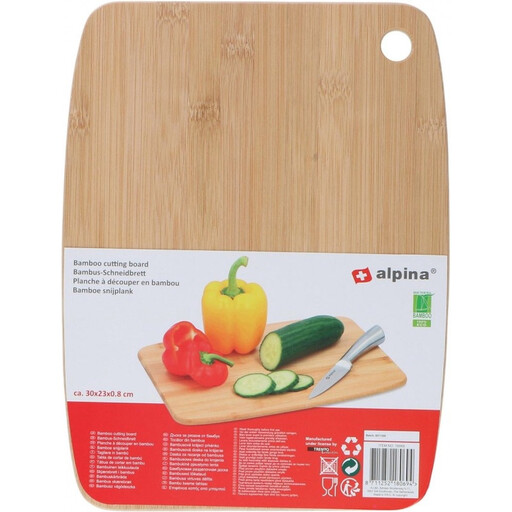
Why This Fits Their Persona: Ideal for students or starters who need a simple, functional board for daily tasks. The compact size is perfect for smaller kitchens and simple cutting jobs.
This board does what it promises without unnecessary features. It's a straightforward bamboo board that doesn't pretend to be indestructible or self-cleaning.
Made from bamboo, a hard and durable material. Its light weight and compact size make it easy to store.
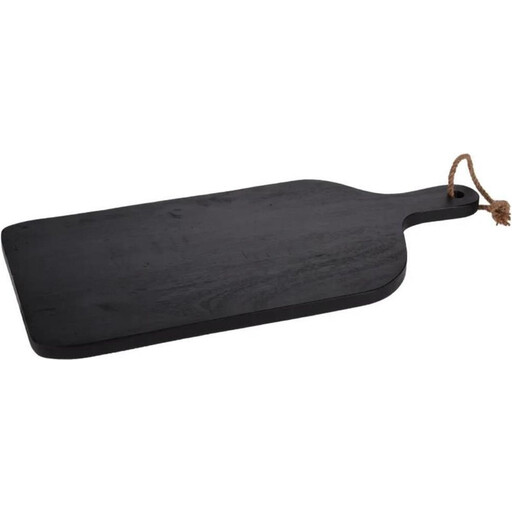
Why This Fits Their Persona: For those seeking a cutting board that doubles as an impressive charcuterie board. The bold, black color and large size make it a centerpiece on the table.
This board is clearly positioned as a serving board, focusing on aesthetics and size. You buy it for its dual function, not for a vague marketing claim.
Very large size (58 cm) for serving plenty of snacks. The black finish provides a robust and modern look.

Why This Fits Their Persona: Perfect for those who cook a lot and value a tidy workspace. Chopping vegetables and sliding them directly into the tray, or collecting waste, makes cooking much more efficient.
This board solves a real, practical problem: a messy countertop. Its value lies in its smart function, not in a vague promise about its material.
The slide-out stainless steel collection tray is the key feature. The tray itself is dishwasher-safe, which simplifies cleanup.
We've compiled a complete, up-to-date list of products that meet these selection criteria and local regulations.
To keep a wooden cutting board or bamboo cutting board in good condition, wash it by hand with mild soap and warm water. Never put it in the dishwasher or let it soak in water. Dry it immediately. Rub the board monthly with a special cutting board oil or mineral oil to prevent drying and cracking.
Replace a plastic cutting board when it has deep grooves and scratches that you can no longer clean properly. Bacteria can nestle in these. A wooden board needs replacing if it's cracked, warped and no longer lies flat, or if it has stains or odors that you can't get out.
For good hygiene, it is recommended to use separate cutting boards for raw meat/fish and for products you eat raw, such as fruits and vegetables. This prevents cross-contamination. A cutting board set with different colors or markings can help with this. If you do use a single board, wash it very thoroughly with hot water and soap after cutting raw meat and before you cut anything else on it.
