
Vandaag of morgen in huis

Kwaliteit gegarandeerd

Welkomstaanbiedingen ontgrendelen: GRATIS bezorging | Tot 80% korting | Gratis 30 dagen JoyPlus-proefperiode
Download de app
For those who spend hours typing, gaming, or programming every day, standard keyboards often fall short. You're looking for more control, a better typing experience, and a desk setup that's truly your own. The world of a custom mechanical keyboard offers that possibility, but the sheer number of options can be overwhelming.
As a Joybuy Product Recommendation Officer, my job is to help you navigate this landscape. In this guide, we'll highlight the specifications that truly matter and present a selection of models that stand out for their functionality and build quality.
Before we dive into the products, here are a few key features to consider. These will help you choose a model that aligns with your needs.
A hot-swappable keyboard is the foundation of true customisation. Unlike traditional soldered keyboards, this feature allows you to easily change the switches (the mechanisms under the keycaps) without a soldering iron. This enables you to try different types of switches—from smooth linears to satisfying tactiles or clicky variants—and replace them whenever you want. It's ideal for anyone who loves experimenting with typing feel and sound.
The case material and the way the internal components are mounted largely determine the sound and feel of a keyboard. An aluminium keyboard offers a heavier, more solid feel and a deeper sound profile than a plastic case. Also, pay attention to the mounting style. Terms like Leaf Spring Mount and Gasket Mount refer to assembly methods that provide a more flexible, softer typing experience by dampening vibrations.
Looking for a clean, clutter-free desk? A wireless mechanical keyboard with tri-mode connectivity (2.4GHz, Bluetooth, and wired via USB-C) offers the most freedom. For serious users, software support is crucial. Keyboards that are VIA programmable (or QMK-compatible) give you complete control to remap any key, create macros, and set up multiple function layers. This is especially useful for programmers and content creators looking to optimise their workflow.
Based on the criteria above, we have selected a few compelling options.
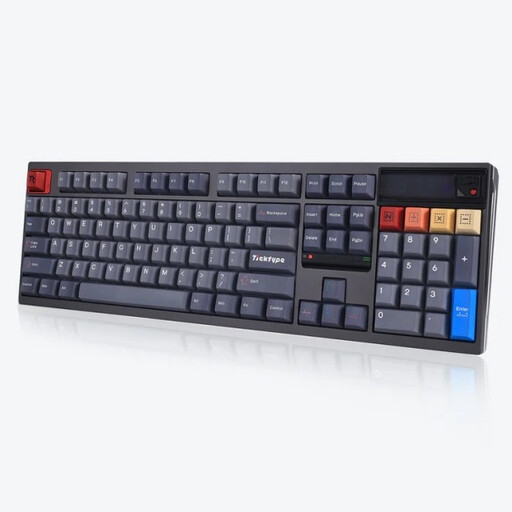
Why It Stands Out: The DP104 combines a traditional full-size layout (108 keys including a number pad) with modern custom features. Its full aluminium case and Leaf Spring Mount provide a premium feel and a muted, creamy sound. A unique addition is the customisable pixel screen, which can display GIFs, images, or system information.
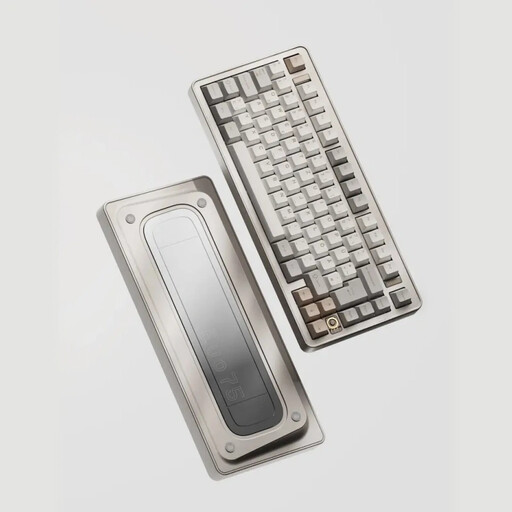
Why It Stands Out: The EVO75 is an epitome of what a modern custom mechanical keyboard can be. Its 75% layout is compact yet retains the function row and arrow keys. The anodised aluminium case, Leaf Spring Mount, and VIA programmable compatibility make this a powerful tool. The quick disassembly is a plus for those who love to tinker.
Important Note: Due to the high-capacity 8000mAh lithium battery, the manufacturer advises against leaving the keyboard in environments with extreme temperatures, such as a vehicle in direct sunlight. When swapping switches, ensure the keyboard is turned off and the USB cable is disconnected to prevent damage.
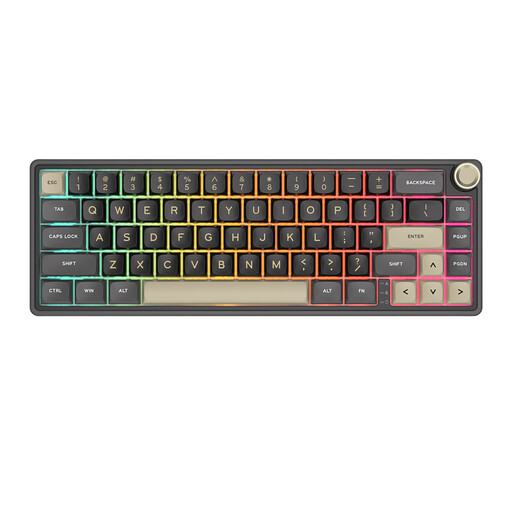
Why It Stands Out: The R65 from Royal Kludge is aimed at gamers and users with limited desk space. The 65% layout is very compact, but the addition of a convenient volume knob is a major plus. The Gasket Mount construction provides a soft and flexible typing feel, which is popular in the gaming keyboard community. Full programmability via QMK/VIA makes it a versatile choice in its class.
The world of mechanical keyboards is vast and diverse, with countless layouts, switches, and materials. If the models above aren't exactly what you had in mind, there are many more possibilities.
? Check out our full range of keyboards for more options.
1. What exactly is a hot-swappable keyboard? A hot-swappable keyboard has sockets on its printed circuit board (PCB) that allow you to push switches in and pull them out, similar to plugging a cord into an outlet. This means you don't need any soldering equipment to change switches, making it ideal for beginners and for people who enjoy experimenting with different typing feels.
2. Is an aluminium keyboard better than a plastic one? "Better" is subjective, but an aluminium case offers objective advantages. It's heavier, which provides more stability on your desk. It generally feels more robust and premium. Additionally, the material affects the sound profile; aluminium often results in a deeper and less hollow-sounding typing acoustic than plastic.
3. What is the advantage of a VIA or QMK programmable keyboard? VIA and QMK are open-source firmware that give you complete control over your keyboard's layout. With a user-friendly interface (especially with VIA), you can assign a different function to any key, set up complex macros (a series of actions with a single keypress), and create different layers. This is ideal for optimising your workflow, for instance, by setting up specific shortcuts for software like Photoshop or your code editor.
