
Home baker making a pastry base
You’re looking for a tart tin that fits and useful oven settings to help bake a crisp base without a soggy bottom. Rutger Bakt describes blind baking as a step for a tart base that needs to cook through properly.


Choose an oven that fits your tart tin and offers the settings your recipe calls for; top and bottom heat are useful settings to look out for when baking a pastry base. A freestanding oven may suit you if you don’t have a built-in space, while a built-in oven could be a better option if your kitchen is designed for one. If your custard filling is perishable, you’ll also need to plan how to keep it chilled during storage and transport.
You’re looking for a tart tin that fits and useful oven settings to help bake a crisp base without a soggy bottom. Rutger Bakt describes blind baking as a step for a tart base that needs to cook through properly.
You’re looking for a freestanding oven that fits on your worktop and has room for your tart tin. The Consumers’ Association recommends checking the internal dimensions; the stated capacity in litres doesn’t guarantee that your tin will fit.
You’ll need to keep a perishable filling chilled and transport it under chilled conditions. The Netherlands Nutrition Centre recommends using a cool bag to keep chilled food cold during a picnic.
Suitable if: you don’t have a built-in space and the oven and tart tin will fit in the available area.
Consider: you’ll need worktop space and clearance around the specific model.
Suitable if: your kitchen has a suitable built-in space and you want to match the oven dimensions to it.
Consider: check both the housing dimensions and the usable internal dimensions of the model you choose.
Suitable if: you want a microwave function as well as an oven.
Consider: check the bottom heat setting and shelf positions for each model; the Consumers’ Association says these are sometimes missing from combination microwave ovens.
| What to consider | What should you check? | Who is this important for? |
|---|---|---|
| Oven settings and pastry base | Check for top and bottom heat, a separate bottom heat setting if available, and a temperature control that matches your recipe. Follow the prescribed blind-baking steps if your recipe includes them. | When I’m baking a pastry base, I want to know which settings my recipe calls for and whether the filling goes into the oven too. Around 33% of consumers prioritise oven settings and the result for the base. |
| Space for the oven and tart tin | Measure your tin, including the rim, and compare it with the internal dimensions. For a built-in oven, check the housing dimensions too. The Consumers’ Association recommends checking the internal space rather than relying on the stated capacity in litres. | If the space in my kitchen or the size of my tart tin is the deciding factor, I’ll measure both before choosing a model. Around 27% of consumers prioritise having enough space in their kitchen and for their tin. |
| Keeping custard chilled on the way | Follow the storage advice for the filling you’re using and plan how to keep it chilled during transport. The Netherlands Nutrition Centre recommends taking chilled food in a cool bag and not leaving perishable food out of the fridge for more than two hours. | For a picnic, I want a filling that needs to stay chilled to remain cold during the journey. Around 20% of consumers prioritise safe, chilled transport. |
| Running costs and maintenance | Compare energy use on a like-for-like basis; Milieu Centraal suggests comparing consumption per use or per year. For small or portable ovens, check whether the energy label rules for domestic ovens apply. | If I’m also using the oven to cook other meals, I’ll factor running costs and maintenance into my choice. Around 20% of consumers prioritise running costs and maintenance. |
The usable internal space may be smaller than you expect from the stated capacity, so your tart tin might not fit.
Measure your tin and compare it with the oven’s internal dimensions. For a built-in model, check the housing dimensions too.
The Consumers’ Association says some combination microwave ovens don’t have bottom heat. This means a model may not offer all the settings your recipe calls for.
Check the heating settings on the exact model and compare them with your recipe instructions.
Once baking is done, the oven won’t keep a perishable filling chilled during transport.
Check the storage advice for the filling and, if needed, arrange chilled transport in a cool bag.
The manufacturer’s warranty terms and your statutory consumer rights in the Netherlands are not the same.
Keep your proof of purchase and contact the retailer if you think a product is faulty.
Freestanding ovens for those without a built-in space. The OV307B is one example, with a stated capacity of 30 litres.
Built-in ovens, including the HBA514BB3, with a stated capacity of 71 litres.
Built-in ovens, including the OM165ZT, with top and bottom heat and turbo fan cooking.
Mini ovens, with the TO 2067 as an example of a model where top and bottom heat can be set separately or together.
Explore the freestanding and built-in ovens below if you’re looking for a model that suits the space in your kitchen and the size of your tart tin.
 Image unavailable
A built-in model to compare if your kitchen has a suitable housing space.
71 l capacity; top and bottom heat and a separate bottom heat setting, according to Bosch. The product description also lists 3D fan cooking.
 Image unavailable
A freestanding model to consider if you’re looking for an oven that doesn’t need a built-in space.
The product description lists a 65 l capacity, six cooking functions, a temperature range of 50–250 °C and a 90-minute timer. The stated power is 2000 W.
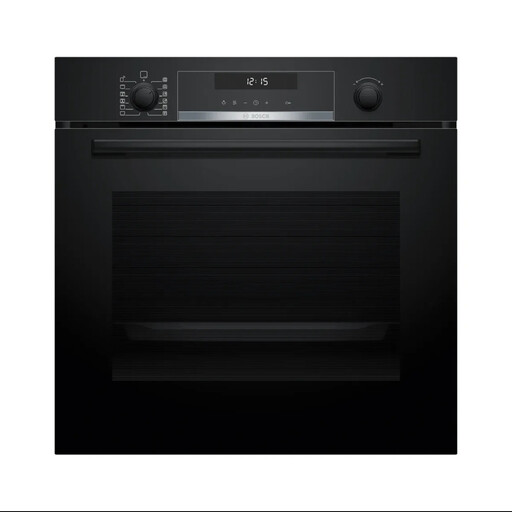 Image unavailable
A built-in model to compare if you want to consider several shelf levels as well as oven capacity.
The product description lists a 71 l capacity, top and bottom heat and an adjustable temperature range of 50–275 °C. 3D fan cooking is listed for up to three levels, along with an Air Fry function.
 Image unavailable
A compact freestanding option to assess against the space you have available and the size of your tart tin.
The product description lists a 35 l capacity, 1800 W, four shelf positions and an adjustable temperature of up to 250 °C. Top and bottom heat can be used separately or together; a baking tray and wire rack are included. According to the instructions, leave at least 10 cm of clearance on all sides and 30 cm above the oven, and don’t use it in an enclosed cupboard.
 Image unavailable
A freestanding model with a hob to consider if you’re looking for this combination.
The product description lists a 45 l capacity and six heating functions, including top heat, bottom heat and convection. The stated power is 3534 W.
No, it depends on the recipe: some recipes bake egg custard in the tart case, while crème pâtissière is made separately. Choose your oven settings and baking time according to the filling you’re making.
If your recipe calls for blind baking, bake the base first with baking beans, then follow the rest of the recipe. Check in advance that your tart tin will fit in the oven.
If the filling needs to be kept chilled, let the finished tart cool, store it in the fridge and transport it in a cool bag. The Netherlands Nutrition Centre recommends throwing away perishable food that has been out of the fridge for more than two hours.
Not necessarily: according to the European Commission, small and portable ovens are outside the scope of the energy label rules for domestic ovens. Before comparing energy labels, check whether those rules apply to the model you’re considering.
Yes. According to ACM ConsuWijzer, you have statutory rights as well as a manufacturer’s warranty. If a product is faulty despite being used normally, the retailer is responsible for providing an appropriate solution. The stated length of a manufacturer’s warranty doesn’t automatically determine how long your statutory rights apply.