
Baking a single custard tart
You’re looking for a suitable oven setting for a delicate filling and checking that your tart tin will fit. Bosch describes top and bottom heat as suitable for delicate bakes.


For a single delicate custard tart, an oven with adjustable top and bottom heat is worth considering alongside a fan setting; follow the setting specified in your recipe. If you’re baking several tarts, also look at the usable space, shelf positions and whether your tins will fit. If you’re selling them, safe storage and information about allergens present are important too: the NVWA states that food safety rules also apply to private individuals who sell food occasionally.
You’re looking for a suitable oven setting for a delicate filling and checking that your tart tin will fit. Bosch describes top and bottom heat as suitable for delicate bakes.
You’re planning bakes for sale and considering the oven’s usable space and shelf positions. Having several shelf positions doesn’t automatically mean every tart will bake evenly at the same time.
You’re looking for a freestanding appliance and weighing up the worktop space available against the room for your tart tin and the oven settings you need.
When choosing an oven for a custard tart for the school bake sale, the main considerations are the right oven setting, the capacity you need and a suitable place for the oven.
Choose this if: you don’t have a suitable built-in space and want to put a freestanding oven in a suitable spot.
Bear in mind: the stated capacity doesn’t tell you whether your tart tin will fit. Inventum states that the OV457B has a net capacity of 45 litres; Severin states that the TO 2058 does not have a ‘safe touch’ housing.
Choose this if: your kitchen has a suitable built-in space and you regularly bake several batches.
Bear in mind: according to their manufacturers, the Bosch HBA514BB3 and Siemens HB457G0B3F each have a capacity of 71 litres and combine 3D hot air with top and bottom heat. Check the niche dimensions, tin dimensions and the setting recommended for your recipe.
| Consideration | What to look for | Who this matters to |
|---|---|---|
| Setting for delicate bakes | Check that top and bottom heat can be selected, and follow the setting specified in your recipe. | When I bake a custard tart, I want to be able to select the recommended setting rather than having to rely on fan heat. Around 31% of consumers prioritise being able to control the baking result. |
| Space and shelf positions | Compare the internal dimensions, the height of your tin and the usable shelf positions. | When I plan several batches for sale, I want to know which tins will fit and how many batches the oven can handle. Around 25% of consumers focus mainly on baking capacity. |
| Finding a place for the oven and tin | Measure your tart tin and the space available for the oven; for a built-in model, also check the specified niche dimensions. | When I choose an oven, I want to be sure that both the tin and the appliance will fit in the intended spot. Around 25% of consumers prioritise where the oven will go and whether their tin will fit. |
| Controls and cleaning | Look at the controls and consider which accessories or parts suit the way you bake. | If you want to make baking and tidying up straightforward, check in advance which controls and parts will be practical. Around 19% of consumers prioritise ease of use and the decision about what to buy. |
Oven settings heat food in different ways. Bosch describes top and bottom heat as suitable for delicate bakes; this isn’t a test result for every custard tart recipe.
Check the settings on the exact model and start with the one specified in your recipe.
An oven’s capacity doesn’t tell you whether your tart tin will fit or how the oven space is arranged.
Measure the tin, including its rim, and compare it with the internal space and available shelf positions.
Even if you sell food occasionally, hygienic preparation and storage, as well as information about allergens present, remain important. The NVWA sets out these requirements for food sales.
Agree the arrangements with the school, check your ingredients and arrange chilled transport and storage if needed.
The Bosch HBA514BB3 we looked at is a built-in oven with top and bottom heat, as well as a 3D hot air setting that Bosch says can be used across several shelf levels.
The Inventum OV457B we looked at is a freestanding oven for anyone who doesn’t want to use a built-in space.
The Severin TO 2058 we looked at is a freestanding mini oven with separate heating settings.
The Siemens HB457G0B3F we looked at is a built-in alternative with a choice of 3D hot air or top and bottom heat.
This selection focuses on built-in ovens for anyone with a suitable niche. Compare the oven settings, space for your tart tin and installation requirements for each model.
 No image available
Could be a good fit if your kitchen has a suitable built-in space; check your tin dimensions and choose the setting that suits your recipe.
Bosch specifies a 71-litre capacity, top and bottom heat, and 3D hot air for up to three shelf levels.
 No image available
A built-in option if you have a suitable niche; measure your tart tin and check in advance that the setting you want is suitable for your recipe.
The product listing states a capacity of 66 litres, five programmes and EcoClean self-cleaning.
 No image available
Worth considering if you have a suitable built-in space; check your tin dimensions and the available oven settings for your recipe.
The product listing states a 71-litre capacity, 3D hot air and EcoClean Direct.
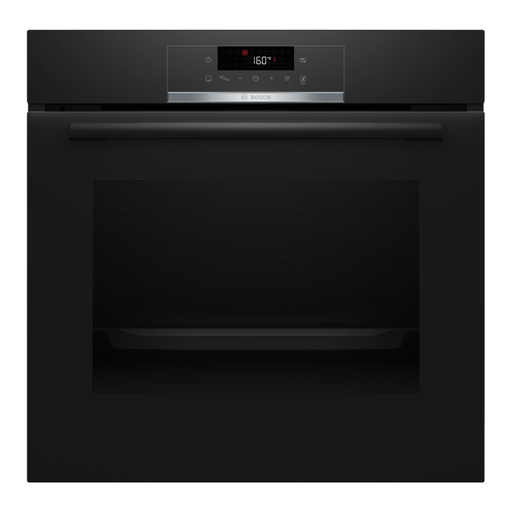 No image available
An option to compare if you have a suitable niche; check that your tin will fit and which heating setting your recipe calls for.
The product listing states a 71-litre capacity, steam cooking and pyrolytic cleaning.
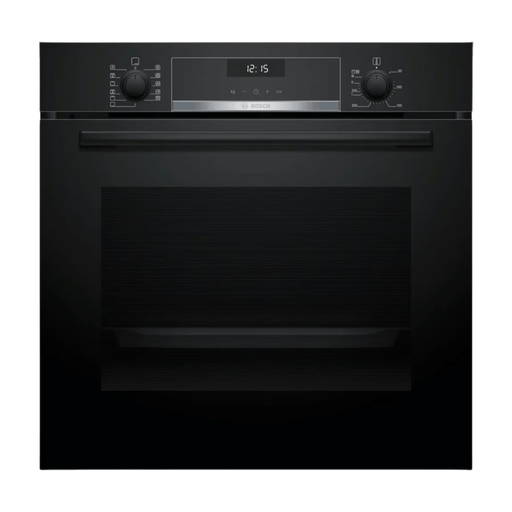 No image available
May suit a kitchen with a suitable built-in space; check the oven settings and the room for your tart tin before choosing.
The product listing states a 71-litre capacity, Air Fry and EcoClean Direct.
No. Bosch describes top and bottom heat as suitable for delicate bakes. Follow the setting in your recipe and check that the exact oven model has it; this isn’t a test result for every custard tart recipe.
According to the Netherlands Nutrition Centre, highly perishable food should be kept chilled in a fridge set to 4 °C and shouldn’t be left out of the fridge for longer than 2 hours. Consider the ingredients and arrange chilled storage during transport and sale if needed.
The NVWA requires information about the allergens actually present in the product being offered. Check the full recipe and the ingredients you use; for non-prepacked food, the NVWA explains how information can be made available before purchase.
Yes. The NVWA states that food safety rules also apply to private individuals who sell food occasionally. The NVWA specifically says that anyone who prepares and sells food several times a year must have a food safety plan; don’t assume this additional requirement applies based on a single school sale alone.
Not necessarily. ACM ConsuWijzer explains that your statutory rights against the seller exist alongside any manufacturer’s or seller’s guarantee. Compare the terms and cover of any extra guarantee offered before you decide.