
Baking a single custard tart
You mainly want to follow the recipe’s recommended setting and get a fully baked base beneath the moist filling. So compare the baking settings and the space available for your tart tin before considering extra features.


Start by checking whether your tart tin will fit in the oven and whether the model has the setting specified in your recipe. A freestanding oven is an option if you don’t want to use a built-in housing; a built-in oven may offer more baking settings, but it needs a suitable housing and connection. For a moist filling, Rutger Bakt recommends blind baking to prepare a fully baked tart case.
You mainly want to follow the recipe’s recommended setting and get a fully baked base beneath the moist filling. So compare the baking settings and the space available for your tart tin before considering extra features.
You want to check whether a larger tart tin will fit, or whether you’ll need to bake in batches. Compare the usable space and shelf positions, not just the capacity in litres.
You need a freestanding oven and should check that you have room for it on your worktop, as well as enough space for the tart tin inside the oven.
First, check that the oven setting suits your recipe and that your tart tin fits. Then consider the baking space you need, where the oven will go and what aftercare is available.
| What to consider | What should you check? | Who should give this extra thought? |
|---|---|---|
| Baking settings and results | Check the setting specified in the recipe, such as conventional heat or fan-assisted cooking, and whether the recipe calls for blind baking. | If I’m baking a moist filling, I want to follow the recipe’s setting and prepare the base properly. Around 36% of consumers say control over baking is their top priority. |
| Tart tin and baking space | Compare the tin with the usable interior space and check the shelf positions and included accessories. | If I’m baking for a larger group, I want to know whether the tin will fit or whether I’ll need to bake in batches. Around 29% of consumers put this capacity first. |
| Freestanding or built-in | For a freestanding model, check that you have space for it on your worktop. For a built-in model, compare the housing dimensions, appliance dimensions and connection details with the installation requirements. | If I don’t have a suitable housing, the oven needs to fit in an available space on my worktop. Location is the first consideration for around 21% of consumers. |
| Installation and aftercare | Check whether installation or an installation service is required, and read the applicable warranty terms. | I want to know in advance what installation involves and who to contact if something goes wrong. Around 14% of consumers put installation and aftercare at the top of their list. |
The stated capacity describes the oven’s volume, not the usable space on the shelf. That means you can’t be sure your tart tin will fit.
Measure your tin and compare it with the usable interior space and installation requirements for the exact model.
If the tin doesn’t fit, you may need a different one or have to bake in extra batches.
The right setting depends on the recipe. Heel Holland Bakt explains that the airflow in a fan-assisted oven can dry out bakes more quickly.
Follow the setting in your recipe and blind bake the base first if the recipe calls for it.
A built-in oven needs a suitable housing and connection, and installation may also be a separate service.
Before ordering, check the housing dimensions, installation requirements and available installation options.
You may need to make arrangements for a separate installation service and schedule it in.
According to Inventum, the freestanding OV457B is a 45-litre fan-assisted oven with conventional heat.
According to Bosch, the built-in HBA534BB3 has 3D hot air, conventional heat and bottom heat settings.
According to AEG, the NBU5A10CK is a built-in oven with conventional heat, fan-assisted cooking and bottom heat.
The OM670Ti is a multifunctional built-in oven you can compare by baking space and shelf positions.
According to Electrolux, the built-in EOF6H46Z has fan-assisted cooking, conventional heat and bottom heat.
This selection of Joybuy products includes freestanding and built-in ovens. Compare the heating settings, installation requirements and interior space listed with your recipe and tart tin.
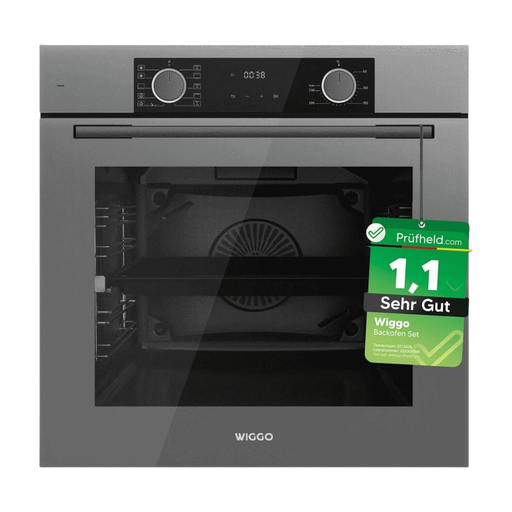 Image unavailable
This built-in oven may suit recipes that call for convection or conventional heat.
The product specifications list five shelf positions and four included accessories. Check the housing dimensions and make sure your tart tin will fit.
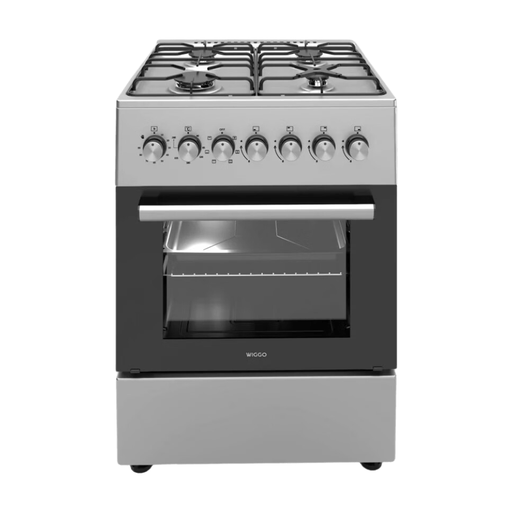 Image unavailable
This freestanding gas oven is an option if you don’t want a built-in oven and have space available on your worktop.
The product information lists a capacity of 66 litres, six cooking programmes and a grill function. It also states that professional installation and a well-ventilated kitchen are required.
 Image unavailable
This freestanding oven may be a good fit if you don’t have a built-in housing and its interior space suits your tart tin.
The product information lists a capacity of 65 litres, four shelf positions, a turbo fan and six cooking functions. The stated power is 2000 W.
 Image unavailable
This electric built-in oven may suit recipes that call for 3D hot air or conventional heat.
The product information lists a capacity of 66 litres and five cooking programmes. Check the required housing dimensions and the space available for your tart tin.
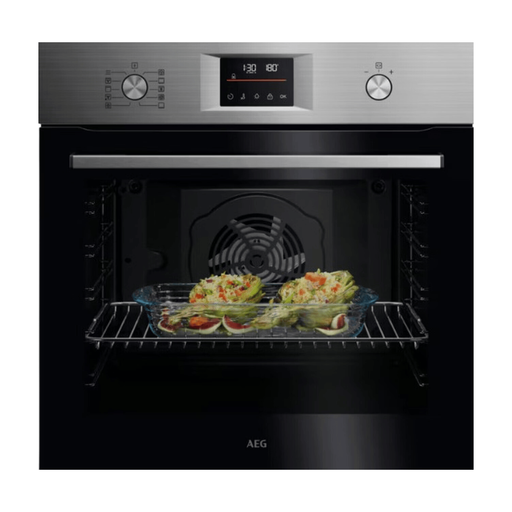 Image unavailable
This electric built-in oven may suit a kitchen with a suitable housing and recipes that use convection.
The product information lists a capacity of 72 litres, pyrolytic cleaning, an A++ energy rating and 45 cooking programmes. Check the housing dimensions and the space available for your tart tin.
Where possible, use the setting specified in the recipe. Heel Holland Bakt recommends reducing the temperature by 20% when converting from conventional heat to fan-assisted cooking, and advises checking the actual oven temperature. This isn’t a guarantee for every oven or tart.
Blind bake the base first if your recipe allows for it. Rutger Bakt describes baking the base with baking paper and baking weights as preparation for a moist or heavy filling.
Cook dishes containing raw egg thoroughly, and keep tarts with perishable ingredients chilled. The Netherlands Nutrition Centre recommends keeping your fridge at 4 °C and not leaving perishable food out of the fridge for more than two hours. Plan transport and serving with this in mind, too.
When you buy as a consumer, you’re entitled to a product that works properly under Dutch government guidance; the Netherlands has no fixed statutory warranty period. If a product is faulty, contact the seller. Any manufacturer’s warranty is in addition to this.
According to the Netherlands Food and Consumer Product Safety Authority (NVWA), food safety rules also apply to private sellers who sell food at an event. The NVWA says that anyone who prepares and sells food several times a year must have a HACCP food safety plan. Whether this applies to your gathering depends, among other things, on whether you sell food and how often you do so; the same conclusion doesn’t necessarily apply if you’re sharing food for free.