
For homes with washable covers
You mainly want to clean removable cushion covers without having to store an unnecessary appliance. Check the care instructions for each cover individually.


If a cushion cover is removable and its own care instructions say it can be machine-washed, follow those instructions; there’s no need to buy a spot cleaner just for that cover. A compact spray-extraction cleaner may be worthwhile if you also want to treat suitable, non-removable upholstery stains. When choosing one, consider where you’ll store it and how you’ll clean the machine after use.
You mainly want to clean removable cushion covers without having to store an unnecessary appliance. Check the care instructions for each cover individually.
You may also have stains on upholstery that can’t be removed from the furniture. A spot cleaner is only an option if the upholstery is suitable for the chosen wet-cleaning method.
You’re looking for a machine to tackle suitable fabric stains and want to check whether it will fit in your flat with its hose and attachments.
Choose this option: if your cover’s care instructions allow machine washing.
Bear in mind: this won’t automatically clean the inner cushion or fixed upholstery.
Consider this: if you regularly want to spot-clean suitable, non-removable upholstery or small rugs.
Bear in mind: you’ll need to look after the machine and its tanks after use, and have room to store the machine and attachments.
Consider this: only if both the specific machine and the surface you want to clean are suitable for this method.
Bear in mind: a steam function doesn’t prove that every cushion cover or fabric can be treated with it.
| What to consider | What should you check? | Who is this most relevant to? |
|---|---|---|
| Do you need a machine? | Check whether each cover is removable and which washing method, temperature and drying method its care instructions allow. IKEA Netherlands advises checking the product information for the specific cover. | If I only want to clean removable covers, I want to know whether washing is enough. Consumers whose main concern is washability make up around 36% of those asking this question when buying. |
| Storage space | Measure the space in your cupboard and check the dimensions of the machine, hose and attachments. | If my flat has limited cupboard space, I want to know in advance where I can keep the machine and accessories. Consumers who prioritise storage space make up around 29% of this group. |
| Fixed upholstery | Check whether the care instructions allow wet cleaning and whether you can test a new method on an inconspicuous area first. | If I also want to treat fixed, non-removable upholstery, I want to choose a method that suits the material. Consumers whose main concern is stains on fixed upholstery make up around 21% of this group. |
| Cleaning after use | Check how to empty the tanks and what cleaning the instruction manual recommends; check whether each model has a rinse function. | If I need to put the machine away after every use, I want to know how much cleaning that involves. Consumers who prioritise cleaning after use make up around 14% of this group. |
Your cover may be machine-washable according to its own care instructions. A machine also takes up storage space and needs to be cleaned after use.
Check the cover’s label first. Then consider whether you also want to spot-clean other suitable, non-removable surfaces.
You’ll also need to make room for the machine and look after it after use.
A machine designed for upholstery isn’t necessarily suitable for treating every type of furniture fabric or cover.
Follow the care instructions for the specific material and test a new method on an inconspicuous area first. The Consumers’ Association recommends testing a new cleaning method in advance.
Not all machines are designed for the same type of cleaning. An extra feature doesn’t, by itself, tell you whether it’s suitable for your cover or upholstery.
First decide which non-removable surfaces you want to treat. Then compare only the features that suit those surfaces and their care instructions.
The SE 3 Compact Home N1 is a spray-extraction cleaner for upholstery and small rugs, among other things.
The 3000 Series includes stain cleaners for soft surfaces; the Dutch product page mentioned here is for the refurbished XW3193/11R1.
The SpotClean range includes various compact models, as well as versions with larger tanks or steam. The HydroSteam 3689N is one specific model.
These products are designed for spot-cleaning upholstery that’s suitable for the chosen wet-cleaning method; they’re not a substitute for the washing instructions for a removable cover.
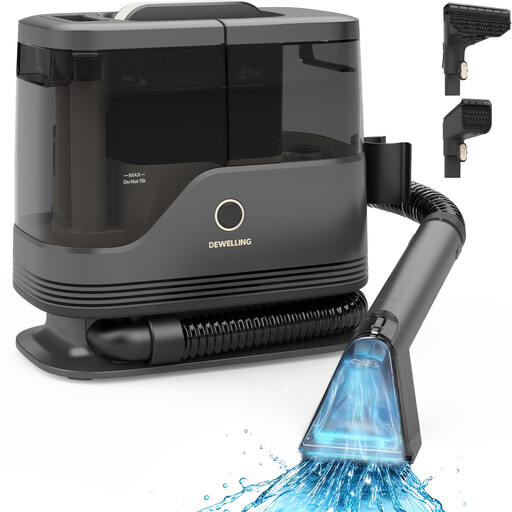 No image available
A portable cleaner for spot-treating suitable upholstery.
400 W; 13 kPa; clean and dirty water tanks; self-cleaning function on the handle.
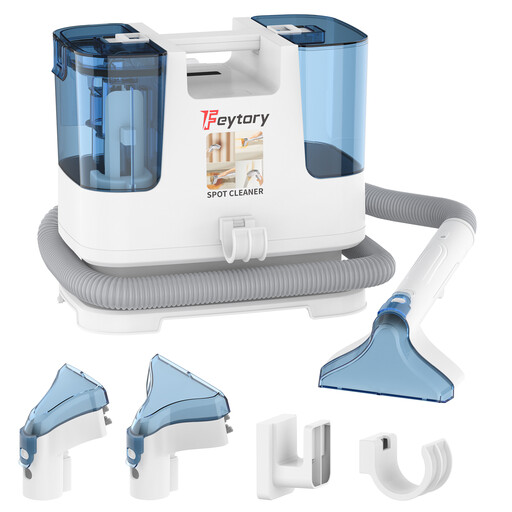 No image available
A handheld option for spot-cleaning suitable upholstery or sofas.
0.6 l and 1.5 l water tanks; designed for sofas, carpets and vehicle interiors.
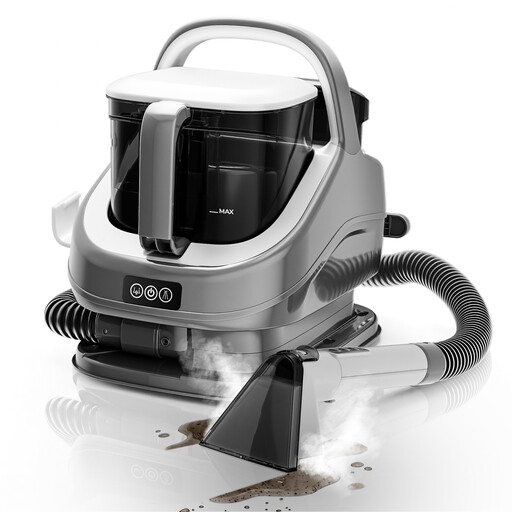 No image available
This version has a steam mode for suitable upholstery; check first that the material can be treated this way.
Cold water, hot water and steam modes; 13 kPa; two water tanks; 1300 W. Do not use on non-water-resistant fabrics.
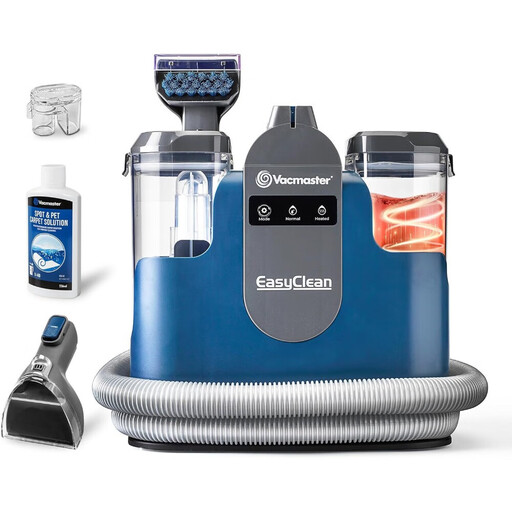 No image available
An option for spot-treating suitable sofas, stairs or car seats.
500 W; two tanks of 1.6 l and 0.95 l; 1.8 m self-cleaning hose.
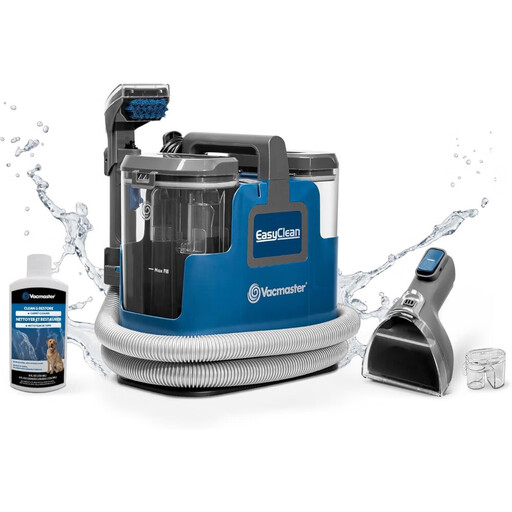 No image available
A compact version for spot-cleaning suitable sofas or other upholstery.
500 W; dual tanks of 1.6 l and 0.95 l; 1.8 m hose.
Not necessarily. If your cover’s own care instructions say it’s machine-washable, follow those washing instructions. Check the temperature and drying method for that specific cover; instructions for an IKEA GURLI cover don’t apply to every cover.
Check the furniture’s care instructions and whether they allow the method you’ve chosen. Test a new treatment on an inconspicuous area first; a ‘for upholstery’ label doesn’t mean every fabric is suitable.
Empty and clean the machine according to the instruction manual before putting it away. Kärcher lists a rinse function for the SE 3 Compact Home N1; don’t assume other models have one too.
When you buy as a consumer, the product must be of satisfactory quality; if there’s a fault, contact the seller. According to the Dutch government, there’s no fixed statutory warranty period of two years in the Netherlands. For online distance purchases, you can usually change your mind within 14 days, subject to legal conditions and exceptions that may depend on the purchase.