For a few removable covers, a standard steam iron is usually the practical choice. A steam generator is better suited to larger loads of ironing and when you have room for a separate base unit. Check the care label on the specific cover to set the temperature, rather than relying on the fact that it is made of cotton: GINETEX emphasises that the fibre type alone does not determine the maximum temperature. A garment steamer is best when light crease removal is all you need; Tefal describes an iron as more suitable for thick fabrics and sharp creases.
Who is this for?
Anyone ironing a few covers for guests
This person wants to get a few removable covers looking neat and smooth without having to store a large appliance. The Dutch Consumers’ Association lists compact size and limited storage space as considerations for a traditional ironing session.
Anyone with covers featuring delicate details
This person checks the temperature limit on their cover’s care label first, even if the fabric contains cotton. GINETEX advises following the maximum temperature on the care label; for example, an IKEA GURLI cotton cover specifies a maximum of 150 °C.
Anyone ironing lots of household textiles in one go
This person often has longer ironing sessions or stubborn creases, so may want to consider a larger water tank. Philips lists a separate 1.5-litre tank for the PSG7200/20.
What should you consider when choosing?
Standard steam iron
Suitable when: you want to press a small number of covers smooth and store the appliance away compactly. The Dutch Consumers’ Association recommends a traditional iron for smaller ironing sessions.
Trade-off: if you have a large load to iron, a smaller tank may mean you need to refill it more often.
Steam generator
Suitable when: you regularly iron lots of textiles in one go and have room for a separate base unit. Philips lists a removable 1.5-litre tank for the PSG7200/20.
Trade-off: the base unit takes up more space and may be unnecessary for just a few covers.
Garment steamer
Suitable when: removing light creases matters more than pressing the cover smooth and flat, and the care instructions allow steaming.
Trade-off: Tefal says an iron is more suitable for thick fabrics and sharp creases; this is the manufacturer’s guidance, not an independent test on cushion covers.
| What to consider |
What to look for when buying |
Who is this important for? |
| Pressing covers smooth |
Check the steam settings and whether the soleplate is suitable for working around seams and edges. |
If I want to get the covers looking neat and smooth for guests, I look for an iron I can adjust to suit the fabric. Around 46% of consumers prioritise a smooth ironing result. |
| Protecting the cover |
Read the cover’s care label and check whether the temperature and steam can be adjusted separately. GINETEX advises following the temperature on the label. |
If I want to avoid damaging my cover, I stick to the stated temperature limit and any restrictions on steam. Around 27% of consumers prioritise protecting the fabric above all else. |
| Long ironing sessions |
Compare the tank capacity of the exact models and consider how much other laundry you’ll be ironing at the same time. |
If I iron lots of household textiles in one go, tank capacity matters more to me than compact storage. Around 18% of consumers prioritise long ironing sessions. |
| Compact storage |
Check the model’s dimensions, tank capacity and controls, as well as the space required for any separate base unit. |
If I only iron a few covers now and then, I want to be able to put the appliance away easily after use. Around 9% of consumers prioritise compact storage over extra capacity. |
Common mistakes
-
Choosing the temperature based on the fact that the cover is cotton
Even a cotton cover may have a lower maximum ironing temperature. GINETEX says the fibre type alone does not determine the maximum temperature you should select.
Check your cover’s care label first and do not exceed the stated temperature. For example, an IKEA GURLI cover made from 100% cotton specifies a maximum of 150 °C.
-
Choosing a garment steamer when you want a crisp finish
Tefal describes an iron as more suitable for thick fabrics and sharp creases. This guidance is not based on an independent test on cushion covers.
Choose a garment steamer only if light crease removal is enough; to press a cover smooth, use an iron and a suitable ironing surface.
-
Overlooking maintenance
Philips warns that limescale can build up and cause brown stains, brown water or reduced steam performance. The right approach depends on the model.
Check the descaling instructions for the exact appliance before making your choice.
Descaling takes time and maintenance.
Relevant brands
Philips
A relevant choice for both a standard steam iron and a steam generator, depending on the amount of ironing and the space available.
- Philips lists a 300 ml tank for the DST3031/20 and a removable 1.5-litre tank for the PSG7200/20.
- These tank specifications are not an independent comparison of ironing results on cushion covers; the generator has a separate base unit.
Tefal
The Ultimate Pure FV9844 is a standard steam iron for anyone considering specifications such as continuous steam output and tank capacity.
- Tefal lists continuous steam output of 60 g/min and a 350 ml tank for the FV9844.
- Tefal mentions a Micro-Calc filter; the claim that this filter prevents limescale marks has not been independently verified for cushion covers.
Braun
The TexStyle 7 Pro range is a relevant option for anyone who values adjustable steam and the ability to work around seams.
- Braun lists variable steam and a precision tip for the range.
- Check the features of the specific model; the claim that it glides more easily is not presented here as an independently measured result.
Rowenta
The Autosteam DW4020D1 is an example of a steam iron with an automatic steam setting.
- Rowenta lists a precision tip and anti-drip function for this model.
- An automatic setting does not replace checking the temperature and steam instructions on the cover’s care label.
Steam irons at Joybuy
The products below are steam irons for anyone wanting to press cushion covers smooth; they do not include steam generators.
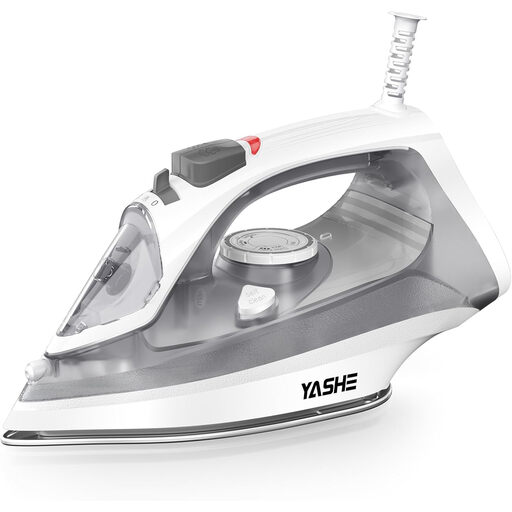 Image unavailable
YASHE WSD-218 steam iron
The adjustable thermostat and steam control are useful if you want to tailor the temperature and steam to suit the cover.
Power: 2300 W. Tank: 300 ml. Continuous steam: 25 g/min. The product name also mentions a non-stick soleplate.
View at Joybuy
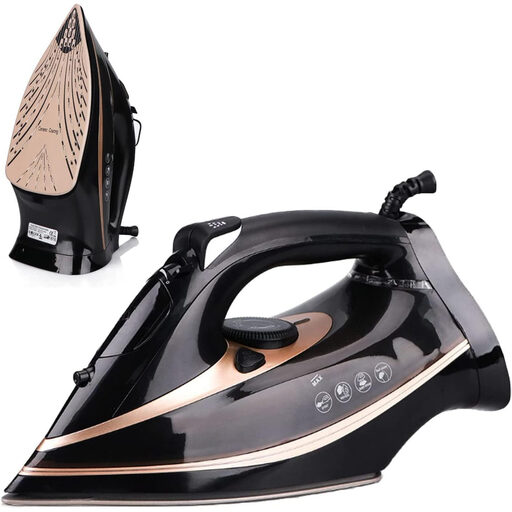 Image unavailable
2600 W steam iron with ceramic soleplate
The ceramic soleplate makes this an option for anyone looking for a standard iron to press covers smooth.
Continuous steam: 70 g/min. Extra steam boost: 120 g. Tank: 300 ml. The product name also mentions a self-cleaning function.
View at Joybuy
 Image unavailable
2400 W handheld steam iron
The soleplate and steam function make this a suitable option for anyone looking for an iron to press a cover smooth.
The product name mentions a non-stick soleplate, automatic cleaning and an anti-drip system.
View at Joybuy
 Image unavailable
Philips 3000 Series steam iron DST3031/20
The temperature dial and adjustable steam settings are useful if you want to tailor the settings to suit the cover.
Philips lists a 300 ml tank for this model. The product name mentions a 180 g steam boost and steam output of 40 g/min.
View at Joybuy
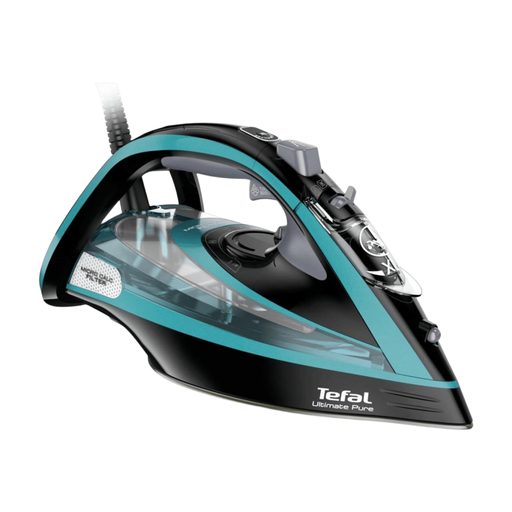 Image unavailable
Tefal Ultimate Pure FV9844 steam iron
This standard steam iron is an option if you want to take the stated steam output and tank capacity into account when pressing covers smooth.
Tefal lists continuous steam output of 60 g/min, a 250 g steam boost and a 350 ml tank. Tefal also mentions a Micro-Calc filter; follow the instructions for the exact model.
View at Joybuy
Frequently asked questions
Can you iron every cotton cushion cover on the highest cotton setting?
No. Follow the maximum ironing temperature and any steam restrictions on your cover’s care label. GINETEX says the fibre type alone does not determine the maximum temperature; for example, IKEA’s 100% cotton GURLI cover specifies a maximum of 150 °C.
Should you remove the filling before pressing the cover smooth?
If the cover is removable, take out the filling before laying it flat on a suitable ironing surface. Check the care label and take care around zips and other details; IKEA’s GURLI cover is removable and has a zip.
Do you need a steam generator for a few cushion covers?
A standard steam iron is usually more practical for a small ironing session, especially if storage space is limited; the Dutch Consumers’ Association gives this as a reason to choose a traditional iron. A generator may be a better fit if you regularly iron large loads and have room for a separate base unit.
How do you descale a steam iron?
Follow the descaling procedure for the exact model. Philips warns that limescale can build up and refers users to the model number and manual for the correct procedure; these instructions do not automatically apply to appliances from other brands.


