
Vandaag of morgen in huis

Kwaliteit gegarandeerd

Welkomstaanbiedingen ontgrendelen: GRATIS bezorging | Tot 80% korting | Gratis 30 dagen JoyPlus-proefperiode
Download de app
Preparing a curry at home needn’t be complicated. However, buying curry paste is less straightforward than it may seem. Shop shelves and online shops stock products with different purposes: concentrated curry paste, ready-made curry sauce and dry curry spice mix. They are not automatically interchangeable.
Terms such as “authentic”, “mild” and “natural” do not always tell you enough either. If you only look at the front of the packaging, you could end up with a paste that is too spicy, a sauce containing lots of sugar or a product that does not suit a vegetarian or vegan diet. Use these checks to compare products based on practical, verifiable information.
Curry paste is generally a concentrated blend of chilli, herbs, spices, aromatic plants and sometimes oil or shrimp paste. You usually fry the paste briefly before adding ingredients such as coconut milk, vegetables, tofu, meat or fish.
Curry sauce is usually already diluted and is often ready to use with chips, snacks, filled rolls or a quick stir-fry. Hela Curry Sauce, for example, contains 29 grams of sugar per 100 grams and is intended as a sweet and spicy sauce for chips and snacks, among other things. This means it is not the same as a Thai curry paste for making a curry with coconut milk.
A curry spice mix is dry and may contain flour, starch, milk derivatives or salt. g’woon Indian Dry Mix for Curry Sauce, for example, contains wheat flour and milk derivatives. So first check what you want to cook before adding a product to your basket.
A brand or product description may refer to an authentic curry paste or traditional recipe. This is marketing language, not a fixed guarantee of flavour. According to Nittaya’s product description, its Red Curry Paste is based on a traditional recipe. The ingredients list includes red chilli, lemongrass, garlic, galangal and shrimp paste, among other ingredients.
The ingredients tell you more about how a product can be used than the front of the packaging does. Look at the order of the ingredients, the proportion of chilli and the presence of herbs and spices such as lemongrass, coriander, cumin, galangal and kaffir lime. This will give you a better idea of the flavour profile.
Red curry paste is not automatically hotter than green curry paste, but varieties containing a lot of chilli can taste sharper. Yellow curry paste is often milder. Koh Thai, for example, describes its yellow variety as the mildest of its curry pastes and recommends approximately two tablespoons for two people.
Always check the allergens too. Some Thai pastes contain shrimp paste or shellfish. This includes Nittaya Red Curry Paste, Mae Ploy Panang Curry Paste and various Sum & Sam boemboes. A product may therefore not be vegetarian or vegan, even if the label lists plenty of plant-based herbs.
A 400-gram jar may seem like good value, but check how much is used per meal. Mae Ploy’s preparation instructions specify 50 grams of paste with 400 grams of coconut milk. Sunlee Vegan Massaman Curry Paste comes in a 400-gram jar and is suitable for curries, stews, marinades and soups.
Small packs of 50 to 95 grams are useful if you want to try a flavour first or have limited storage space. Larger jars are better suited to families or anyone who cooks curry regularly. Once opened, follow the storage instructions on the packaging; many pastes need to be refrigerated.
For a vegan curry paste, do not just look for terms such as “plant-based”. Also check whether it contains shrimp paste, fish sauce, milk, egg or other animal-derived ingredients. Sunlee Vegan Massaman Curry Paste lists chilli, lemongrass, garlic, shallot, galangal, coriander, cumin, cinnamon and tamarind, and according to the product information it contains soya as an allergen.
According to the product information, Fairtrade Thai Green Curry Paste contains only plant-based ingredients and none of the 14 main EU allergens. If in doubt, the packaging should always be treated as the definitive source, as labels and recipes may change.
So do not choose based on colour alone. The same colour can indicate a different use and level of heat in different cuisines.
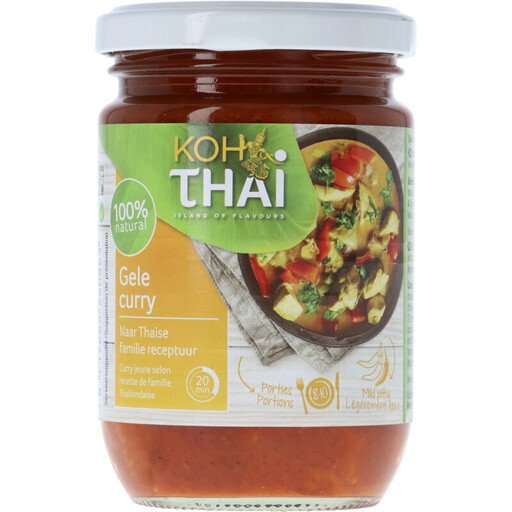
Why it suits this profile: The product information describes a mild flavour, recommends two tablespoons for two people and states that it provides eight to ten portions.
The stated mild variety helps beginners avoid choosing a very hot paste straight away. Do check the listed allergens: wheat and mustard.
Mild Thai yellow curry paste; suitable for soups, curries and marinades.
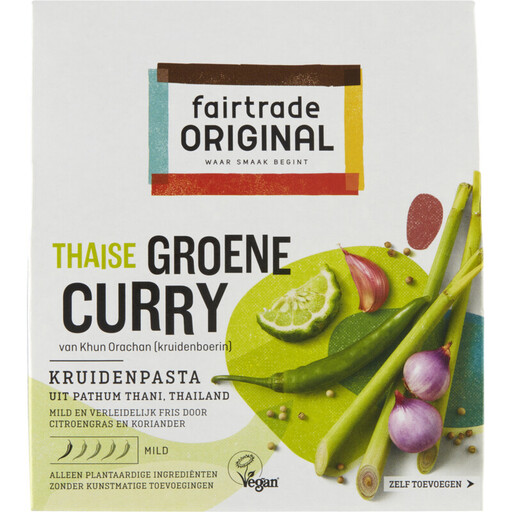
Why it suits this profile: Anyone who values a short, plant-based ingredients list and information about provenance has clear points of comparison.
The ingredients and allergens are clearly specified. According to the product information, this paste contains none of the 14 main EU allergens.
Plant-based ingredients; prepared and packaged in Thailand according to the product information.
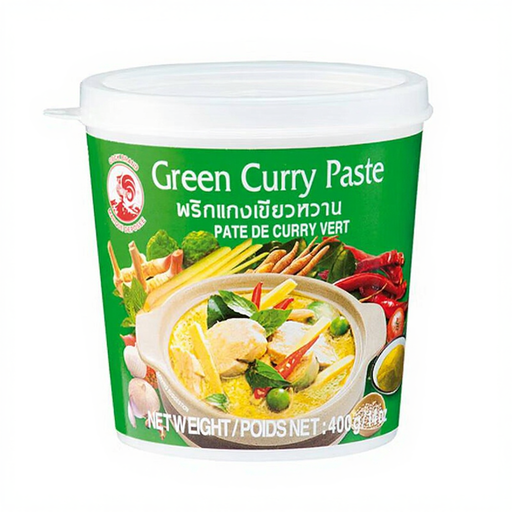
Why it suits this profile: The 400-gram size is practical for families, keen cooks and repeated use in curries.
The large pack means you do not need a new small jar for every meal. Check the storage instructions after opening and bear in mind the salt content of 14,1 grams per 100 grams.
400 grams; ingredients list including 33% fresh green chilli, lemongrass, garlic and galangal.
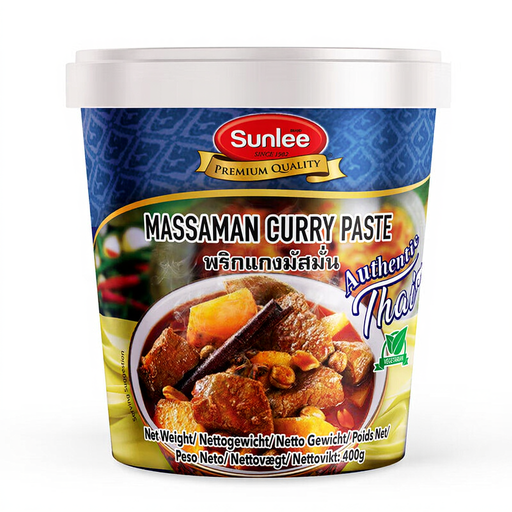
Why it suits this profile: According to the product information, this Massaman paste is intended for vegan dishes with coconut milk, vegetables, tofu or plant-based protein products.
The product description explicitly mentions vegan use. However, the ingredients list includes soya, so always check the current label if you have an allergy.
Vegan Massaman curry paste; suitable for curries, stews, soups and marinades.
We have put together a complete, up-to-date list of products that fully meet these strict selection criteria and the applicable European safety regulations.
A mild yellow curry paste is often an accessible choice because you can easily adjust the quantity. According to the product information, Koh Thai Yellow Curry Paste is described as mild. Start by adding less paste than recommended, then adjust the flavour of the curry to taste.
Fry the paste briefly in oil, add coconut milk or another liquid, and heat the mixture gently. Then add vegetables, tofu, meat or fish according to the preparation instructions. Always check the label, as the recommended ratio varies by brand and pack size.
This varies from one product to another. Store an opened jar according to the instructions on the packaging; this often means refrigerating it and keeping it tightly sealed. Also check the best-before date, and do not use a jar if the packaging is damaged or the product smells or looks unusual.
