
If you want to check Fairtrade status
You want a currant bun with verifiable Fairtrade status. So check the claim for the bun itself, not just the shop’s range of sustainable products.


Only choose a currant bun on the basis of Fairtrade if you can verify a Fairtrade mark or a specific certification claim for that bun. A supermarket’s Fairtrade range tells you nothing about an individual bun. If you can’t confirm its status, choose a currant bun based on portion size, nutritional information and ingredients, and assess any Fairtrade chocolate separately as a different product.
You want a currant bun with verifiable Fairtrade status. So check the claim for the bun itself, not just the shop’s range of sustainable products.
You want a bun you can take with you, and you’re comparing the portion size, nutritional information and storage advice on the packs you’re considering.
If you have an allergy or intolerance, or a question about the salt used, check the ingredients and allergen information for the exact currant bun you’ve chosen. Always check the latest packaging.
First, check whether Fairtrade is a requirement for the currant bun itself. Then compare the bun you want to eat by portion size and label; chocolate with its own certification does not change the bun’s status.
| What to look for | What to check when buying | Who it matters to |
|---|---|---|
| Fairtrade status | Look for the Fairtrade mark or a specific certification claim on the packaging or the current product page for the currant bun. | If Fairtrade is a deciding factor for me, I want to know whether this particular bun carries the mark. For around 45% of consumers, checking the specific product comes first. |
| Nutrition and portion size | Compare the nutritional information per 100 g and per portion, including sugars, fibre and salt; check the size of the bun. | For a long study session, I want to know what’s in the bun I’m actually eating. Portion size and nutritional information matter most to around 33% of consumers. |
| Availability and storage | Check the number of buns, the date on the packaging and the storage advice for the variant you’ve chosen. | If I’m shopping for several study sessions, I want to be able to use the buns within the stated storage period. This practical consideration comes first for around 22% of consumers. |
A shop selling Fairtrade products doesn’t make every product in the shop Fairtrade. And the mark on chocolate you’ve chosen separately doesn’t apply to the currant bun beside it.
Check the claim on the exact currant bun. Assess a separate chocolate product using its own packaging.
According to the Netherlands Nutrition Centre, a 50 g currant bun contains 134 kcal, 25,6 g of carbohydrates, 15,9 g of sugars and 2 g of fibre. This is a general guide, not the nutritional value of every brand or size.
Compare the labels per 100 g and per the portion you’ll actually eat.
The Netherlands Nutrition Centre says that bakers aren’t required to use baker’s salt. It also says that organic bread usually doesn’t contain baker’s salt.
For packaged currant buns, read the ingredients list or ask the baker which salt was used.
Ingredients and allergen information can change. Albert Heijn therefore advises customers to check the packaging of its products.
Check the latest packaging before eating. If you’re buying an unpackaged currant bun, ask about allergen information before you buy.
Albert Heijn lists currant buns and muesli buns in its online range.
Jumbo lists white wheat buns with raisins and currants, as well as a separate Fairtrade range.
PLUS lists currant buns in different pack sizes and also has Fairtrade own-brand products.
ALDI lists a pack of 6 raisin and currant buns.
Lidl lists currant buns on its product page.
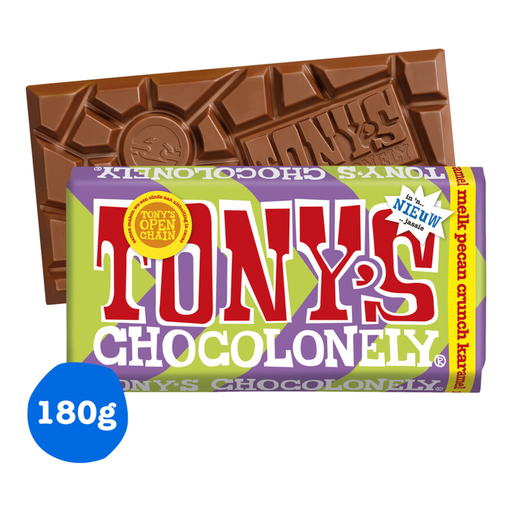
If you’d like chocolate alongside a plain currant bun, you can assess it as a separate product. The chocolate bar below isn’t a currant bun; check the Fairtrade claim on the bar itself before choosing it on that basis.
 No image available
A separate chocolate bar for anyone who wants chocolate alongside a currant bun; this product isn’t a currant bun itself.
The product description mentions Fairtrade. Check the latest packaging for the product-specific claim, ingredients and allergens.
No. The supermarket’s range doesn’t confirm the status of an individual currant bun. Check whether the FAIRTRADE mark or a specific certification claim applies to that exact product.
Compare the nutritional values per 100 g and per portion, including energy, sugars, fibre and salt. The Netherlands Nutrition Centre gives 134 kcal, 15,9 g of sugars and 2 g of fibre for a general 50 g currant bun; check the label for the brand you’ve chosen.
For a packaged currant bun, check the latest label. According to the Netherlands Food and Consumer Product Safety Authority, allergens must be clearly listed on the label of prepacked foods. If you’re buying an unpackaged currant bun, ask about allergen information before you buy.
No, you can’t tell from the product category alone. According to the Netherlands Nutrition Centre, bakers aren’t required to use baker’s salt; read the ingredients list on a packaged currant bun or ask your baker.