
Anyone who wants to check Fairtrade status at product level
You want to know exactly which product the Fairtrade claim applies to for your Mother’s Day breakfast. It’s not enough for a shop to sell Fairtrade products too.


Choose currant buns for your Mother’s Day breakfast by checking the packaging, ingredients, allergen information and storage instructions. If Fairtrade certification for the buns themselves is essential, look for a certification mark or explicit claim on that exact product: a supermarket’s Fairtrade range is not proof. A separately labelled cocoa or chocolate product can be a Fairtrade part of your breakfast, but that does not make the currant buns certified.
You want to know exactly which product the Fairtrade claim applies to for your Mother’s Day breakfast. It’s not enough for a shop to sell Fairtrade products too.
You’re choosing currant buns for several people, so you check the ingredients, allergen information and any may-contain warnings on the packaging before serving.
You want to shop ahead, so you check the number of buns, the storage instructions and, if you plan to freeze them, the guidance for that specific product.
First decide whether Fairtrade certification is a requirement for the currant buns themselves, or whether a separately certified part of the breakfast would also suit you. Then check the packaging for your guests and for when you plan to serve the buns.
When: You’re looking for currant buns for breakfast and don’t require the buns themselves to be Fairtrade-certified.
Bear in mind: A shop’s Fairtrade range does not confirm that the currant buns you’ve chosen are certified.
When: You’d like to serve currant buns with, for example, cocoa, chocolate, coffee or tea, and can check the Fairtrade claim on that product.
Bear in mind: Certification for a drink or topping does not automatically apply to the currant buns.
| What to consider | What to check when buying | Who it matters to |
|---|---|---|
| Fairtrade status | Look for a certification mark or explicit certification claim for the exact currant bun or, if you’re putting together a combination, for the separate product. | If Fairtrade is my main reason for choosing, I want to know which part of breakfast carries the claim. Around 40% of consumers put this check first. |
| Ingredients and allergens | Read the current ingredients list and allergen declaration on the packaging you’ve chosen, including any may-contain warnings. | When I’m buying for guests with an allergy, I need to be able to check whether the product is suitable for them before serving it. For around 30% of consumers, this is the most important check. |
| Storage and quantity | Compare the number of buns with the number of people eating, and follow the product-specific storage and freezing instructions. | I want to plan breakfast in advance without buying more buns than we need. This is the main consideration for around 20% of consumers. |
| Suitable pack size | Check how many buns are in the pack and whether that quantity suits the breakfast you’re planning. | If there are only a few of us having breakfast, I mainly want to choose a quantity we’ll use. Around 10% of consumers give this the highest priority. |
Albert Heijn, Jumbo and PLUS stock Fairtrade products or provide information about Fairtrade. That doesn’t mean an individual pack of currant buns is certified.
Check the claim on the packaging you’ve chosen. If you want to add a Fairtrade item, check that product’s packaging separately.
Ingredients and allergen information can change. This is particularly important if someone at the table needs to avoid certain ingredients or allergens.
Before serving, read the information on the packaging you actually bought, even if you’ve looked at the product online before.
The conditions for adding iodine through baker’s salt, as described by the Netherlands Food and Consumer Product Safety Authority, don’t mean that every currant bun contains iodised salt.
Check the ingredients list for the variety you’ve chosen if the type of salt matters to you.
Albert Heijn describes its AH Raisin Currant Buns as a pack of six.
Jumbo lists Raisin Currant Buns in packs of six and also has a separate Fairtrade category.
PLUS describes its Currant Buns as a pack of six, with ingredient information and instructions for storage and home freezing.
ALDI describes its Raisin and Currant Buns as a pack of six.
Lidl lists packs of six currant buns as an in-store product.
These Joybuy products are cocoa and chocolate that you could serve separately alongside currant buns. The product information mentions Fairtrade; check the claim on the packaging of the product you choose. Neither product is a currant bun.
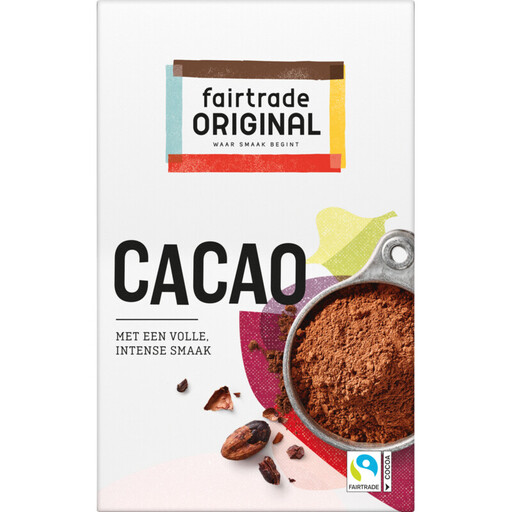 Image unavailable
For anyone who’d like to serve hot chocolate alongside currant buns; the product description mentions this use and states that it is Fairtrade. Check the claim on the packaging. The listed pack size is 125 g.
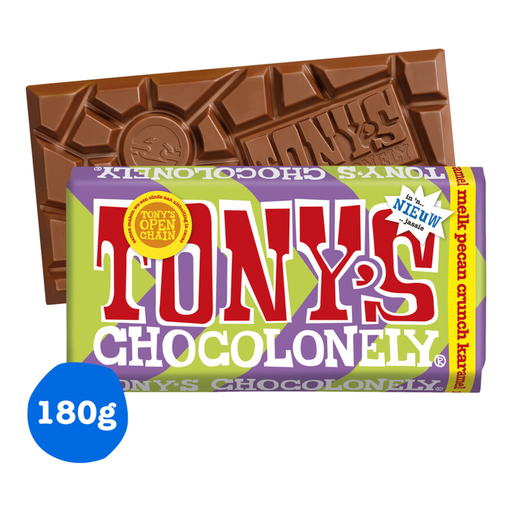 Image unavailable
A separate chocolate bar to share at breakfast; the product description mentions Fairtrade and a weight of 180 g. Check the claim and current allergen information on the packaging: the bar described contains milk, soya and pecans, among other ingredients.
Don’t assume they are just because the supermarket has a Fairtrade range. Check whether the packaging of the currant buns you’re buying displays a certification mark or an explicit certification claim.
For the AH and PLUS currant buns described, the product pages say they can be frozen at home on the day of purchase and used within one month. Follow the instructions on the current packaging of the variety you buy.
No. That doesn’t follow from the conditions for adding iodine to bakery products described by the Netherlands Food and Consumer Product Safety Authority. Check the ingredients list of the currant buns you choose to see what type of salt is listed.
Always read the allergen declaration on the packaging you choose. The products described by Albert Heijn, Jumbo and PLUS list ingredients including wheat or cereals containing gluten and milk; also look for any may-contain warnings for other allergens.