
Planning drinks with a Fairtrade requirement
You want to serve Fairtrade chocolate, so you’re looking for an explicit claim on the product you choose, rather than a general sustainability message from the shop.


Choose currant buns and Fairtrade chocolate as two separate items for Friday afternoon drinks: a Fairtrade claim on chocolate says nothing about whether the currant buns are certified. For the chocolate, check the specific product; for the currant buns, compare the pack size, ingredients and allergens. If you have questions about iodine, check whether baker’s salt has been used too. According to the Voedingscentrum, bakers are not required to use it.
You want to serve Fairtrade chocolate, so you’re looking for an explicit claim on the product you choose, rather than a general sustainability message from the shop.
You want to pick up currant buns and chocolate in the same shopping trip. The number of buns in each pack and the chocolate’s current availability will determine whether the combination works for you.
You want to know which ingredients and allergens are in both products. If you’re also checking salt or iodine, look at the nutritional information for your chosen currant buns and check whether baker’s salt is listed.
First decide whether Fairtrade is a requirement for the chocolate. Then choose a suitable quantity of currant buns and check the labels on both products.
| What to consider | What to check when buying | Who it matters to |
|---|---|---|
| Fairtrade chocolate | Look for an explicit Fairtrade claim on the packaging or the current product page for the chocolate you’ve chosen. Assess the currant buns separately. | If Fairtrade is a firm requirement for me, I want to know that the claim applies to my chocolate, not just to the shop’s range. Around 40% of consumers say this check is their top priority. |
| Everything you need for drinks | Compare the number of currant buns in each pack and check that your chosen chocolate is available. | When I’m hosting, I want to buy enough currant buns without having to find a different chocolate at the last minute. This practical combination comes first for around 30% of consumers. |
| Labels and nutritional information | Read the ingredients and allergen information for both products. If needed, compare the nutritional information per serving and check whether baker’s salt is listed for the currant buns. | When I’m shopping for others, I want to be able to check what’s in the products I’ve chosen; with bread, I may also look for baker’s salt. For around 30% of consumers, checking labels is their main priority. |
A certification claim applies to the product it appears on. Chocolate with a Fairtrade claim doesn’t automatically make the currant buns next to it Fairtrade too.
Choose each product separately and only use a product-specific claim to check its Fairtrade status.
Albert Heijn says that cocoa in its own-brand products is Rainforest Alliance or Fairtrade certified. This doesn’t tell you which certification applies to a particular chocolate product.
If only Fairtrade meets your needs, check the packaging or current product description for the exact item.
According to the Voedingscentrum, bakers don’t have to use baker’s salt. So you can’t tell what’s in a currant bun just from its product category.
Check the label or ask the baker which salt has been used in the product you’ve chosen.
Past mentions of Fairtrade chocolate at a shop don’t tell you which varieties are available now.
Check the specific product and its current availability before you finish your shopping for drinks.
A shop can help you find both items for drinks, but the Fairtrade claim and product information for each individual item are what count.
Albert Heijn has an online category for currant buns. You’ll need to check chocolate products individually.
PLUS is worth a look if you want to pair currant buns with chocolate that has an explicit Fairtrade claim.
Jumbo has an online Fairtrade category that can help you look for chocolate to go with your currant buns.
Fairtrade Nederland has described Lidl’s Way To Go! chocolate bars as Fairtrade.
Fairtrade Nederland has highlighted ALDI’s Bio Fairtrade chocolate.
You could serve this chocolate bar alongside currant buns. Choose the buns separately and check the current chocolate wrapper to make sure the Fairtrade claim meets your requirements.
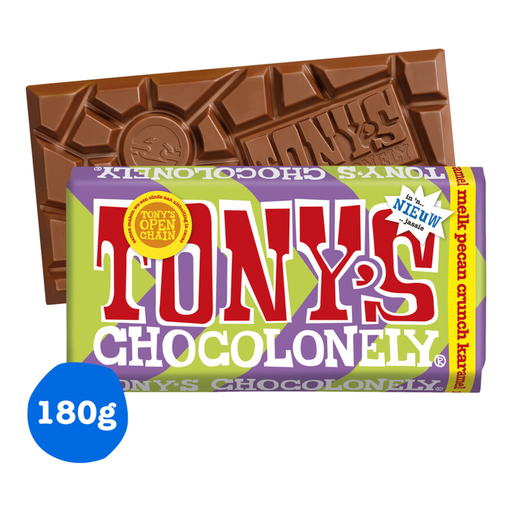 Image unavailable
A chocolate option to choose separately from the currant buns for drinks.
180 g bar. Check the current packaging for the Fairtrade claim, ingredients and allergens.
No. The Fairtrade claim on the chocolate doesn’t apply to the currant buns. Check any certification claim for each product separately.
Check the packaging or current product page for the exact chocolate you want to buy. A general statement about a supermarket’s cocoa sourcing doesn’t necessarily confirm the status of every individual product.
No, you can’t assume that: according to the Voedingscentrum, bakers aren’t required to use baker’s salt. Check the label or ask the baker which salt has been used.
Read the current labels for both products you’ve chosen. According to the Voedingscentrum, common allergens must be clearly listed on the label. If you have a specific allergy, don’t rely solely on a general category page or an old product description.
Check the current range shortly before you shop and, if needed, find a second product with a suitable Fairtrade claim in advance. An old product page or promotion doesn’t confirm current availability.