
Easter brunch hosts who prioritise Fairtrade
You’re serving currant buns and want to check what the Fairtrade label applies to on any chocolate, chocolate sprinkles or other cocoa-based extra.


Choose your currant buns according to what matters for your Easter breakfast. Compare the wholemeal labelling and fibre content if those are priorities, or choose a classic option if that’s what you’re after. Always check the current label on the buns you choose for ingredients and allergens. If you want to prioritise Fairtrade cocoa, check the label on the chocolate or cocoa product separately; it tells you nothing about the Fairtrade status of the currant buns.
You’re serving currant buns and want to check what the Fairtrade label applies to on any chocolate, chocolate sprinkles or other cocoa-based extra.
You’re looking for currant buns for Easter and comparing the wholemeal labelling and fibre content per 100 g or per serving.
Before serving, you want to know which allergens, possible traces and ingredients are listed on the packaging of your chosen option, including whether iodised salt is listed.
First, choose currant buns that suit your needs. If you’re adding Fairtrade chocolate, assess it as a separate product.
| What to look for | What to check when buying | Who it matters to |
|---|---|---|
| Fairtrade cocoa | Check the Fairtrade label on the chocolate or cocoa product separately. If there’s an arrow next to the certification mark, read the explanation on the back too. | For Easter brunch, I want to serve currant buns with a cocoa-based extra whose Fairtrade label I can assess. This is the top priority for around 33% of consumers. |
| Allergens and ingredients | Read the current ingredients and allergen information for your chosen buns and any extra. If you have a question about iodine, check which type of salt is listed. | If certain ingredients are a concern for me, I want to be able to check the packaging of every product I choose. Around 33% of consumers prioritise checking the label. |
| Wholemeal and fibre | Look for the wholemeal labelling and compare fibre content on the same basis, for example per 100 g. | I want to consider a wholemeal option for Easter breakfast and see how the fibre content of different buns compares. This is the first consideration for around 20% of consumers. |
| Portions and storage | Compare the number of buns, serving size and storage or freezing instructions on the packaging. | When I shop ahead for Easter, I want to know how many buns I can serve and how to store them. This is the most important consideration for around 14% of consumers. |
A label on chocolate doesn’t confirm that the currant buns you serve it with are certified. Fairtrade International advises reading the explanation on the back if there’s an arrow next to the certification mark.
Check the label on the specific chocolate, chocolate sprinkles or cocoa product, and treat that choice separately from your choice of buns.
Currant buns aren’t automatically wholemeal. Albert Heijn lists 6.1 g of fibre per 100 g for its Extra lang lekker raisin and currant buns; Jumbo lists 2.8 g per 100 g for its Rozijnen Krentenbollen. These are two specific products, not all the buns sold by these retailers.
Check the product name and compare fibre per 100 g when weighing up different options.
Ingredients and allergens can vary between options, and product information can change. So a product page you viewed previously is no substitute for checking the packaging of the buns you’re using.
Check the current ingredients, allergens and warnings about possible traces on the packaging.
The Albert Heijn currant buns checked list iodised salt. That doesn’t tell you which type of salt is used in another option.
If you have a specific question about iodine, check the ingredients list for the product you’ve chosen and, if necessary, ask the manufacturer or retailer for up-to-date product information.
The product ranges below offer different options for your Easter shopping. A retailer’s information about Fairtrade cocoa doesn’t mean its currant buns are certified.
AH Extra lang lekker raisin and currant buns are a wholemeal wheat and rye option to include in your comparison.
Jumbo Rozijnen Krentenbollen are white wheat buns with raisins and currants, sold in packs of six.
PLUS is worth considering if you’re choosing a chocolate or cocoa product to go with your currant buns.
This chocolate works as a separate extra with currant buns for Easter. Choose the buns themselves based on their own label and nutritional information.
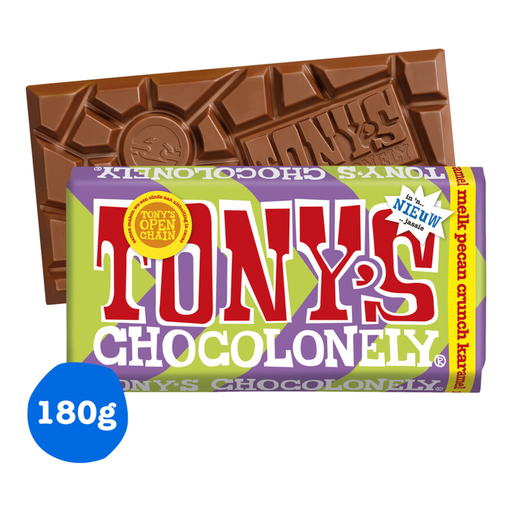 Image unavailable
A chocolate bar to serve alongside currant buns if you’d like to add a cocoa-based extra.
The product description mentions Fairtrade. Check the current packaging for the label and which ingredients it applies to.
For allergen information, check the packaging: the available product information lists pecans, milk, soya and cereals containing gluten, and warns that peanuts and egg may also be present.
Not all Fairtrade labels cover the same things. Fairtrade International says that if there’s an arrow next to the certification mark, you can read the explanation on the back to find out what the label means for the product as a whole. A claim for a specific ingredient may, for example, apply only to the cocoa.
You can’t assume that all currant buns do. The Albert Heijn option checked lists iodised salt; for other options, read the ingredients list on the product itself.
Compare the amount of fibre per 100 g to make sure you’re using the same measure for both products. Albert Heijn lists 6.1 g per 100 g for the wholemeal option checked; Jumbo lists 2.8 g per 100 g for its Rozijnen Krentenbollen checked. Also look at the label to see whether your chosen buns are described as wholemeal.
Use the online list to narrow down your options, but check the packaging of the product you’ve chosen before serving it. Ingredients and allergen or possible trace information can vary between options and may change if the recipe is updated.
Compare the number of buns with how many you plan to serve, and follow the storage advice on the packaging. Albert Heijn says that the option checked can be frozen at home on the day of purchase; Jumbo advises storing the option checked in a cool, dry place away from light.