
Organisers of a traditional treat for a new arrival
You want to serve Dutch rusk with aniseed sprinkles and are looking for the right base. A soft currant bun is a different product from rusk.


If you want to serve the traditional Dutch treat for a new arrival, choose Dutch rusk topped with aniseed sprinkles: 24Baby describes rusk as the usual base. A currant bun is a separate, soft bread option. When choosing, check the pack size, ingredients, allergens and storage instructions.
You want to serve Dutch rusk with aniseed sprinkles and are looking for the right base. A soft currant bun is a different product from rusk.
You’re looking for soft buns with raisins and currants, and want to choose a pack size that suits the number of people eating. That’s a different choice from the traditional treat for a new arrival.
You want to read the ingredients, allergen and nutritional information for the variety you’ve chosen before buying it. This could help you distinguish white wheat buns from a product labelled as wholemeal, for example.
First decide whether you want to serve Dutch rusk with aniseed sprinkles or are looking for soft currant buns. Then compare packs within the product type you’ve chosen.
| What to consider | What to check when buying | Who it matters to |
|---|---|---|
| Base for the treat | Choose Dutch rusk if you want to serve it with aniseed sprinkles; choose currant buns only if a soft bread option suits your plans. | I want to serve the usual treat for a new arrival, not accidentally offer a different product. Around 36% of consumers prioritise the traditional base. |
| Number of buns | Check how many buns are in each bag and make sure it’s enough for the number of people eating. | When buying for a group, I want to know how many soft buns I’ll need without having any bags left over. For around 29% of consumers, choosing the right number is their main concern. |
| Ingredients and nutritional information | Check the allergen information for the variety you’ve chosen and, if you wish, compare fibre, sugars and salt per 100 g. | If ingredients are a deciding factor for me, I want to be able to check the pack before serving anything. Around 21% of consumers prioritise the label. |
| Storage | Check the storage instructions and whether the pack you’ve chosen can be frozen at home. | I won’t eat all the buns at once and want to stop the rest going stale. Storage is the main priority for around 14% of consumers. |
A soft bun isn’t the same treat as Dutch rusk with aniseed sprinkles. 24Baby identifies rusk with aniseed sprinkles as a Dutch birth tradition.
Decide what you want to serve before choosing your packs.
For the traditional treat, you’ll need aniseed sprinkles and butter or margarine as well as rusk.
The standard varieties described by Jumbo and PLUS are white wheat buns. Their product information also lists gluten and milk ingredients; don’t assume other varieties have the same ingredients based on those labels.
If you want a wholemeal product, look for an explicit wholemeal description. If you have allergies, check the ingredients and any ‘may contain’ information on the pack you’ve chosen.
A bag with more buns won’t always suit the number of people eating. PLUS describes both a pack of six and a variety containing eight.
Check the storage instructions and only freeze the buns if the pack says you can.
ALDI Netherlands describes a pack of six soft raisin and currant buns.
Jumbo describes white raisin and currant buns in a pack of six.
PLUS describes a standard pack of six currant buns and a longer-life variety containing eight.
Albert Heijn lists rusk as a separate product category, alongside product information about raisin and currant buns.
Lidl Netherlands describes a bag of six soft currant buns, which, according to the product page, is only available in store.
Bolletje is relevant here for rusk: Albert Heijn lists several Bolletje rusk varieties in its rusk category.
This product selection is suited to rusk with aniseed sprinkles. If you’re looking for soft currant buns instead, compare packs within that separate product type.
 No image available
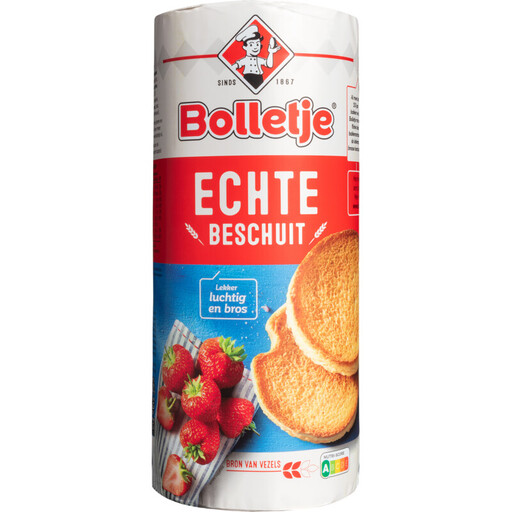
Rusk for anyone who wants to serve it with aniseed sprinkles; this isn’t a soft currant bun. The pack contains 13 pieces. Check the pack for allergen information before serving.
Not if you want to serve the traditional Dutch treat for a new arrival. 24Baby describes rusk with aniseed sprinkles as the usual treat for a birth; a currant bun is a soft bread option for a different occasion.
Check the ingredients and allergen information for the exact variety you’re buying. The Jumbo and PLUS varieties described list gluten and milk ingredients; according to the Netherlands Nutrition Centre, the label is important if you have a food allergy.
You can’t assume that every currant bun does. The product information for one Albert Heijn variety lists iodised salt, but check the current ingredients list for any other variety.
According to their product information, the PLUS varieties described can be frozen on the day of purchase. Follow the storage and freezing instructions on the pack of the currant buns you actually buy.