
Styling tool for soft waves
You want softer waves or a mix of different waves for a night out, so you’re looking at the shape and diameter of the barrel. Suitability for a particular look is based on product descriptions, not a comparative test.


Start by choosing the shape and barrel diameter that suit the look you want: a narrow barrel for more defined curls, or a wider or tapered barrel if you want more variety in your waves. Then compare the temperature settings and features such as a stand, heat-resistant mat and automatic shut-off. These vary by model and don’t replace careful use. Descriptions of curling results come from manufacturers and aren’t based on a comparative usage test.
You want softer waves or a mix of different waves for a night out, so you’re looking at the shape and diameter of the barrel. Suitability for a particular look is based on product descriptions, not a comparative test.
You want clearly defined curls, so you’re comparing narrower barrels and how the tool works, with or without a clamp.
You want to limit heat exposure and put your hot curling wand down carefully. That’s why you’re comparing each model’s temperature settings, stand or mat, and automatic shut-off.
Suitable for: anyone looking for smaller, clearly defined curls; according to ghd, the Thin Wand has a diameter of 14 mm.
Bear in mind: you wrap each section of hair around the hot barrel yourself; check whether a glove is included and read the instructions.
Suitable for: anyone who wants to switch between curls and looser waves in one styling session; Remington lists a diameter of 19–28 mm for the CI83V6.
Bear in mind: as the barrel’s diameter varies along its length, sections of hair won’t all curl into the same shape automatically. Claims about a conditioning coating aren’t independent evidence of a protective effect.
Suitable for: anyone who wants to secure sections of hair with a clamp and prefers a consistent diameter; according to BaByliss, the C451E has a 25 mm barrel.
Bear in mind: a fixed diameter offers less variation in curl size than a tapered barrel.
| What to consider | What should you check? | Who is this important for? |
|---|---|---|
| Soft waves and variety | Look at the diameter along the full length of the barrel and check whether you want a model without a clamp. Remington describes the CI83V6 as tapered, with a diameter of 19–28 mm. | If I want soft waves for a night out, I focus mainly on the shape of the barrel. Around 31% of consumers put soft waves first. |
| Defined curls | Compare narrower barrels and check whether a styling glove is included. ghd lists a diameter of 14 mm for the Thin Wand. | If you want separate, smaller curls, start with a narrower barrel and also consider how sections of hair are held in place. Around 25% of consumers put defined curls first. |
| Heat exposure | Check the settings on the exact model and follow the instructions for use. The American Academy of Dermatology recommends limiting the use of heat-styling tools and choosing a low or medium setting. | If I want to limit heat exposure, being able to choose a lower setting matters more than achieving a particular curl shape. Around 25% of consumers put limiting heat exposure first. |
| Using it at your dressing table | Check whether each model comes with a mat or stand, and read the instructions on where to put it down, switching it off and using it near water. | If you want to put the wand down and handle it carefully while styling, look for these practical features. Around 19% of consumers put safe use at the dressing table first. |
Remington describes the CI83V6 as having a coating with keratin and almond oil, but this isn’t independent proof that it protects against heat damage. The American Academy of Dermatology warns that excessive heat can damage hair.
Choose a temperature setting that suits your needs and limit heat exposure. Don’t treat claims about a coating as a substitute for careful use.
According to ghd, the Curve Creative Curl Wand operates at a fixed temperature of 185 °C. The BaByliss C451E and Remington CI83V6 have several temperature settings, but these vary by model.
If you want to be able to choose a lower setting, check the temperature settings for the exact model before buying.
ghd says the Curve Creative Curl Wand goes into sleep mode after 30 minutes of inactivity. The hot barrel can still cause an injury if touched before then.
Use a suitable mat or stand, switch the wand off yourself after styling and don’t leave it unattended.
According to BaByliss product information, the C451E is a straight-barrel curling tong with a clamp and a fixed diameter of 25 mm.
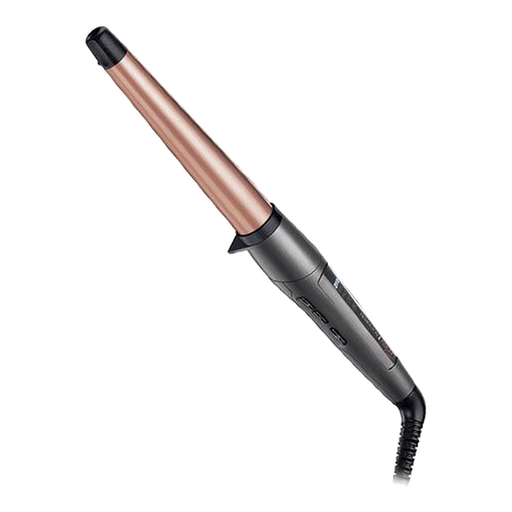
The tapered CI83V6 is designed for anyone who wants to vary the shape of their curls; Remington lists a diameter of 19–28 mm.
The product range reviewed includes the tapered Curve Creative Curl Wand and the narrower Thin Wand.
This selection of Joybuy products is aimed at anyone looking for a tapered curling wand to style their hair for a night out.
 No image available
The tapered shape makes this a good option if you’re looking for a tapered curling wand to create a look for a night out. Only use the wand on a flat, heat-resistant surface, away from water and damp environments; the barrel gets hot.
The American Academy of Dermatology recommends limiting the use of heat-styling tools, choosing a low or medium setting and using a heat-protectant product. Follow your curling wand’s instructions too; this advice can’t guarantee that your hair will remain undamaged.
A heat-resistant mat or stand gives you a designated place to put down a hot curling wand. BaByliss describes the C451E as coming with a heat-resistant mat; ghd lists a stand for placing the Curve Creative Curl Wand on a hard surface. Check the instructions for your model and don’t leave a hot curling wand unattended.
If a product is faulty, the seller is responsible for providing an appropriate solution under the statutory guarantee, according to ACM ConsuWijzer. Online purchases usually come with a cooling-off period of up to and including 14 days after delivery; check which exceptions and returns conditions apply to your purchase.
Electrical equipment covered by EU low-voltage rules, including equipment designed for 50–1.000 V AC, must meet requirements for CE marking and safety information. Check the voltage and relevant marking on the specific appliance. CE is the manufacturer’s declaration of conformity, not an independent quality mark.