
For soft, face-framing waves
You mainly want to add a loose shape to the front sections of your hair. Barrel size plays a part: MediaMarkt Netherlands explains that a larger barrel creates a looser curl.


For a softer wave, a curling tong of around 25 mm is a good starting point; 19 mm or narrower is better suited to a more defined curl. Next, look at the lowest usable temperature, how easy it is to handle near your face, and features such as a cool tip or automatic shut-off. A short heat-up time alone doesn’t make a tong the right choice.
You mainly want to add a loose shape to the front sections of your hair. Barrel size plays a part: MediaMarkt Netherlands explains that a larger barrel creates a looser curl.
You want more definition and control over individual sections, and want to know whether a narrower tong is easy to handle.
You style your hair regularly before work and take temperature settings and limiting heat exposure into account.
Start with the shape you want for the front sections of your hair, then compare the temperature settings, controls and how safely you can set the tong down.
| What to consider | What should you check? | Who should consider this? |
|---|---|---|
| Barrel size and curl shape | Compare the barrel size with the length of your hair and the shape you want. MediaMarkt Netherlands explains that a narrower barrel creates a tighter curl than a wider one. | If you mainly want to avoid curls that are too tight or too loose, start by checking the barrel size. Around 36% of consumers prioritise their desired curl shape. |
| Temperature for regular use | Check the lowest setting on the exact model. The American Academy of Dermatology recommends using low or medium heat and a heat-protectant product. | If you style your hair regularly before work, you’ll want to choose a temperature that suits your routine. Around 29% of consumers give heat control top priority. |
| Handling and setting it down | Check the model’s heat-up time, cool tip, stand or mat, and automatic shut-off. Even with these features, a hot barrel needs to be handled carefully. | If you’re in a hurry and styling close to your face, ease of handling and a safe place to set the tong down matter. Around 21% of consumers prioritise ease of use and safe handling. |
| Manual wrapping or automatic styling | Consider whether you can easily position the front sections of your hair in the device, and compare the available temperature, timer and curl-direction settings. | If you’d rather not wrap a section of hair around a hot barrel yourself, automatic operation may be worth considering. Around 14% of consumers prioritise how the device is operated over other factors. |
Models with the same barrel size can differ in temperature settings, barrel length and controls. So one 19 mm tong may be better suited to your needs than another.
Compare the full model code and check the features that matter for the front sections of your hair.
Heat-up time tells you how quickly a device is ready to use, not how much heat your hair is exposed to while styling.
Compare both the wait time and the adjustable temperature, and use heat sparingly.
A claim about a conditioning coating doesn’t prove that heat damage won’t occur. The American Academy of Dermatology recommends limiting excessive heat.
Don’t choose based on a coating claim alone; compare the barrel size, usable temperature settings and controls too.
The range described includes 19 mm and 25 mm clamp tongs, as well as a 19 mm automatic curler. Compare the full model code.
The Thin Wand is a specific 14 mm option without a clamp, designed for smaller, more defined curls.
The range described includes 19 mm tongs and separate conical models, so check the exact model.
The Dutch category page distinguishes, among other options, a 16 mm barrel in the 3000 Series and a 25 mm barrel in the 5000 Series.
The CF321L is a specific model with a 25 mm barrel and a clamp, designed for curls or waves.
These product picks are suited to softer waves with a wider barrel or to automatic styling. Check that the size and safety instructions are right for the sections around your face.
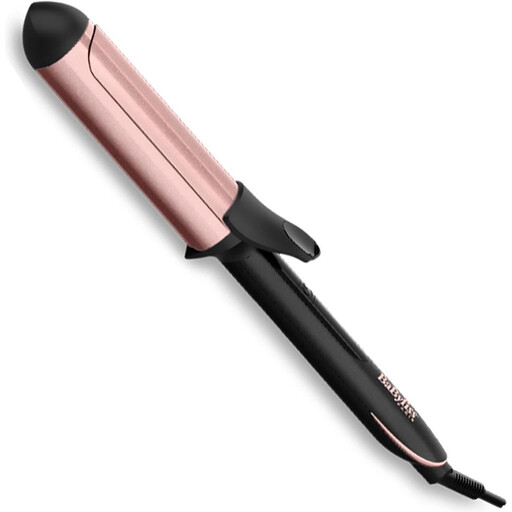 No image available
The wide barrel is suited to a softer shape; check whether 38 mm works for the length of the front sections of your hair.
The product description lists six temperature settings from 160–210 °C, a clamp, automatic shut-off, an insulated tip, a glove and a heat mat.
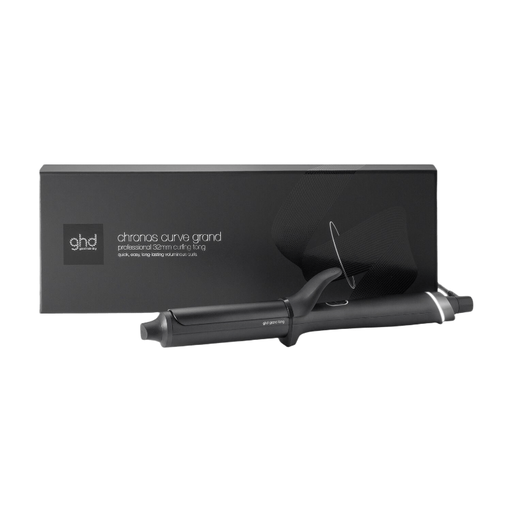 No image available
A 25 mm barrel suits anyone looking for a softer shape. When styling close to your face, take care to avoid direct skin contact with the hot barrel, as stated in the warning.
The product title lists a heat-up time of 30 seconds and automatic shut-off; the product description mentions a cool tip and a styling temperature of 185 °C.
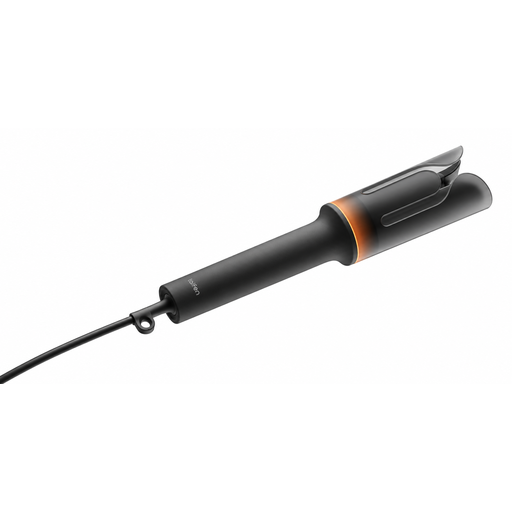 No image available
Automatic operation may appeal if you’d rather not wrap your hair yourself. The warning for this model says to keep the hot barrel away from your face and eyes, so bear this in mind when styling sections around your face.
The product information lists automatic rotation, three temperature settings and an anti-tangle function.
No, you can choose a barrel size to suit the shape you want for just the front sections. A narrower barrel creates a tighter curl than a wider one; the result also depends on the length of your hair and your technique.
Limit excessive heat and choose a usable low or medium setting. The American Academy of Dermatology also recommends using a heat-protectant product; a coating claim doesn’t make repeated heat styling risk-free.
For a standard product bought online in the Netherlands, you generally have 14 days from delivery to change your mind, subject to applicable exceptions. This cooling-off period is separate from your statutory guarantee: if a product used normally doesn’t meet what you could reasonably expect, the seller is responsible for providing an appropriate solution. ACM ConsuWijzer explains these consumer rights.
Electrical equipment within the applicable voltage range of the Low Voltage Directive must meet the relevant safety requirements and carry the mandatory CE marking. The marking is the manufacturer’s declaration of conformity, not an independent guarantee of risk-free use. Check the information for the exact model; the Netherlands Food and Consumer Product Safety Authority explains the applicable rules.