
Short strands, defined curls
You want the short strands around your face to wrap neatly around the barrel and take on a defined shape. Philips recommends a narrow-barrel curling tong for shorter hair.


If you have short strands around your face, a narrow-barrel curling tong is a sensible first option to consider. A wider or tapered barrel may suit you if you want a looser curl or more variety. Choose controls you can handle easily when styling close to your face. For hotel use, also check the temperature settings, where you can safely rest the hot tong, and — when travelling outside the Netherlands — the voltage and plug type.
You want the short strands around your face to wrap neatly around the barrel and take on a defined shape. Philips recommends a narrow-barrel curling tong for shorter hair.
You style your hair in hotels in different countries and want to check the stated voltage, plug type and a safe way to store the tong, as well as the curl shape it creates.
You curl just a few strands and prioritise a temperature setting that suits the way you use it, a suitable place to rest the hot tong and straightforward controls.
Suitable for: short face-framing strands that you want to clamp and shape into a defined curl. BaByliss lists a 19 mm barrel for the C450E.
Keep in mind: the clamp means you need to position the hair ends carefully; this model’s stated temperature settings start at 160 °C.
Suitable for: anyone who wants to create different curl sizes with one wand. Remington lists a tapered shape of 13–25 mm for the CI96W1.
Keep in mind: you wrap the strand around the wand yourself and hold it close to your fingers and face. The supplied heat glove doesn’t remove the need to take care.
Suitable for: anyone who wants to minimise the need to wrap hair around a hot wand by hand. BaByliss describes the C1031E as a model that automatically draws hair around a cylinder.
Keep in mind: check the hair-length requirements for the exact model. Philips warns that some automatic curlers require hair longer than 16 cm; this limit does not apply to every model.
Compare the barrel shape and temperature settings with the shortest strand you want to curl. For hotel use, also check the plug type and where you can rest the hot tong.
| What to consider | What should you check? | Who should prioritise this? |
|---|---|---|
| Grip and curl shape | Compare the barrel diameter and shape, and whether it has a clamp, with the length of your strands and the curl you want. | I want to wrap short strands around my face neatly around the barrel and create a defined curl. Around 40% of consumers focus mainly on grip and curl shape. |
| Temperature and controls | Check the lowest available temperature setting and make sure the controls and shape are easy for you to handle. | When I use the tong close to my face, I want to adjust the heat and style each strand with control. Around 30% of consumers prioritise temperature and controls. |
| Travel use | Check the voltage for the exact model and separately confirm that the plug will fit at your destination. | I want to plug the tong in at hotels outside the Netherlands without confusing voltage and plug type. Around 20% of consumers give travel suitability top priority. |
| Resting and switching off | Check whether the model comes with a heat-resistant mat or stand and has automatic shut-off. | When I style a few strands in a hotel room, I want to choose a suitable place for the hot tong beforehand and switch it off myself afterwards. Around 10% of consumers focus mainly on safe resting and switching off. |
You need to be able to wrap a short strand around the barrel. Philips recommends a narrow-barrel curling tong for shorter hair.
Compare the barrel shape with your shortest strand to curl, and check the minimum hair length in the manual for the exact model.
A voltage range doesn’t tell you whether the plug will fit the socket at your destination. Remington lists a range of 120–240 V for the CI96W1.
Check the voltage and plug type separately. You may need a suitable plug adapter for your destination.
Automatic shut-off may only activate after a set period for that specific model; Remington gives 60 minutes for the CI96W1.
Before styling, clear a space on a suitable surface, switch the tong off yourself afterwards, and follow the manual for cooling and storage.
The clamped C450E and automatic C1031E offer different ways to curl your hair.
The tapered CI96W1 is designed to create different curl sizes, while the CI6525 has a fixed 25 mm barrel.
The 14 mm Thin Wand is a narrow-barrel curling wand for anyone looking for a defined curl shape.
Philips offers the BHB886/00 as an automatic curler and provides advice on using curling tongs on shorter hair.
The Twist 19 mm is a curling wand without a clamp, combining manual wrapping with adjustable temperature settings.
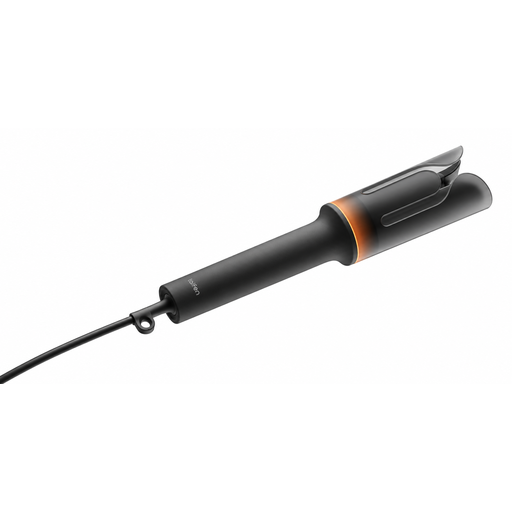
Joybuy product selection for anyone who wants to minimise the need to wrap a wand by hand when curling face-framing strands.
 No image available
Automatic rotation may suit you if you want to minimise the need to wrap a few strands by hand. Keep the hot parts away from your face, scalp and eyes during use.
The product name lists three temperature settings and an anti-tangle function.
Before buying, check that the product on offer meets the applicable electrical safety requirements and carries the required CE marking.
It depends on the length requirements for the exact model. Philips warns that some automatic curlers require hair longer than 16 cm, so check the manual and don’t assume this limit applies to other models.
Compare the voltage of the exact appliance with the voltage at your destination, and check separately that the plug will fit. Remington lists 120–240 V for the CI96W1; this range alone doesn’t confirm that the plug is suitable.
No. Switch the tong off yourself after use and follow the manual for cooling and storage. The Dutch Fire Service advises switching electrical appliances off completely; automatic shut-off is no reason to leave a hot appliance unattended.
Use the curling tong on dry hair and follow the manual for your model. Philips recommends using its hair styler on dry hair, as wet hair is more vulnerable to damage when exposed to heat.
A mains-powered curling tong covered by the Low Voltage Directive must meet the applicable EU safety requirements and carry a CE marking. The Netherlands Food and Consumer Product Safety Authority states that the directive covers electrical equipment with a rated AC voltage of 50–1000 V. The European Commission explains that the manufacturer uses the CE marking to declare that the product meets the applicable EU rules; the marking isn’t an independent performance test.