
Cooking for a crowd in a large soup pan
You want to blend a large quantity of soup for a neighbourhood meal without having to keep filling a jug. The Consumers’ Association says blending soup in the pan is convenient.


For a large pan of cucumber soup, a hand blender is handy because you can blend the soup straight in the pan. For a smooth, cold soup, a jug blender is a good choice if you’re happy to blend in batches as needed. A heated blender is particularly useful if you also want to make hot dishes. Check the usable capacity and temperature guidance for the exact model, as not every blender jug is suitable for hot ingredients. The Consumers’ Association explains the difference between blending in a pan and using a jug.
You want to blend a large quantity of soup for a neighbourhood meal without having to keep filling a jug. The Consumers’ Association says blending soup in the pan is convenient.
You prioritise a smooth texture and want to know how much soup will fit in the jug per batch. The Consumers’ Association describes a blender jug as suitable for liquid mixtures.
You want to use the same appliance for hot and cold dishes, so you’ll need to check the heating function and temperature guidance for each model.
Choose this approach: if you’re making a large pan and would rather not transfer the soup in batches.
Trade-off: according to the Consumers’ Association, blending in the pan may not produce as smooth a result as blending in a jug.
Choose this approach: if a smooth texture is your priority and you’re happy to blend in batches if needed.
Trade-off: check the usable capacity. The jug’s total capacity isn’t always the amount you can use in a recipe.
Choose this approach: if you want to make hot dishes as well as cold cucumber soup and will use the heating function.
Trade-off: heating adds little if you only make cold soup. The usable jug capacity also limits how much you can make per batch.
| What to consider | What to look for | Who should consider this? |
|---|---|---|
| Large quantity | Compare blending in the pan with the number of jug batches required to stay within the permitted filling level. | When I’m making a large pan for a neighbourhood meal, I don’t want to keep transferring the soup. Around 42% of consumers prioritise blending a large quantity without using a jug in batches. |
| Smooth, cold soup | Consider using a jug and check the usable capacity per batch; don’t judge texture by wattage alone. | A smooth texture is my priority for cold cucumber soup, even if I have to work in batches. Around 33% of consumers say a smooth result is their main concern. |
| Hot soup too | Check whether the exact model heats ingredients or only allows them to be processed within certain temperature limits. | I want to use the appliance for hot soup too, so I’ll check its heating function and the model’s instructions. Around 8% of consumers prioritise this versatility. |
| Cleaning | Check which parts can be removed and are dishwasher-safe according to the manual for each model. | After making several batches, I want to wash as few parts by hand as possible. Around 17% of consumers prioritise easy cleaning. |
The total capacity doesn’t automatically tell you how much soup you can safely make per batch or how much the instructions allow. For example, Tefal lists a total capacity of 2 litres and a usable capacity of 1.75 litres for the Perfectmix Cook BL83SD30.
Work out how many batches you’ll need using the permitted filling level for your recipe, not the largest figure on the packaging.
A smaller usable capacity may mean you need to blend more batches than you expected.
Temperature limits vary by model. Philips says that for models HR2512/90, HR2511/90 and HR2510/90, ingredients must first be allowed to cool to below 60 °C.
When making hot soup, follow the instructions for the exact model. For cold cucumber soup, there’s no need to use a heating function.
The Dutch Government says there is no fixed statutory guarantee period in the Netherlands. If there’s a problem with a product, the seller is your point of contact.
Check exactly what extra cover offers and compare its terms with your existing statutory rights.
MultiQuick hand blenders are an option if you want to blend soup straight in the pan.
VitaPower jug blenders are an option for blending liquid soup in batches.
The Perfectmix Cook BL83SD30 is an option if you want to make both cold and heated dishes.
These Joybuy products are jug blenders for anyone who wants to blend cold cucumber soup in batches.
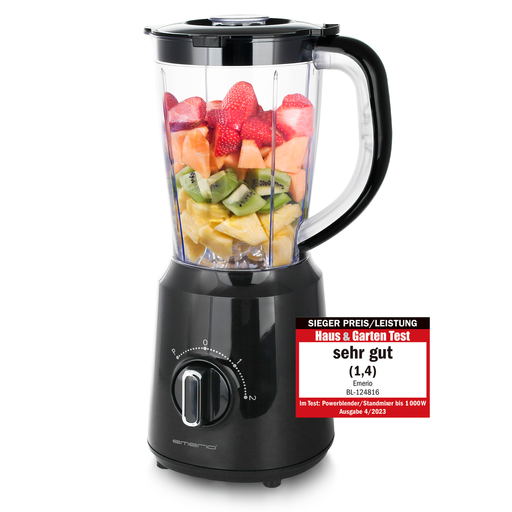 No image available
Suitable if you want to blend cucumber soup in a jug; the product description lists soup as one of its uses.
Jug capacity: 1.5 L. Two speeds.
 No image available
Suitable if you want to blend soup in batches in a blending jug; the product description lists soup as one of its uses.
The product name also lists a 600 ml travel bottle and a 300 ml chopping cup.
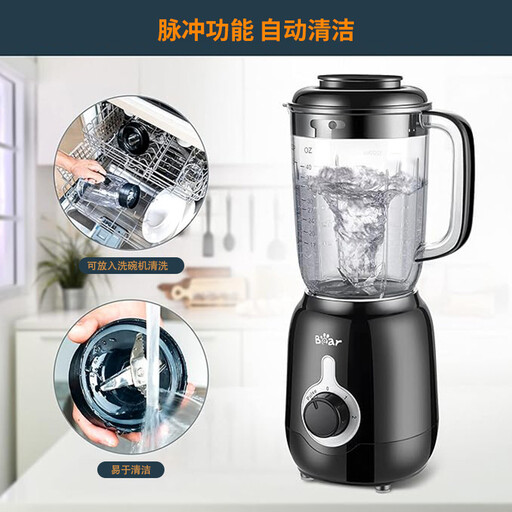 No image available
Suitable if you want to blend cold soup in a blender jug; the product description lists blending as one of its uses.
The product name lists a 1.2 L jug, 500 W, 2 speeds, a pulse function and 4 stainless steel blades.
 No image available
Suitable if you want to blend soup in a jug; the product description lists soup as one of its uses.
The product name lists a 1.5 L jug and a 1000 Watt motor.
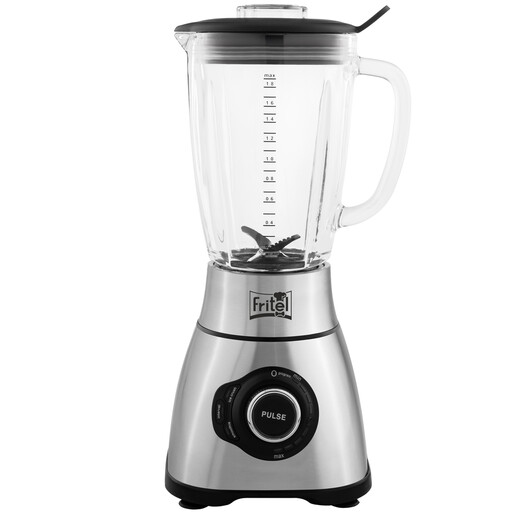 No image available
Suitable if you want to blend soup in a jug; the product description lists soup as one of its uses.
The product name lists a 1.8 L glass jug, 1800 W and 9 speeds.
No, not if you’re only making cold soup. If you also want to blend hot soup, follow the instructions for the exact model. Philips says that for the HR2512/90, HR2511/90 and HR2510/90, ingredients must first be allowed to cool to below 60 °C.
According to the Netherlands Nutrition Centre, store leftovers covered and cooled in the fridge within 2 hours of preparation, preferably at 4 °C.
It depends on the part and model. Braun refers owners of the MQ50236M to the instructions, so check them before putting the blending shaft or accessories in the dishwasher.
Not necessarily. The Dutch Government says there is no fixed statutory guarantee period in the Netherlands. Compare the terms of any extra cover with your statutory rights. If there’s a fault, the seller is your point of contact.
Yes. The Netherlands Food and Consumer Product Safety Authority (NVWA) says CE marking is compulsory for electrical products. A claim on a product page doesn’t in itself prove that an individual item meets the applicable requirements.