
Blend straight in the pan
You’re preparing the cucumber mixture in a pan and want to blend it there, without pouring it into another container first. The Netherlands Nutrition Centre lists a hand blender as an option for cold cucumber soup.


Choose a hand blender if you want to blend the cucumber soup straight in the pan. A blender jug is a better fit if you want to blend a sufficiently liquid soup until smooth for several people. The Netherlands Consumers' Association and the Netherlands Nutrition Centre describe both methods. If you choose a jug blender, compare its usable capacity with your recipe and check the instructions for the exact model when using hot ingredients. A jug that can handle hot ingredients won’t heat the soup for you.
You’re preparing the cucumber mixture in a pan and want to blend it there, without pouring it into another container first. The Netherlands Nutrition Centre lists a hand blender as an option for cold cucumber soup.
You want to blend the soup in a blender jug and choose a usable capacity that suits the amount you’re making. The Netherlands Consumers' Association lists a blender as an option for larger quantities.
You prioritise an evenly blended, liquid mixture, while also taking the extra jug, washing up and worktop space into account.
First decide where you want to blend, then choose a capacity and check the temperature guidance and cleaning requirements for your recipe.
| What to consider | What to look for | Who is this important for? |
|---|---|---|
| Blending in the pan | Check that the instructions allow you to use the appliance in your pan and with ingredients at the temperature you’re using. | If I want to blend the mixture in the pan, I don’t want to pour everything into another container first, and I want to avoid splashes. Around 36% of consumers say blending in the pan is their top buying priority. |
| Capacity per batch | Compare your recipe with the effective or usable capacity, not just the jug’s maximum capacity. | When preparing a meal for everyone, I want to know whether the jug can hold the amount of soup I need. Around 29% of consumers prioritise having enough capacity for several people. |
| Even texture | Read reviews about blending vegetables and check that the model is suitable for the temperature of your mixture. | If a smoothly blended soup is my priority, I compare how suitable each model is for the task rather than looking at wattage alone. Around 21% of consumers put texture first. |
| Cleaning | Check which parts can be removed and which are dishwasher-safe according to the instructions. | After a meal with everyone, I want as few parts as possible to clean. Easy cleaning is the top buying priority for around 14% of consumers. |
The maximum capacity isn’t always the amount you can blend in one go. Philips lists a maximum capacity of 1,9 l and an effective capacity of 1 l for the HR2041/00. Tefal lists a 2 l jug with a usable capacity of 1,5 l for the BL871D31.
Work out the quantity in your recipe and compare it with the usable capacity of the exact model.
A lower working capacity may mean you need to blend the soup in several batches.
A jug that can handle hot ingredients won’t necessarily heat the soup itself. The Netherlands Consumers' Association distinguishes between blenders that blend soup and models that can also heat it.
Check separately whether the exact model can process hot ingredients and whether it heats the soup itself.
If the appliance doesn’t heat the soup, you may still need a pan to cook or reheat it.
For cucumber soup, your chosen method, the amount per batch and the cleaning requirements all matter too. Motor power alone doesn’t tell you how well a model blends vegetables.
First decide whether you want to blend in the pan or in a jug. Then compare each model’s capacity, reviews of its performance with vegetables and maintenance requirements.
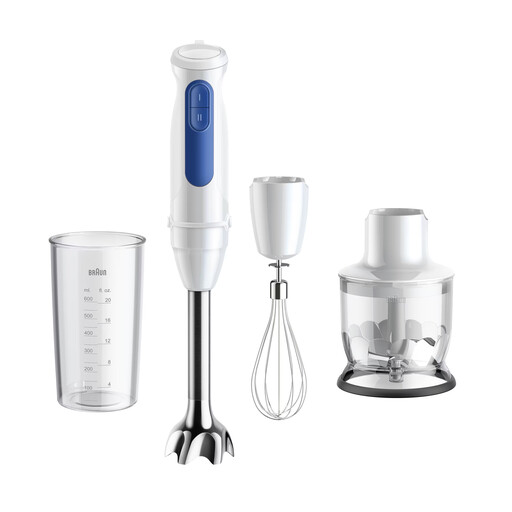
The MultiQuick 5 MQ 50236 M we looked at is a hand blender with several attachments.
The PerfectMix+ BL871D31 we looked at is a jug blender with a stated usable capacity and cleaning features.
The VitaPower Serie 4 MMB6172S we looked at is a jug blender with a stated jug capacity of 1,5 l.
The 3000 Series HR2041/00 we looked at is a jug blender where the difference between maximum and effective capacity matters when making several portions.
This selection includes jug blenders for larger quantities of soup and hand blenders for blending in the pan. Always check the instructions for the exact model before using hot ingredients.
 No image available
A jug blender for making soup for several people, provided its usable capacity suits your recipe.
1200 W; 1,5 l usable capacity; Auto-Clean; removable blades; dishwasher-safe jug.
The product description mentions hot and cold preparations. Check the model instructions for the temperature of your ingredients.
 No image available
A jug blender for soup when its stated working capacity matches the amount you want to blend.
1000 W; 1,5 l working capacity; the product description lists soup as a use.
Do not process ingredients hotter than 80 °C; allow hot liquids to cool first.
 No image available
A hand blender for soup if you want to blend it straight in the pan.
Up to 1200 W; 700 ml beaker; 500 ml chopper; whisk.
Let the appliance rest for 1 minute after 1 minute of use. Wash dishwasher-safe accessories at under 60 °C.
 No image available
A hand blender for smooth soups if you’d rather not use a blender jug while blending.
The product description mentions SplashControl and dishwasher-safe parts.
Do not use the appliance continuously for longer than 1 minute, and allow it to cool between uses.
 No image available
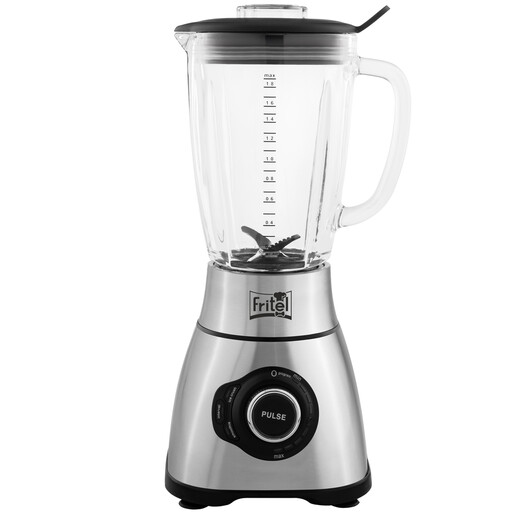
A jug blender for soup if its stated jug capacity suits the quantity in your recipe.
1800 W; 1,8 l glass jug; 9 speeds; removable blade assembly.
The product description says the jug, lid and filling cap are dishwasher-safe.
Not in the recipe from the Netherlands Nutrition Centre that we looked at: the cucumber and stock are simmered for a few minutes first, then blended and chilled later. Other recipes may have different steps.
No. Don’t assume that all blenders have the same temperature limit. Philips prohibits hot ingredients in the HR3756/00, HR3752/00 and HR3868/00 models. For the HR2512/90, HR2511/90 and HR2510/90, Philips recommends cooling ingredients to below 60 °C first. Follow the instructions for any other model.
Allow the soup to cool and store it covered in the fridge. The Netherlands Nutrition Centre recommends keeping your fridge at 4 °C, not leaving perishable food out of the fridge for more than 2 hours, and storing leftovers covered in the fridge for up to 2 days.
In the Netherlands, the retailer is your point of contact if a product is faulty. According to the Dutch government, there’s no fixed statutory warranty period; a manufacturer’s warranty is in addition to your statutory rights.
No. According to the European Union, the manufacturer uses the CE mark to indicate that the product complies with the relevant EU product rules. The mark doesn’t assess how well it blends.