
Storing a small portion after class
You want to know whether your current fridge and a sealed container are enough, and how to check the temperature.


You don’t need a new fridge for cucumber slices after an evening class if your current fridge has room for a sealed container and, once checked, is actually at 4 °C. The Netherlands Nutrition Centre recommends setting your fridge to 4 °C, so check the temperature with a fridge thermometer. If you don’t have suitable fridge space, choose a fridge based on where it will go and how much capacity you need, then compare its annual energy consumption and noise level, and decide whether you need a freezer compartment.
You want to know whether your current fridge and a sealed container are enough, and how to check the temperature.
You’re looking for a fridge that fits in a small kitchen, without taking up space with a freezer compartment you don’t need.
You also store everyday groceries or frozen food, and want to find the right balance between capacity, energy consumption and fridge type.
First check whether your existing fridge can keep the slices sealed at the right temperature; only buy an appliance if you need extra fridge space.
For sliced cucumber, the Netherlands Nutrition Centre recommends storing it sealed in the fridge, set to 4 °C. The temperature setting doesn’t prove that the fridge actually reaches that temperature. Check it with a fridge thermometer.
| What to consider | What should you check? | Who should pay particular attention? |
|---|---|---|
| Temperature and sealed storage | Set the fridge to 4 °C, measure its actual temperature and check that there’s room for a sealed container. | After class, I want to be able to store the slices sealed and check whether my fridge really reaches 4 °C. Around 31% of consumers put reliable cooling first. |
| Size and positioning | Measure the space available and compare it with the exact model’s external dimensions and installation instructions. | In a small kitchen, I want the appliance to fit while leaving enough room for my other groceries. Around 25% of consumers prioritise a suitable size and position. |
| Annual energy consumption | Compare kWh/year and fridge capacity for appliances that suit your space requirements; don’t look at the energy label rating alone. | If I use a fridge every day, I want to take its labelled annual energy consumption into account alongside its capacity. Around 19% of consumers make running costs their top priority. |
| A freezer compartment | Decide whether you need freezer space for other products and compare fridge and freezer capacity separately. | I don’t need a freezer compartment for cucumber slices, but it could be essential for other frozen foods. Around 13% of consumers prioritise having freezer space. |
| Noise | Compare the labelled noise level in dB of models that also meet your cooling and size requirements. | If the fridge is close to my living space, I want to consider its noise level without losing sight of the need to check the temperature. Around 12% of consumers give noise the greatest weight in their choice. |
For this storage task, keeping the slices sealed and at the right measured temperature matters more than having an extra appliance or a special feature.
First, measure the temperature in your current fridge and check that there’s room for a sealed container.
An unnecessary extra appliance can also mean additional electricity consumption.
The Netherlands Nutrition Centre distinguishes between a whole and a cut cucumber; cut vegetables should be kept sealed in the fridge.
Keep the slices sealed and follow the advice for pre-cut vegetables.
An energy label shows, among other things, annual energy consumption and capacity, but the rating alone doesn’t tell you how much electricity a suitable appliance uses each year. A claim about a freshness drawer doesn’t prove that cucumber slices will keep for longer.
Compare kWh/year and capacity for appliances that fit your space, and always store the slices sealed.
The Inventum KK471W product information gives two widths: 47,2 and 47,5 cm. An integrated fridge may also require specific niche dimensions and door mounting.
Before choosing, confirm the external dimensions, available space and any door mounting requirements for the exact model.
The KK471W is a compact freestanding model for anyone looking for fridge space without a large fridge-freezer.
The TSE1285N is a freestanding under-counter model for anyone looking for compact fridge space.
The RB34C670DWW/EF is a fridge-freezer for anyone who needs freezer space as well as fridge space.
The KGN39OCAF is a freestanding fridge-freezer for households that use both fridge and freezer space.
The IRd 5100 is an integrated fridge for a kitchen with a suitable niche and door mounting.
This selection includes compact freestanding under-counter models and fridge-freezers for anyone who stores other chilled or frozen food as well as cucumber slices.
 No image available
A compact under-counter model for anyone looking for fridge space without a freezer compartment.
The stated fridge capacity is 88 litres. The product description lists adjustable glass shelves, a salad crisper and mechanical temperature control; use a thermometer to check the temperature the appliance reaches during use.
 No image available
This under-counter model offers both fridge and freezer space for anyone who needs both, not just somewhere to store cucumber slices.
The product description lists 107 litres of fridge space, 13 litres of freezer space and annual energy consumption of 87 kWh. It also mentions a temperature control dial and a C energy label rating.
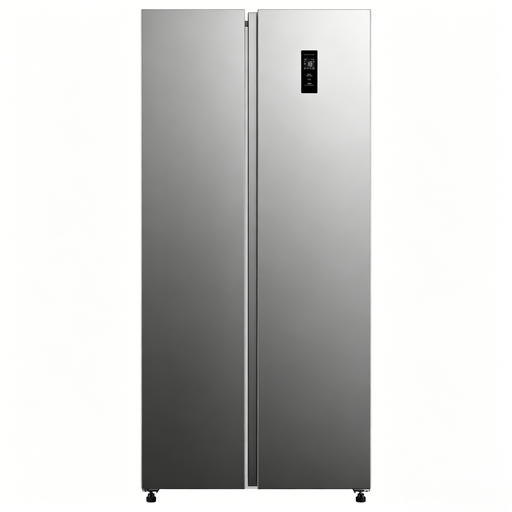 No image available
This fridge-freezer is designed for anyone who needs separate fridge and freezer space for everyday groceries.
The product name lists 276 litres of fridge space, 168 litres of freezer space, a width of 83 cm, a noise level of 40 dB and an E energy label rating. The description mentions No Frost and separate digital settings for the fridge and freezer. Check the ventilation and door-opening clearance required for installation.
 No image available
This fridge-freezer is a good fit for anyone who stores both chilled and frozen food.
The product description lists 187 litres of fridge space, 73 litres of freezer space and a width of 55 cm. The stated fridge temperature range is 2 °C to 8 °C, which includes 4 °C; check the actual temperature with a fridge thermometer. The description also mentions a salad crisper, reversible door and E energy label rating.
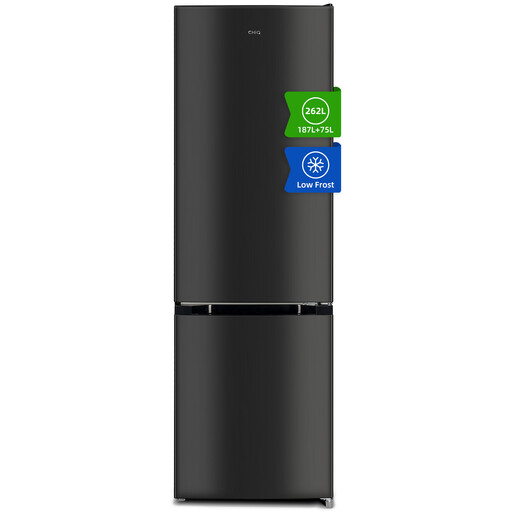 No image available
This model offers fridge and freezer space for anyone who stores frozen food as well as chilled products.
The product information lists a total capacity of 262 litres, a salad crisper and a reversible door. The product name mentions Low Frost and a noise level of 39 dB.
No, not if your current fridge has room for a well-sealed container and, once correctly adjusted, its measured temperature is 4 °C. Measure the temperature rather than relying only on the setting.
The Netherlands Nutrition Centre recommends keeping opened pre-cut vegetables in the fridge for two days. This doesn’t guarantee that every container will be fine for two days, so check for signs of spoilage too.
The Netherlands Nutrition Centre recommends placing a thermometer in the middle of the bottom shelf and leaving it there for half a day or overnight. Adjust the fridge if the reading is above 4 °C, then check again.
No. The Netherlands Nutrition Centre says that cucumbers can lose flavour and become limp in the fridge, but recommends keeping a cut cucumber chilled and protected from drying out.
No, you don’t need a freezer compartment to keep the slices chilled. Decide how much freezer space you need based on other products; freezing isn’t suitable for raw cucumber.