
Fan of raita with a bit of bite
You want pieces of cucumber in a thick yoghurt sauce and are wondering whether you need a blender. The Netherlands Nutrition Centre describes a method using coarsely grated, drained cucumber.


You don’t need a blender for raita with distinct pieces of cucumber: the Netherlands Nutrition Centre recommends coarsely grating the cucumber, draining it and mixing it with yoghurt. If you’d prefer a smooth sauce, a blender could be a good fit; compare the usable capacity if you’re making several portions. For smaller quantities, a hand blender or chopper may suit the task, depending on the attachments included.
You want pieces of cucumber in a thick yoghurt sauce and are wondering whether you need a blender. The Netherlands Nutrition Centre describes a method using coarsely grated, drained cucumber.
You want to make several portions of smooth sauce, so you’re considering usable capacity and the texture you’re after. The Netherlands Consumers’ Association discusses blenders mainly for puréeing and larger quantities.
You want to blend small portions or process herbs too, while keeping attachments, storage space and cleaning in mind. The Netherlands Consumers’ Association distinguishes small blending tasks from chopping, which requires a chopper.
Choose this if: you want distinct pieces of cucumber and a thick raita. Coarsely grate the cucumber, leave it to drain, then mix it with yoghurt.
The trade-off: you’ll grate by hand, but you won’t need to buy or clean a blender for this recipe.
Choose this if: you specifically want to make a smooth sauce or prepare other liquid recipes in larger quantities. Compare the usable capacity, not just the maximum jug capacity.
The trade-off: puréeing changes the texture; a jug blender also takes up worktop space and may create more washing-up than a hand blender.
Choose this if: you want to blend small quantities until smooth or work in a suitable mixing bowl.
The trade-off: a blending foot won’t grate cucumber, and it doesn’t necessarily mean a chopper is included too.
Choose this if: you mainly want to chop herbs or other ingredients separately.
The trade-off: chopping won’t automatically give you the coarse, drained cucumber used in the raita recipe; you’ll need to mix the cucumber and yoghurt yourself afterwards.
| What to consider | What should you look for? | Who is this important for? |
|---|---|---|
| Texture | First decide whether you want to keep the pieces or make a smooth sauce. Use a grater for a coarse texture; pulse or speed settings are relevant if you’re going to purée. | If I want pieces of cucumber in a thick raita, puréeing isn’t what I’m after. Around 29% of consumers put their preferred texture first. |
| Portion size | With a jug blender, compare the usable capacity with the amount you want to make at once. Maximum jug capacity isn’t the same as usable capacity. | For a dinner party, I want to know whether I can make the amount I need in one batch. Around 23% of consumers mainly consider portion size. |
| Small tasks | Check the full model number to see whether a chopper is included. Choose a hand blender for small blending jobs, and consider chopping a separate task. | If I want to blend small quantities or chop herbs separately, the version I choose needs to suit the task. Around 18% of consumers prioritise small kitchen jobs. |
| Cleaning | Check which parts can be removed and consult the manual to see whether each part is dishwasher-safe. | After eating, I don’t want more cleaning than necessary. Around 18% of consumers mainly value easy cleaning. |
| Use and aftercare | Check the accessories and available parts for the exact model, and read the warranty terms alongside your statutory rights. | If I’m considering an appliance for more than one dish, I want to know what it can really do and what support is available afterwards. Around 12% of consumers mainly consider uses beyond this one dinner party and aftercare. |
The Netherlands Nutrition Centre’s raita recipe calls for the cucumber to be coarsely grated and drained, rather than puréed.
Decide on your preferred texture first. For raita with pieces, a grater, sieve and mixing bowl are all you need.
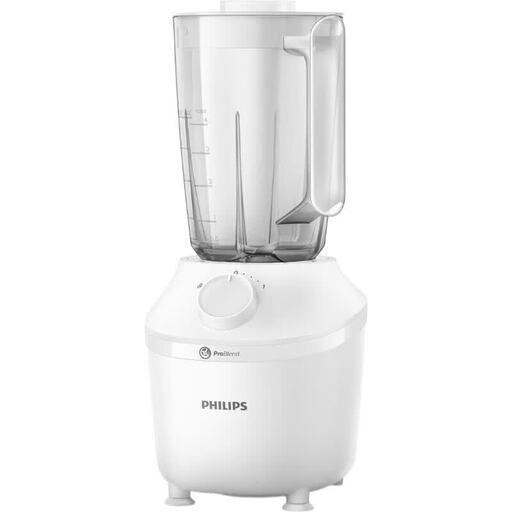
The Philips HR2041/00 has a maximum capacity of 1,9 l and a usable capacity of 1 l. This difference could determine whether you need to prepare several batches for guests.
For the exact model, compare the usable capacity with the amount you want to prepare at once.
Chopping requires a chopper attachment. The Braun MQ50001M is listed with a measuring beaker and metal blending foot; a chopper isn’t included among the listed parts.
Check the contents of the box against the full model number before relying on it for chopping.
The HR2041/00 is a jug blender to consider if you want to make a smooth mixture and compare usable capacity.
The MultiQuick 5 MQ50001M is a hand blender for small blending jobs; check the accessories supplied with the specific version.
The MMR08A1 is a chopper for separate chopping tasks, such as processing herbs on their own.
The Blendforce II BL435831 is a jug blender to consider for a smooth version or other liquid recipes.
These product choices are aimed at making smooth sauces or handling small blending and chopping jobs; for raita with distinct pieces of cucumber, grating remains an alternative.
 No image available
For a deliberately smooth sauce, where you want to consider the usable quantity per batch.
Usable capacity: 1 l; maximum capacity: 1,9 l. One speed setting and a pulse setting. The instructions limit continuous use to 2 minutes and ingredients to a maximum of 60 °C.
 No image available
For smooth sauces, when you want to weigh the stated working capacity against the batch size you need.
Working capacity: 1,5 l. Three speeds and a pulse setting. The product information lists dishwasher-safe parts; the instructions limit continuous use to 3 minutes and say to cut large ingredients into pieces of around 2 × 2 × 2 cm first.
 No image available
For blending small quantities and, with the included attachment, chopping ingredients separately.
The set includes a 700 ml measuring beaker, a 500 ml chopper and a whisk, with variable speed control. Each usage cycle is limited to 1 minute, followed by 1 minute of rest; dishwasher-safe accessories should be washed below 60 °C.
 No image available
For a smooth mixture, if you’re looking for a jug blender with several manual speeds and programmes.
Jug capacity: 2,1 l; 14 manual speeds and four programmes, including Pulse. Follow the maximum fill lines and don’t operate the appliance empty, overfilled or without the lid.
 No image available
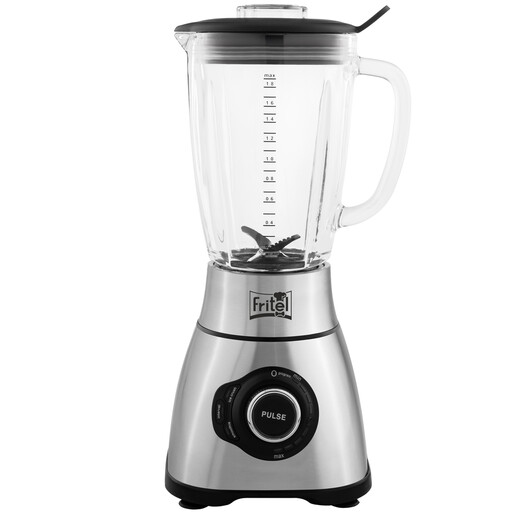
For smooth sauces and dips, if a jug blender suits the batch size you need.
Jug capacity: 1,8 l. The product information lists nine speeds, a pulse function and a removable blade assembly. The jug, lid and filler cap are listed as dishwasher-safe.
No, not if you want the coarse cucumber texture used in the recipe: grate the cucumber, leave it to drain and mix it with yoghurt. The Netherlands Nutrition Centre describes this method; a blender is suitable for a deliberately smoother version.
Refrigerate the raita promptly after making it, covered. The Netherlands Nutrition Centre recommends keeping your fridge at 4 °C and refrigerating leftovers within 2 hours of preparation. Advice on how long opened full-fat yoghurt keeps doesn’t automatically apply to homemade cucumber raita.
It varies by model and part. Braun refers users to the instructions for dishwasher guidance on parts of the MQ50001M; check the manual for your exact version and don’t put the motor unit in the dishwasher based on a general product listing.
Not necessarily. According to ACM ConsuWijzer, in addition to any manufacturer’s or seller’s warranty, you have statutory rights if a product used normally doesn’t do what you could reasonably expect it to. The circumstances determine which claim applies.
Yes, if the product rules that apply to the appliance require CE marking. The Netherlands Food and Consumer Product Safety Authority explains the requirements and scope for electrical appliances; check the marking and product documentation for the model you’re considering. General regulations alone don’t confirm that a specific model meets the requirements.