
Fans of raita with texture
You want recognisable pieces of cucumber and are wondering whether a blender will make the sauce too smooth. Recipes from Nutmeg & Vinegar and Goddelijke Recepten describe using chopped and grated cucumber respectively.


You don’t need a blender to make cucumber raita with recognisable pieces of cucumber: simply chop or grate the cucumber and stir it into the yoghurt. A hand blender or manual chopper is worth considering if you also want to blend or chop other ingredients. A jug blender is a better fit if you also make smooth blends and have room for the motor base and jug. For electrical appliances, check the CE information and see which parts are included with the specific version.
You want recognisable pieces of cucumber and are wondering whether a blender will make the sauce too smooth. Recipes from Nutmeg & Vinegar and Goddelijke Recepten describe using chopped and grated cucumber respectively.
You want to prepare small quantities without leaving a large appliance on the worktop. So, consider how much room you’ll need for both the appliance and its separate parts.
You make small portions and want to know in advance which parts need to be cleaned separately after use.
A good fit if: you want to keep pieces of cucumber intact and mainly make raita.
Bear in mind: you’ll chop or grate by hand; you don’t need an electrical appliance for this recipe.
A good fit if: you want to chop small quantities of ingredients without an electric motor.
Bear in mind: chopping isn’t the same as grating and won’t necessarily give you the same texture.
A good fit if: you want to blend soft ingredients or sauces as well as make raita, and store the appliance away.
Bear in mind: blending changes the texture; also check which accessories are included with the exact version.
A good fit if: you also make smooth smoothies or sauces and have room for the motor base and jug.
Bear in mind: blending the cucumber and yoghurt together until smooth won’t leave any pieces of cucumber.
First decide whether you want to chop, grate, mince or purée the cucumber. Nutmeg & Vinegar describes chopped cucumber stirred into yoghurt; Goddelijke Recepten describes grated cucumber that is left to drain.
| Consideration | What to look for | Who is this important to? |
|---|---|---|
| Texture | Choose between chopping, grating, mincing and puréeing. | If you want recognisable pieces of cucumber, choose a preparation method that keeps them intact. Around 36% of consumers prioritise texture. |
| Worktop and storage space | Measure the space for both the appliance and its separate parts. | In a small kitchen, you’ll want to know whether the whole set will fit in the cupboard, not just whether the motor base looks compact. Space is the main concern for around 29% of consumers. |
| Cleaning | Check the cleaning instructions for each part. | If you want to tidy up quickly after making a small portion, you’ll want to know in advance which parts need to be washed separately. Around 21% of consumers give cleaning top priority. |
| Other uses | Check that the functions and accessories suit what else you make. | If you also make smooth sauces or other dishes, an appliance may be more useful than if you only prepare cucumber for raita. Other uses are the top priority for around 14% of consumers. |
A recipe from Nutmeg & Vinegar stirs chopped cucumber into yoghurt; you don’t need a blender for this. Puréeing gives you a different texture.
Decide on the texture you want first, and consider using a knife or grater before choosing an appliance.
Versions can vary. A detachable system doesn’t tell you by itself which accessories are included in the box.
Compare the full model code and what’s in the box, not just the series name.
A jug blender and a manual chopper also have separate parts that need space both when you’re using them and when you’re storing them.
Check how much room you’ll need for the full set, including the jug, blades and lid.
The MultiQuick range includes several hand blender versions; the MQ10.001M WH is a basic model with one speed.
The ErgoMixx MSM64110 is a hand blender model with a detachable blending foot.
The manufacturer describes the Original NB603DG as a personal jug blender for small, smooth blends.
The manual 5 Second Chopper K1330404 is a chopper, not an electric blender.
This selection includes tools for textured raita, such as a vegetable slicer or manual chopper, as well as hand blenders for anyone who also wants to blend ingredients. For electrical models, check the CE information and see exactly which parts are included.
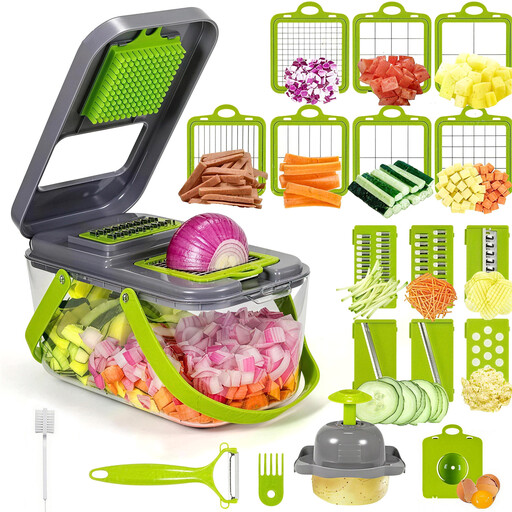 No image available
A manual slicer for grating or chopping cucumber when you want to keep the pieces intact for raita.
The product name says 13-in-1; check the full set and the parts included before choosing.
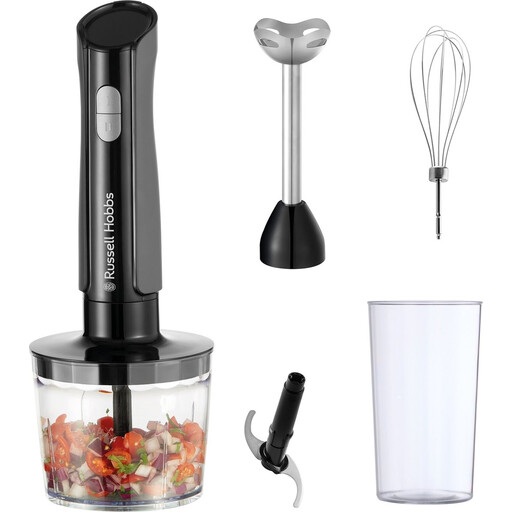
 No image available
A hand blender option for anyone who wants to blend soft ingredients or sauces as well as make raita; puréeing won’t leave any pieces of cucumber intact.
Check the included accessories and CE information for this electrical model.
 No image available
The product name mentions blending and chopping, for anyone who wants to make other dishes as well as raita.
The product name lists up to 1200 W, 15.000 rpm, a 700 ml jug and a 500 ml chopper. The description says to use it continuously for no more than one minute, followed by one minute of rest.
Check the CE information and the parts included with this electrical model.
 No image available
A hand blender to consider if you also want to blend ingredients as well as make raita; for raita with pieces, try chopping or grating instead.
Check the parts included and the CE information for this electrical model.
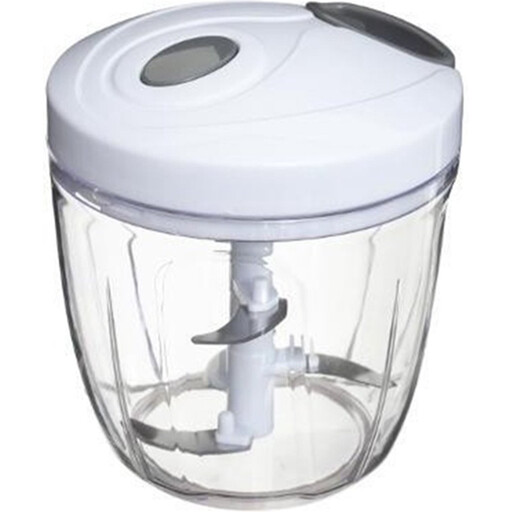 No image available
A manual option for chopping ingredients without an electric motor base.
The product name lists a capacity of 900 ml. According to the product information, this model isn’t dishwasher-safe and must be washed by hand.
No. For raita with pieces of cucumber, you can chop the cucumber and stir it into the yoghurt. Another method described involves grating the cucumber and leaving it to drain for a firmer texture.
Follow the instructions for the exact model. For the Tefal K1330404, Tefal says that the bowl and blades are dishwasher-safe, but the lid should be cleaned with a damp sponge or cloth.
Keep leftover raita covered in the fridge and eat it within two days. The Voedingscentrum recommends keeping leftovers in the fridge for no more than two days; this is general advice about leftovers, not a specific shelf-life recommendation for raita.
According to the Netherlands Food and Consumer Product Safety Authority, CE marking is compulsory for electrical appliances covered by the relevant regulations. This alone doesn’t confirm whether a specific model on sale meets the requirement; check the information for the exact version.
No. According to the Dutch government, there is no fixed statutory guarantee period in the Netherlands. You’re entitled to a product that works properly for as long as you can reasonably expect it to; if something goes wrong, contact the retailer. Any manufacturer’s guarantee is in addition to this.