
Fan of chunky raita
Wants the cucumber to remain recognisable and is weighing up whether a blender is really needed.


For cucumber raita with distinct pieces, you don’t need a blender: grate the cucumber and mix it with yoghurt. Choose a chopper for chopping ingredients, a hand blender set if you also want to purée, or a jug blender for a smooth dip and other blends. Before you buy, compare the usable capacity and cleaning instructions for the exact model.
Wants the cucumber to remain recognisable and is weighing up whether a blender is really needed.
Wants to prepare a suitable quantity in one go, so pays attention to the capacity of a beaker or jug.
Wants to chop herbs or purée other sauces as well as making raita, and compares functions and included attachments.
For raita with distinct pieces of cucumber, the preparation method makes all the difference: grating, chopping and puréeing don’t produce the same texture.
Choose this if: you want to make raita with distinct pieces and don’t prepare it often.
Trade-off: you grate and chop the ingredients yourself, but you don’t need an electrical appliance for this recipe.
Choose this if: you want to chop cucumber or herbs and control how finely they’re chopped.
Trade-off: chopping won’t create grated strands; also follow the cleaning instructions for each part.
Choose this if: you want to purée other dishes or sauces as well as chop ingredients.
Trade-off: check which attachments come with the model; longer blending creates a different texture from grated cucumber.
Choose this if: you want to make a smooth dip and will also use the appliance for other blends.
Trade-off: for chunky cucumber raita, it’s better to grate and add the cucumber separately; compare the usable capacity with your recipe.
| What to consider | What to look for when buying | Who is this important for? |
|---|---|---|
| Texture and moisture | Decide whether you want to grate, chop briefly or purée completely. | If I want recognisable pieces of cucumber in yoghurt, I choose a cutting method to match. Around 36% of consumers say texture is their top priority. |
| Usable capacity | Compare the usable capacity with your recipe, and leave room for mixing. | For a shared meal, I want to know how much fits in one go, not just the jug’s maximum capacity. Around 29% of consumers prioritise a suitable portion size. |
| Chopping and puréeing | Check whether the exact model includes a chopper and any other attachments you want. | If I want to chop herbs and purée other sauces as well as making raita, I look for those functions in one set. Around 21% of consumers say versatility is their top priority. |
| Cleaning | Check the cleaning instructions separately for the bowl, blades, lid and other parts. | After a meal, I want to know which parts are easy to clean and which need to be wiped by hand. Around 14% of consumers prioritise easy cleaning. |
Grate the cucumber if you want distinct pieces in the yoghurt; puréeing makes a smoother dip.
Decide on the texture you want before choosing between a grater, chopper and blender.
For the Philips HR2041/00, maximum and usable capacities are different: 1.9 l and 1 l respectively, according to Philips.
Compare the usable capacity with your recipe, not just the biggest number on the packaging.
If your recipe doesn’t fit in one go, preparing it in batches can take extra time.
According to Tefal, the bowl and blades of the Tefal K1330404 are dishwasher-safe, but the lid isn’t.
Check the cleaning instructions for every part of the exact model.
MultiQuick hand blenders are worth considering if you want to combine puréeing with chopping herbs or cucumber.
The 3000 Series HR2041/00 is a jug blender to consider if you also want to make larger, smooth blends.
The manual 5 Second Chopper is an option if you want to chop ingredients rather than blend them electrically.
The compact VitaPower MMB2111S is worth considering if you mainly make small, smooth blends.
These products are jug blenders and hand blender sets with chopping functions. They’re aimed at anyone who wants to blend or chop as well as make raita; if you want distinct pieces of cucumber, grating remains a separate option.
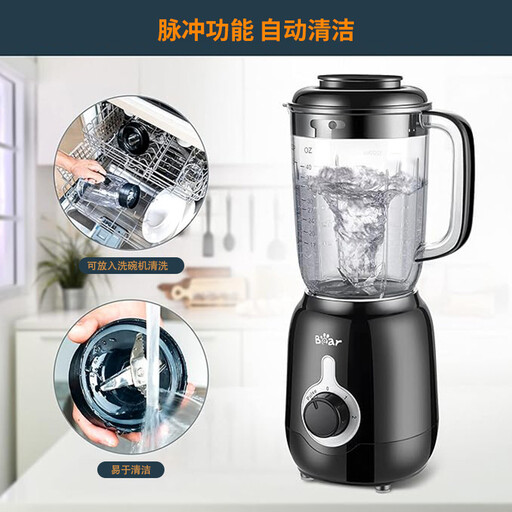 Image unavailable
A jug blender for smooth blends; add grated cucumber separately if you want to keep the pieces intact.
Jug capacity 1.2 l; 500 W; 2 speeds and a pulse function; 4 stainless steel blades.
The separate chopping and grinding cups are each listed as 100 g; that isn’t enough for a full portion of raita.
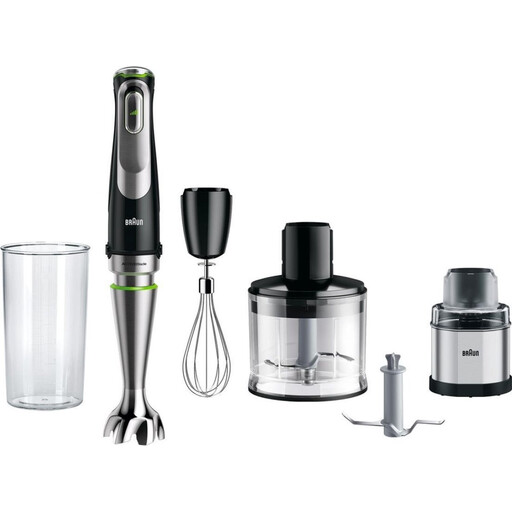 Image unavailable
A hand blender set for combining chopping and puréeing; check that the included attachments suit your recipes.
Compare the mixing beaker’s capacity with the quantity you want to prepare for your shared meal.
 Image unavailable
A hand blender set for anyone who wants to combine chopping and blending in different recipes.
Measuring beaker 700 ml; chopper 500 ml. The product information states a maximum of 1 minute of continuous use, followed by 1 minute of rest.
 Image unavailable
A hand blender with a chopping function for anyone who wants to chop ingredients as well as blend them.
Chopper cup 500 ml; measuring beaker 800 ml; whisk and 2 speeds.
 Image unavailable
A hand blender with a whisk and chopper for anyone looking for several functions in one set.
Chopper 500 ml; measuring beaker 500 ml; normal and turbo settings.
No, not if you want distinct pieces: grate the cucumber, drain it if needed, then stir it into the yoghurt. Blending everything is an option if you prefer a smoother dip.
Compare the usable capacity with the quantity in your recipe. Maximum jug capacity and usable capacity can differ; for example, according to Philips, the Philips HR2041/00 has a maximum capacity of 1.9 l and a usable capacity of 1 l.
Follow the instructions for each part. According to Tefal, the bowl and blades of the K1330404 are dishwasher-safe, but the lid isn’t.
According to the Voedingscentrum, store leftovers in a well-sealed container in a fridge set to preferably 4 °C, and refrigerate them within 2 hours. The general advice for leftovers is to keep them in the fridge for no more than 2 days; this doesn’t guarantee that every batch of raita will stay in good condition for that long.
The NVWA lists kitchen appliances as electrical equipment subject to statutory safety requirements; CE marking is mandatory for electrical products covered by the rules. This isn’t a separate approval of a specific model. There are also requirements for materials that come into contact with food.