
Raita lover who likes a bit of texture
If you want to be able to taste the cucumber, grate it coarsely and stir it into the yoghurt. Albert Heijn Allerhande and Leuke Recepten describe this method.


You don’t need a hand blender to make cucumber raita with distinct pieces of cucumber: recipes from Albert Heijn Allerhande and Leuke Recepten grate the cucumber and stir it into the yoghurt. A hand blender is most useful if you also make smooth dips or sauces. If cupboard space is limited, choose a simple model and only get one with a chopper if you’ll use it regularly and have somewhere to store it.
If you want to be able to taste the cucumber, grate it coarsely and stir it into the yoghurt. Albert Heijn Allerhande and Leuke Recepten describe this method.
If you also want to blend sauces but have little room for separate accessories, check which parts come with the model and whether the blending foot can be detached.
If you regularly chop herbs or onions, a model with a chopper could be a good fit. Consumentenbond describes choppers as accessories for ingredients such as onions and herbs. Bear in mind that you’ll have extra parts to store.
Best for: raita with distinct pieces of cucumber, without any extra blending tasks.
Trade-off: you grate and mix everything yourself, but don’t need an appliance or extra storage space.
Best for: anyone who makes smooth dips or sauces as well as raita and wants to keep separate accessories to a minimum.
Trade-off: a blending foot won’t give you the coarse pieces found in raita recipes; grate the cucumber separately if you want that texture.
Best for: anyone who regularly chops herbs, onions or other ingredients as well as blending.
Trade-off: a chopper adds more options, but takes up extra space and needs cleaning.
| What to consider | What to look for | Who it matters most to |
|---|---|---|
| Raita texture | Choose coarse grating for distinct pieces; add the cucumber after blending, if you’re blending anything. | If I want to be able to taste the pieces of cucumber, I’d rather grate it and stir it into the yoghurt. Around 36% of consumers prioritise this texture in their raita. |
| Storage space | Check everything included in the box and make sure the motor unit, blending foot and any beaker will fit in your cupboard. | With limited cupboard space, I don’t want to store separate parts I’ll hardly ever use. Around 29% of consumers prioritise keeping storage needs to a minimum. |
| Cleaning | Check whether the blending foot can be detached and which parts the manual says are dishwasher-safe. | After making a small dish, I want to clean the blender without having lots of separate items to wash. Around 21% of consumers prioritise easy cleaning. |
| Extra functions | Consider whether you really want to chop or whisk, and check whether the relevant accessory is included with the exact model. | If I regularly chop herbs or onions, a chopper could be useful alongside the blending foot, but I’ll need somewhere to store it. Around 14% of consumers are mainly looking for extra food preparation functions. |
The recipes consulted from Albert Heijn Allerhande and Leuke Recepten grate the cucumber and stir it into the yoghurt. So you don’t need to blend anything to achieve the texture they describe.
First decide which texture you want. Buy a hand blender mainly if you also want to make smooth sauces or dips.
An appliance you only use for raita with pieces of cucumber takes up extra cupboard space and needs cleaning.
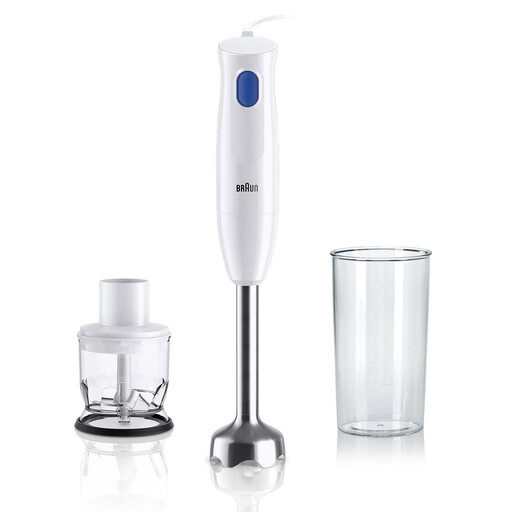
Models in the same product range can come with different parts. For example, Braun lists a beaker with the MQ10.001M WH and a chopper as well with the MQ10.201M WH.
Compare the full model number and check what’s in the box before you choose. Consumentenbond describes a chopper and whisk as accessories for tasks other than blending.
A set with parts you don’t use takes up unnecessary space and means more cleaning.
The MultiQuick 1 models show the difference between a simpler model with a beaker and one with a chopper.
The 3000 Series HR2521/40 is worth considering if you mainly want to blend or purée.
The Intention HB46E8 is an alternative to compare if you’re looking for two speeds and a detachable blending foot.
These Joybuy product picks are intended for smooth dips and other blending tasks; some models also come with accessories for chopping ingredients.
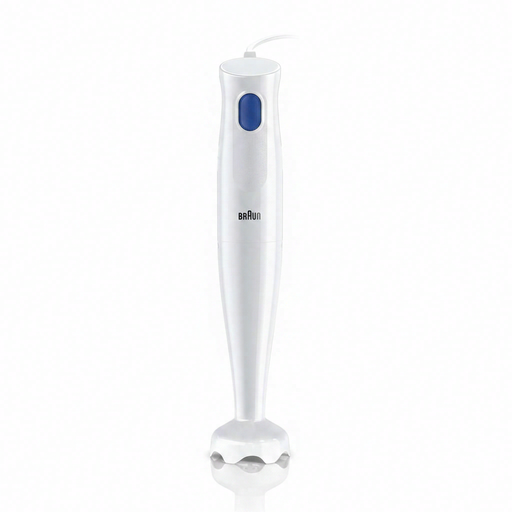 No image available
A detachable blending foot is a good option for smooth dips if you want to clean or store it separately.
One speed; the product description lists a detachable, dishwasher-safe blending foot.
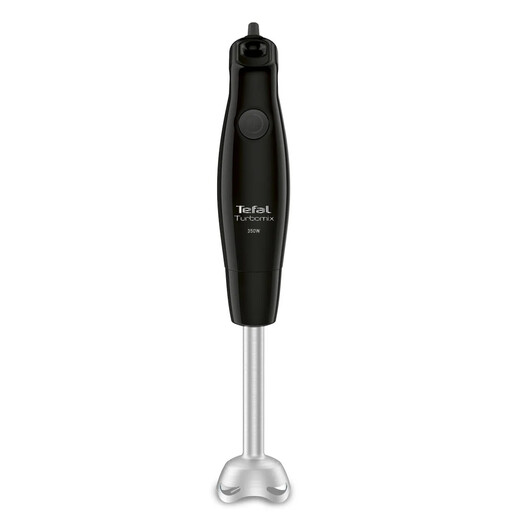 No image available
This hand blender is a good fit if you want to make smooth sauces as well as raita.
The product description mentions one-button operation, detachable parts and a measuring beaker. It also lists dishwasher-safe parts.
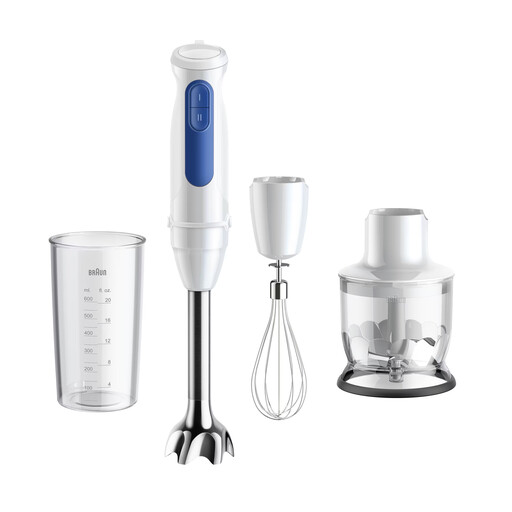 No image available
A detachable blending shaft could suit anyone who wants to make sauces and clean or store the foot separately.
The product description lists two speeds and dishwasher-safe parts.
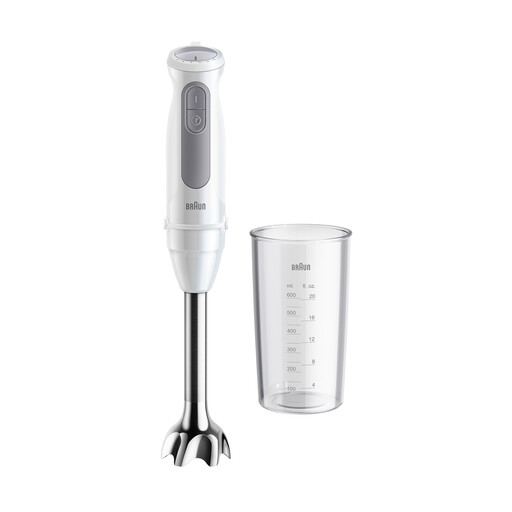 No image available
The product description lists a blending attachment for small portions, including dips.
It lists 21 speeds and a matching blending beaker. The stick blender and beaker are extra parts to store.
 No image available
This model is designed for anyone who wants to chop ingredients as well as blend.
The product description lists one speed, a detachable blending shaft, a whisk and a 350 ml chopper. The separate parts need extra storage space and cleaning.
No, not if you want the texture in the recipes consulted: grate the cucumber coarsely and mix it into the yoghurt. You can squeeze out some of the cucumber’s moisture if you’d like a thicker dip. A hand blender is mainly an extra option for smooth sauces.
Compare the contents of the box for the full model number with the dishes you actually make. A chopper is most useful if you regularly chop ingredients; for cucumber raita with pieces, you can grate the cucumber.
Voedingscentrum advises not leaving leftovers out of the fridge for more than 2 hours. Refrigerate them and, ideally, keep your fridge at 4 °C.
Not automatically. According to the Dutch government, there is no fixed statutory two-year guarantee period in the Netherlands. Read exactly what any extra cover includes and consider it alongside your statutory rights.
The Dutch government states that electrical appliances in the EU must carry a CE mark. Check the mark and instructions for the specific appliance you’re buying.