
Cooks who want pieces of cucumber
You want distinct pieces of cucumber in your raita and are wondering whether you need an appliance at all. Dutch recipes from Allerhande and Yoghurt.nl grate or chop the cucumber before mixing it with yoghurt.


You don’t need a hand blender to make cucumber raita with distinct pieces of cucumber: grate or chop the cucumber, then stir it into the yoghurt. If you also want to blend sauces, look for a detachable blending shaft; for chopping herbs, you’ll need a set with a chopper. Choose based on the texture you want and the tasks you’ll genuinely use the blender for, rather than wattage alone.
You want distinct pieces of cucumber in your raita and are wondering whether you need an appliance at all. Dutch recipes from Allerhande and Yoghurt.nl grate or chop the cucumber before mixing it with yoghurt.
You’d like to use the blender for smooth sauces too. The Consumers’ Association describes the blending shaft as the part used for blending and puréeing. Check whether it’s detachable and how to clean the separate parts.
You might want to chop fresh herbs separately, for example. Check whether the exact version comes with a chopper: Braun, for instance, lists one with the MultiQuick 1 MQ10.201MWH.
Choose this if: you want to keep the pieces of cucumber and don’t need a hand blender for anything else.
Bear in mind: grating or chopping takes manual effort, and this approach won’t purée other ingredients.
Choose this if: you want to purée sauces as well as make raita, and you’re happy to grate the cucumber separately.
Bear in mind: a blending shaft isn’t a herb chopper. Blending the whole raita will break down the pieces of cucumber.
Choose this if: you want to chop herbs or other ingredients separately as well as purée sauces.
Bear in mind: extra attachments take up storage space and need cleaning. Grate the cucumber separately if you want coarse strands.
| What to consider | What should you look for? | Who is this most important for? |
|---|---|---|
| Texture of the raita | Decide whether you want to keep the pieces; grate or chop the cucumber separately to do this. | If I want distinct pieces of cucumber, I first want to know whether I need a blender for this dish. Around 34% of consumers prioritise getting the texture right. |
| Chopping ingredients separately | Check whether the exact version includes a chopper and how much it holds. | If you want to chop herbs separately, a set with a chopper is more useful than one with just a blending shaft. Around 25% of consumers prioritise chopping ingredients separately. |
| Cleaning up after cooking | Check whether the blending shaft is detachable and which parts the manual says are dishwasher-safe. | If I want to tidy up quickly after cooking, I look at which parts come apart and how to clean them. Around 25% of consumers prioritise easy cleaning. |
| Features and use | Compare the included attachments with your other cooking plans; don’t let wattage take the place of a feature you need. | If you want to use the blender for more dishes, weigh up the extra features against the storage space and cleaning they’ll require. Around 16% of consumers prioritise this balance. |
The percentages give a rough breakdown of the main buying priority in the choices described. Several considerations may matter to the same consumer.
Recipes from Allerhande and Yoghurt.nl grate or chop the cucumber for raita. Puréeing it won’t necessarily give you the texture you want.
Decide first whether you want to keep the pieces. Consider a blender mainly for other tasks you also plan to use it for.
Blending, chopping and whisking are different functions, each requiring a different attachment.
Check the full model designation and what’s included in the box if you want to chop herbs separately.
The Consumers’ Association recommends choosing at least 600 W for more demanding blending and chopping tasks. That isn’t a general power requirement for cucumber raita.
First choose the features and parts you need. Then assess the stated power in relation to the other dishes you plan to make.
The MultiQuick 1 MQ10.201MWH is a version that comes with a blending shaft, chopper and measuring beaker.
The ErgoMixx MSM64110 is an example of a basic hand blender with a blending shaft and measuring beaker.
The Quickchef+ HB67MB is a more comprehensive set with accessories for chopping and whisking.
The Viva collection HR2657/90 is designed for more than just raita and is available with various accessories.
These models are a good fit if you want to purée sauces or chop ingredients separately as well as make cucumber raita. Grate or chop the cucumber separately if you want to keep the pieces.
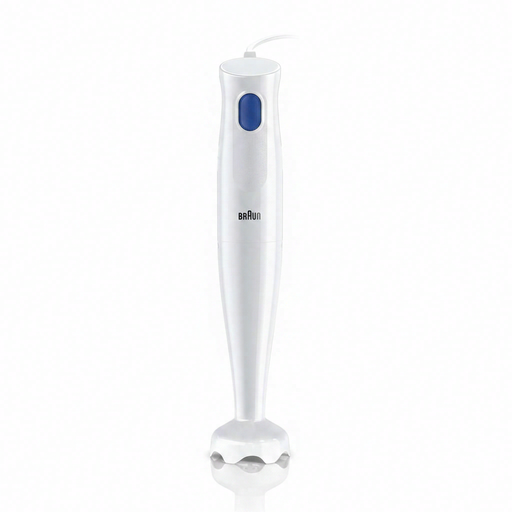 No image available
Ideal if you want to purée sauces as well as make raita with grated cucumber.
The product description lists a detachable blending shaft and a measuring beaker.
 No image available
Ideal if you want to chop herbs or other ingredients separately as well as purée.
The product description lists a chopper with fine, medium and coarse settings, plus dishwasher-safe parts.
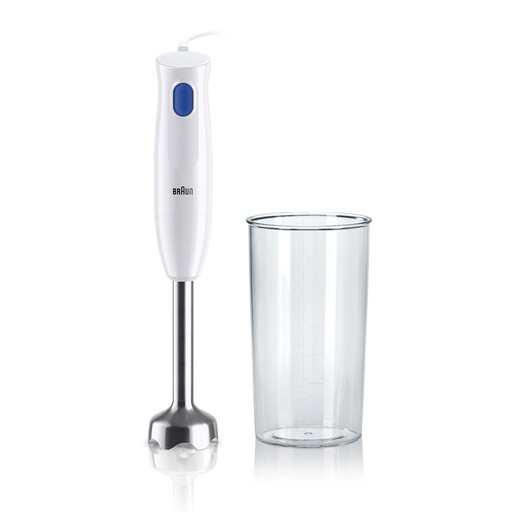 No image available
Ideal if you want to chop or whisk ingredients separately as well as make smooth mixtures.
The product description lists a blending shaft, chopper, whisk and measuring beaker.
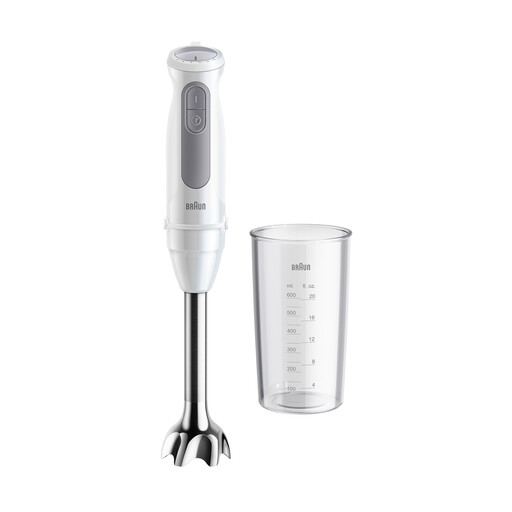 No image available
Ideal if you want to make small portions of sauce or dip as well as raita.
The product description lists variable speed control, a blending beaker for small portions and dishwasher-safe parts.
 No image available
Ideal if you’re looking for a blender with attachments for puréeing, chopping and whisking.
The product name specifies up to 1200 W, a 700 ml measuring beaker and a 500 ml chopper. The product description recommends using it continuously for no more than one minute, followed by a one-minute rest.
No, you don’t need a hand blender for cucumber raita with pieces of cucumber. Recipes from Allerhande and Yoghurt.nl grate or chop the cucumber and mix it with yoghurt. Use a blender only if you deliberately want to make one part of the dish smoother.
Following the Consumers’ Association’s usage tips, place the blending shaft in the bowl before switching on the blender. Unplug it before removing and cleaning attachments, and check the manual to see which parts are dishwasher-safe.
Keep the yoghurt mixture chilled. The Netherlands Nutrition Centre recommends a fridge temperature of 4 °C and says highly perishable food shouldn’t be left out of the fridge for more than 2 hours. This is storage advice, not a requirement for the hand blender.
No, the Netherlands has no fixed legal guarantee period. According to the Government of the Netherlands, you’re entitled to a product that works properly for as long as you can reasonably expect. If a product is faulty, the seller must provide a solution; a manufacturer’s guarantee is additional.
CE marking is compulsory for electrical products, according to the Netherlands Food and Consumer Product Safety Authority. Check the marking on the actual appliance being offered; a brand name or search result doesn’t confirm that a specific version meets the requirements.