For generous fillings, choose a roll whose size you can judge for yourself and that you can take along whole, then cut open when you’re ready to eat. Don’t rely on terms such as ‘thick cut’ or ‘rustic’: they don’t give you a consistent measure of slice thickness or how well a roll will hold its filling. Also consider how much time you have to bake the rolls, which fillings need to stay chilled and what the label says.
Who is this choice relevant to?
Picnickers with generous or chilled fillings
If you want to decide how far to cut the roll open, check whether you can take it along whole and fill it shortly before eating. Pack any ingredients that need to stay chilled separately in a cool bag, as the Netherlands Nutrition Centre advises for picnics.
Planners who want to bake at home
A bag of bake-at-home rolls could be a good fit if you have time to follow the preparation instructions before setting off. If you choose a frozen option, check the instructions for defrosting and use too, as these vary by product.
Label-conscious eaters
If wholegrain status, nutritional value, ingredients or allergens influence your choice, compare the information for the exact rolls you’re considering. The Netherlands Nutrition Centre recommends comparing similar products per 100 g; the term ‘multi-grain’ alone doesn’t confirm that a roll is wholemeal.
What should you look for when choosing?
Start by thinking about how you want to transport and fill the rolls. Then decide whether you have time to bake them and which label details matter most to your choice.
| What to consider |
What should you check? |
Who is this most important for? |
| Size and transport |
Judge the size of the roll and check whether you can take it along whole to cut open yourself. A rustic name or the weight of the bag won’t tell you how sturdy an individual roll will be once filled. |
With generous fillings, I want to wait until the picnic to cut the roll open, so I can choose how to slice it. For around 33% of consumers, having this control over size and transport comes first. |
| Baking and planning |
Check whether the rolls are freshly baked, ready to bake or frozen, and follow the relevant preparation instructions. PLUS gives a baking time of 8–10 minutes for its white bake-at-home rolls; Jumbo specifies how soon its white frozen rolls should be used after defrosting. |
If I want to bake the rolls at home, I need to fit that in before setting off; with frozen rolls, I also need to allow time for defrosting. Around 27% of consumers give this planning the highest priority. |
| Wholemeal and nutritional value |
Look specifically for ‘wholemeal’ if that’s a requirement for you. Compare the fibre and salt content of similar rolls using the nutritional information per 100 g, as the Netherlands Nutrition Centre advises. |
I want to know what the grain description means, rather than relying on ‘multi-grain’ alone. This nutritional choice matters most to around 20% of consumers. |
| Ingredients and allergens |
Read the current ingredients and allergen information for the exact product. If the type of salt used matters to your choice, check the packaging or ask about it when buying unpackaged bread. |
If my choice depends on specific ingredients, I want to be able to check what’s in the roll before buying it. For around 20% of consumers, checking the label is the top priority. |
Common mistakes
-
Assuming ‘thick cut’ means a standard roll size
A product name such as ‘rustic’ or a larger bag weight won’t tell you how thickly you can slice an individual roll or how well it will hold generous fillings.
Choose a size that suits your fillings, check that the roll is whole and cut it open yourself when you’re ready to eat.
-
Treating chilled fillings like food that doesn’t need chilling
Whether a filling can be left out of the fridge depends on the ingredient. The Netherlands Nutrition Centre recommends using a cool bag for foods that need to stay chilled during a picnic.
Keep these ingredients chilled while you’re travelling and fill the rolls shortly before eating.
-
Assuming ‘multi-grain’ means wholemeal
The term ‘multi-grain’ tells you which types of grain have been used, but doesn’t confirm that the roll is wholemeal.
Look for an explicit wholemeal description if that’s what you’re after, and compare the nutritional information for similar products per 100 g.
-
Expecting every roll to contain iodised baker’s salt
According to the Netherlands Nutrition Centre, bakers aren’t required to use baker’s salt. As a result, the type of salt used can vary from one roll to another.
Check the ingredients list on the current packaging or, if buying unpackaged bread, ask which salt has been used if this matters to your choice.
Brands to consider
These brands offer different types of crusty rolls. Compare the exact product and packaging; the brand name alone won’t tell you whether a roll suits your fillings and plans for setting off.
Albert Heijn
Albert Heijn lists white, brown, wholemeal and multi-grain rolls, among other options, on separate product pages.
- The clearly labelled wholemeal option is a useful starting point if you want to choose on that basis.
- For generous fillings, judge the size of the specific roll; the variant name doesn’t tell you how thickly you can slice it.
Jumbo
Jumbo lists a range of crusty rolls, including white and multi-seed options, as well as frozen products.
- A pack of four white rolls weighing 300 g gives you a specific quantity to plan for a group.
- For frozen rolls, check the product-specific instructions for after defrosting; Jumbo says its white frozen rolls should be prepared and eaten within 24 hours of defrosting.
PLUS
PLUS lists white and multi-grain bake-at-home rolls in 300 g packs.
- The white option has a baking time of 8–10 minutes, helping you plan when to bake the rolls before setting off.
- Compare the nutritional information for the exact variants per 100 g; ‘multi-grain’ alone doesn’t confirm wholemeal status.
Dirk
Dirk lists white and rustic multi-grain rolls, among other options; the rustic multi-grain variety comes in packs of four.
- The stated quantity helps you plan how many rolls to take for a group of picnickers.
- The product page’s description ‘sturdy’ isn’t a measured slice thickness or indication of how much filling the roll can hold.
ALDI
ALDI lists a freshly baked roll sold individually.
- Buying rolls individually suits you if you only want to take a few.
- Look at the roll itself if its size and how it opens up matter for your fillings.
Lidl
Lidl lists white rolls to bake at home, marked as an in-store item.
- Baking the rolls at home is an option if you have time to do so before the picnic.
- Check the instructions and the size of the pack you’re buying before planning when to set off.
Crusty rolls on Joybuy
If you’re taking several rolls on a picnic, you could consider this pack of four white rustic rolls. Before buying, check that they’re whole and whether they need to be prepared if you want to cut them open and add fillings once you’re in the park.
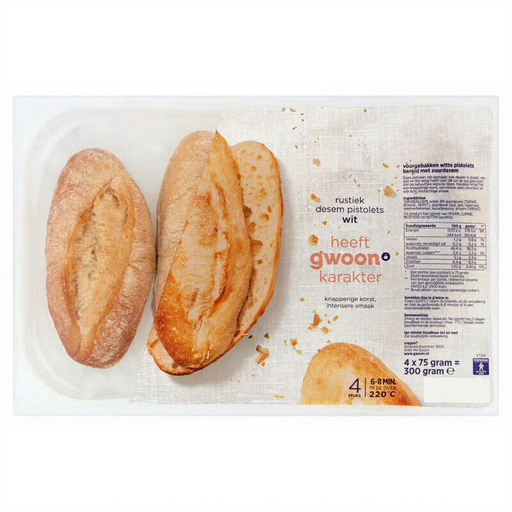 Image unavailable
g'woon white rustic rolls, 4 rolls
A pack of four rolls is an option if you’re looking for enough bread for several picnic portions.
If you want to decide how to cut them open, check that the rolls are whole. Also check the packaging for preparation instructions and the latest ingredients, allergen and nutritional information.
View on Joybuy
Frequently asked questions
Is ‘thick cut’ a standard size for crusty rolls?
Don’t use ‘thick cut’ as a consistent way to compare crusty rolls. For generous fillings, judge the size of the roll and check whether you can take it along whole and cut it open yourself.
How should I take chilled fillings to the park?
Pack fillings that need to stay chilled in a cool bag. The Netherlands Nutrition Centre also advises taking chilled foods out of the fridge shortly before setting off; it’s best to fill the rolls shortly before eating.
Is a multi-grain roll automatically wholemeal?
No, ‘multi-grain’ alone doesn’t confirm wholemeal status. Look for a clear wholemeal description if that’s a requirement for you, and compare the nutritional information for similar rolls per 100 g.
Does every roll contain iodised baker’s salt?
No, you can’t assume that every roll does. According to the Netherlands Nutrition Centre, bakers aren’t required to use baker’s salt, so check the ingredients list or ask which salt has been used if you’re buying unpackaged bread.
What should I check if ingredients or allergens matter to me?
Read the current ingredients and allergen information for the exact roll. Wheat is a grain that contains gluten; the other ingredients vary by product.


