
Photographing complete toys
You photograph figures in different sizes and want to adjust the framing and background easily. Assess the supplied lens separately from the camera. This is in line with advice from Consumentenbond and Canon Netherlands.


A kit zoom lens is a sensible starting point for photos of complete crocheted figures. For small stitches that need to fill the frame, it’s worth comparing compatible macro lenses with 1:1 magnification. Always check the specifications of the exact lens and allow enough working space for your lighting. A stable camera set-up and controlled lighting also help you take consistent photos, but a more expensive camera body alone won’t achieve that.
You photograph figures in different sizes and want to adjust the framing and background easily. Assess the supplied lens separately from the camera. This is in line with advice from Consumentenbond and Canon Netherlands.
You want to show tiny eyes, seams or crochet stitches in close-up, so you’re looking at lens magnification and space for lighting. Nikon Netherlands, Fujifilm X Netherlands and Sony Netherlands describe relevant macro lenses and specifications.
You take repeated photos with similar compositions and want to assess yarn colours carefully. Canon Netherlands discusses using a fixed camera set-up and white balance for product photography.
First decide whether the whole figure or a small stitch detail is your main subject. Then choose a lens, allow space for lighting and adapt the rest of your set-up accordingly.
| What matters when buying | What should you check? | Who is this important for? |
|---|---|---|
| Photographing tiny stitches | Magnification, lens mount and working distance of the exact lens. | If I want to capture tiny eyes, seams or stitches in close-up, I’ll look at both magnification and space for lighting. Around 33% of consumers say capturing detail is their main concern when buying. |
| Framing complete figures | Focal lengths, minimum focusing distance at each zoom setting and what’s included in the kit. | If I want to photograph figures in different sizes, I’ll prioritise getting the framing right. Around 25% of consumers prioritise framing complete figures. |
| Reproducing colour and set-up | White balance and RAW options on the exact camera body; also consider whether a tripod and fixed light source will fit in your space. | For a series of photos with similar framing and accurately rendered yarn colours, I want to be able to reproduce my set-up. Around 25% of consumers say colour consistency and repeatability are their main concerns when buying. |
| Considering the complete set-up | What’s included in the kit and whether you’ll need a compatible macro lens, tripod, lighting and memory card. | If I want to weigh up the full cost, I’ll look beyond the camera body alone. Around 17% of consumers prioritise the total cost of the camera, lens and home set-up. |
Focusing distance and the clear working space between the lens and subject aren’t the same thing. Sony states that, at maximum magnification, the E 30mm F3.5 Macro has 2.4 cm between the front of the lens and the subject. This can limit how close you can position lights to the toy.
For detailed shots, compare both the magnification and working distance of the exact lens.
According to Canon, the Canon RF-S 18-45mm kit lens has a maximum magnification of 0.16× at 45 mm with autofocus, or 0.26× with manual focus. That’s not the same as the 1:1 specification of the macro lenses mentioned.
Decide how large the smallest stitch needs to appear in the frame, then compare lens specifications and the space available for your set-up.
ACM ConsuWijzer explains that your legal guarantee may still apply after a manufacturer’s warranty has expired. What you can expect from a product also depends on the circumstances.
Keep your proof of purchase and contact the seller if a product doesn’t meet reasonable expectations.
The EOS R50 with RF-S 18-45mm kit zoom lens is worth considering for photos of complete figures. For smaller details, a separate macro lens may be more suitable.
The Z50II with Z DX 16-50mm kit zoom lens is an option for general compositions. The Z MC 50mm f/2.8 is a separate macro lens for detailed shots.
The Alpha 6400 has an E-mount. The separate E 30mm F3.5 Macro is an APS-C option to consider for small details.
Within the Fujifilm X system, the XF30mmF2.8 R LM WR Macro is a separate lens option for close-up photography.
These camera options are suited to photography and, where stated, offer different framing options. Check that the camera type and lens are suitable for close-ups of crochet stitches.
 No image available
The product title mentions 12× optical zoom and close-ups as a use case.
The title also mentions WiFi.
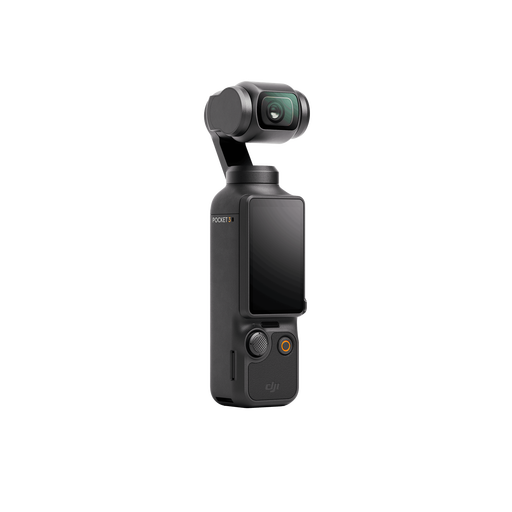 No image available
The product title mentions photography and video. Consider whether this camera combination suits the way you want to photograph products.
The title mentions a 1-inch CMOS sensor, 4K/120fps video, 3-axis stabilisation and a microphone.
 No image available
The product title mentions photography and video. Check that the camera type suits the framing and close-ups you have in mind.
The title mentions a 1-inch CMOS sensor, 4K/120fps video and a 2-inch rotating touchscreen.
 No image available
The supplied 16-50mm zoom lens offers different framing options to consider for photos of complete figures.
Check that the supplied lens offers enough magnification for the smallest details you want to photograph.
 No image available
The supplied 16-50mm lens offers a range of focal lengths to consider when framing complete figures.
Check the magnification of this exact lens if you also want to capture small stitches in close-up.
That depends on how large you want the stitches to appear in the frame. Canon states that the RF-S 18-45mm offers a maximum magnification of 0.16× at 45 mm with autofocus and 0.26× with manual focus. Compare this with the 1:1 specification of a compatible macro lens.
Set the camera in a fixed position for the series and keep the lighting as even as possible. If the colours look different, check the white balance. RAW may give you more scope to make corrections afterwards, if your chosen camera supports it.
The depth of field can be shallow when shooting at close range. For a stationary figure, you could try taking a series of shots with different focus points. A sturdy tripod helps keep the camera in place while you take them. Check that your exact camera supports the feature you want.
When a consumer buys online from a business, a 14-day cooling-off period often applies, although this depends on the purchase. The Dutch Government explains this cooling-off period for distance purchases. Your legal guarantee is separate from any manufacturer’s warranty: according to ACM ConsuWijzer, the seller is your point of contact if, under normal use, a product doesn’t do what you could reasonably expect. Don’t assume the same rules apply to a business purchase.