
Vandaag of morgen in huis

Kwaliteit gegarandeerd

Welkomstaanbiedingen ontgrendelen: GRATIS bezorging | Tot 80% korting | Gratis 30 dagen JoyPlus-proefperiode
Download de app
Seaweed snacks come in many forms: thin sheets for sushi, individually wrapped Korean snacks, and seasoned varieties with wasabi, teriyaki, or chili. This makes choosing seem simple, but the differences in packaging, ingredients, and usage are significant.
The main pitfall is that a large pack is not automatically cost-effective. A package with 100 sheets is convenient for sushi or foodservice, but less suitable if you occasionally want a small snack. Conversely, individual bags can be practical but may be more expensive per gram.
Also pay attention to taste claims such as "extra crispy" or "authentic flavor." The texture is primarily related to packaging and moisture. Once opened, roasted seaweed quickly loses its crunchy structure. Therefore, check whether portions are individually packaged and store opened products in a dry, airtight container.
A third point of attention is oil, salt, and seasonings. A natural product can consist mainly of seaweed, while a spicy seaweed snack often contains oil, sugar, maltodextrin, sesame, or flavor enhancers. Always check the current ingredient list on the packaging, especially if you have allergies.
For sushi, kimbap, and rice rolls, you need larger nori sheets. According to the product information, Miyamoto Roasted Seaweed has a size of 19 × 21 cm and contains 100 sheets. This suits families, parties, and professional use.
For direct snacking, smaller bags are usually more convenient. A portion of 4 or 5 grams is suitable for on-the-go, at the office, or in a lunchbox. A multipack makes it easier to maintain the crispy structure per portion.
Japanese nori and Korean seaweed snacks look similar but are often used differently. Japanese nori is typically intended as a sheet for sushi, onigiri, or wraps. Roasted seaweed with oil and salt is more lightly seasoned and ready to eat.
Check among other things:
For Bibigo Seaweed Snack Crispy Wasabi, the product consists of 53% seaweed according to the stated specification and contains rapeseed oil, sesame oil, mustard, and coconut oil, among others. The packaging states gluten-free and halal, but always check the label of the delivered package for dietary requirements.
Nutritional values per 100 grams can seem high for light snacks because oil is relatively energy-dense. A 5-gram bag naturally contains a much smaller amount. Therefore, compare the net weight per package and not just the table per 100 grams.
Seaweed can naturally contain iodine. Sempio therefore recommends moderate consumption. This is not a reason to avoid every product, but it is an indication to consider the portion size and your overall diet. For specific dietary questions, you can use the information on the label or advice from a qualified healthcare provider.
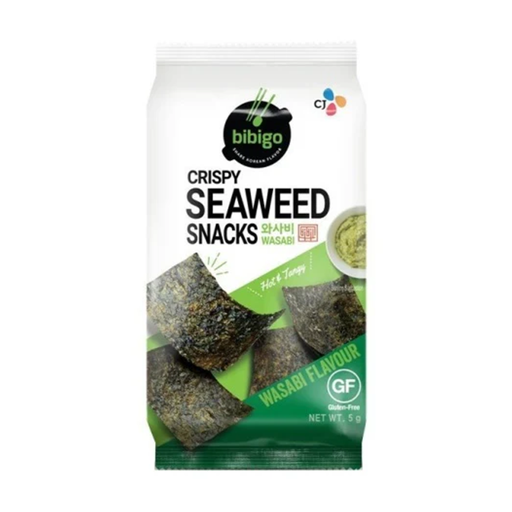
Why this fits the profile: The small 5-gram bag is suitable for trying a Korean seaweed snack with a spicy wasabi flavor without buying a large bulk pack.
The portion is clearly defined. This means less product remains after opening that could lose its crispness due to moisture.
5 g per bag, wasabi flavor, 53% seaweed according to product information, and labeled gluten-free and halal.
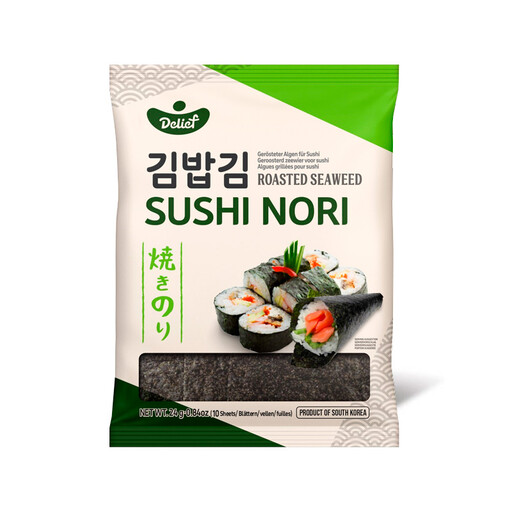
Why this fits the profile: This is a compact choice for those who primarily want to use Japanese nori for sushi, rice balls, or as a wrap for a meal.
The product information explicitly mentions its use for sushi, rice balls, and meals. You are therefore buying a sheet product rather than a snack that is difficult to shape.
24 g roasted laver seaweed, with salt as a listed ingredient, and suitable for sushi and rice dishes.
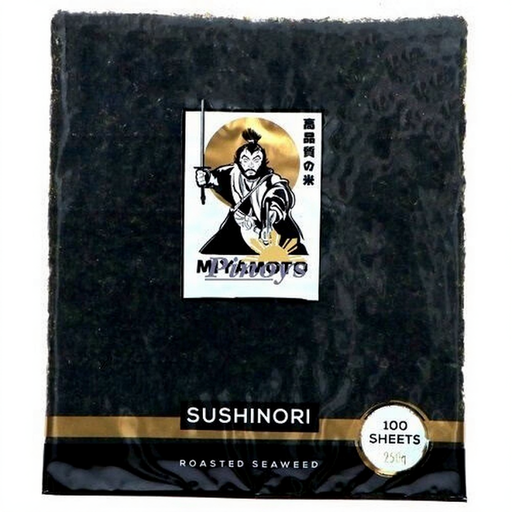
Why this fits the profile: The large number of sheets suits frequent sushi making, cooking workshops, families, and professional kitchens.
The size and quantity are clear upfront: 19 × 21 cm and 100 sheets. This prevents a small snack pack from being insufficient for larger preparations.
100 roasted sheets, large format, and according to product information composed of 100% roasted seaweed.
We have compiled a complete, up-to-date list of products that fully meet these strict selection criteria and comply with current European safety regulations.
That depends on your choice. Natural roasted seaweed often contains fewer ingredients than seasoned varieties, but oil and salt can increase the nutritional values. Compare the label per portion and choose a format that suits your eating occasion.
Store the package in a cool, dry place away from direct sunlight. Seal an opened bag tightly or use an airtight container. Moisture makes thin sheets soften more quickly. Individual portions are practical if you do not use the product all at once.
Not every snack is suitable for this. Seasoned sheets with wasabi, teriyaki, or chili are primarily intended for direct consumption. For sushi, choose a product offered as sushi nori or roasted nori sheet, such as Delief or Miyamoto. Check the size, firmness, and number of sheets.
