
Anyone preparing lunch boxes in advance
Individual packs make it easy to set aside one portion for each lunch box. Jumbo, for example, lists boxes of 20 bags weighing 40 g each, as well as a Family Box containing individual snacks.


If you want to prepare an individual portion for every office lunch box, choose a multipack of individually sealed bags or small tubes. A variety box gives colleagues a choice of different snacks, while a single flavour makes portions easier to plan. For mixed boxes, check the contents and allergens for each type of snack.
Individual packs make it easy to set aside one portion for each lunch box. Jumbo, for example, lists boxes of 20 bags weighing 40 g each, as well as a Family Box containing individual snacks.
A mixed box offers a choice without needing a separate box for every type of snack. Albert Heijn’s Celebration Box, for example, combines Lay’s, Cheetos and Doritos in 30 bags.
Ingredients can vary between snacks in a mixed box. Check the labels on the individual packs for allergens, and compare nutritional values on the same basis, such as per 100 g or per portion.
First, work out how many individual lunch portions you need. Then choose between a single flavour and a mixed box, and check the ingredients for the specific product in either case.
| What to consider | What to check before buying | Who it matters to |
|---|---|---|
| Individual portions | Count the individual bags or tubes and check the weight of each one; a large sharing bag is no substitute for an individually wrapped portion. | If I fill lunch boxes in advance, I want to be able to set aside one sealed portion for each box. Portion planning is the top priority for around 42% of consumers. |
| Choice of snacks | Check which types of snacks are in the box and how many packs there are of each. | When preferences vary, I want to give colleagues a choice without opening several boxes. Around 33% of consumers say variety is their main need. |
| Ingredients and nutritional values | Read the allergen information for each variety and compare salt and fat on the same basis, for example per 100 g. | When I hand out snacks to a group, I need to know which ingredients each person will receive. For around 25% of consumers, this check matters most. |
Mixed boxes can contain different types of crisps and other savoury snacks. So the information on one bag does not necessarily apply to the rest of the box.
Check the ingredients and allergens for every type of snack in the box. Keep the packaging to hand while you’re handing out the lunch boxes.
The total weight doesn’t tell you how many individual lunch boxes you can fill from one box.
Count the individual packs and check how many grams each bag or tube contains.
For average crisps, the Voedingscentrum lists 0.53 g of salt and 13.1 g of fat per 40 g. The values for a particular brand and variety may differ.
For an accurate comparison, use the nutritional information for the specific products and compare like with like, either per 100 g or per portion.
Albert Heijn and Jumbo list examples of both single-flavour bags and mixed boxes for sharing with a group.
The Original 12-pack is an alternative with small tubes; the Joybuy product name lists 12 × 40 g.
Jumbo lists Smiths Sticks in barbecue and paprika varieties, in individual 100 g packs.
The retailer lists products including the Lay’s Celebration Box and the Pringles Original 12-pack.
The retailer lists Lay’s bags in packs of 20 × 40 g and a mixed Family Box containing 15 items.
Lidl has a product page for a crisps multipack.
These products show three pack options for office lunch boxes: small tubes, mixed boxes of individual bags, and single-flavour bags. Match the number of individual packs to the lunch boxes you want to prepare.
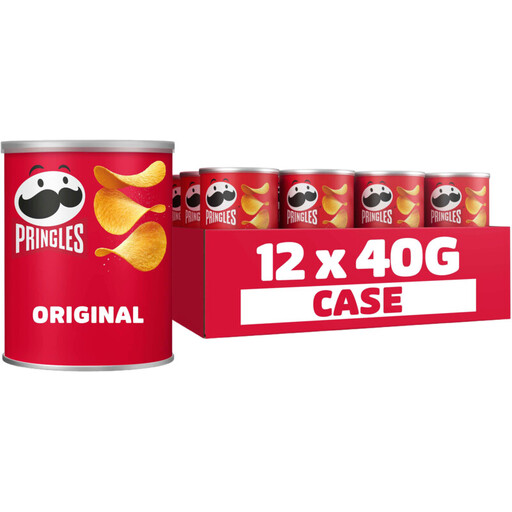 Image unavailable
For lunch boxes where you want to include individual tubes. The product name lists 12 tubes of 40 g each. Before handing them out to a group, check the allergens on the specific packaging.
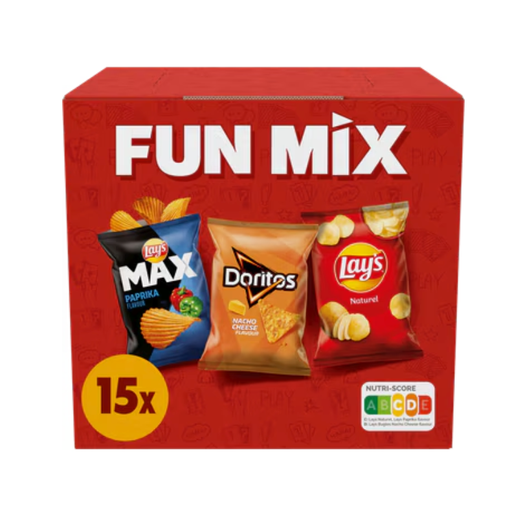 Image unavailable
A mixed box for sharing individual snacks between lunch boxes. The product name lists 15 items; check the packaging to see which snacks are included and how many of each there are.
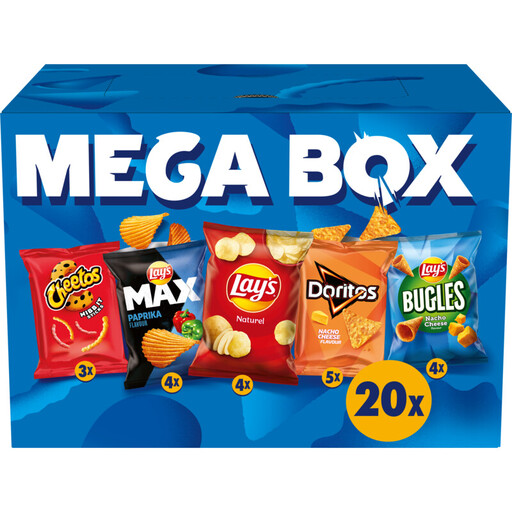 Image unavailable
For a shared supply of different snacks. Joybuy lists 20 items; check how they’re divided between the snack types and the allergens in each one before handing out the contents.
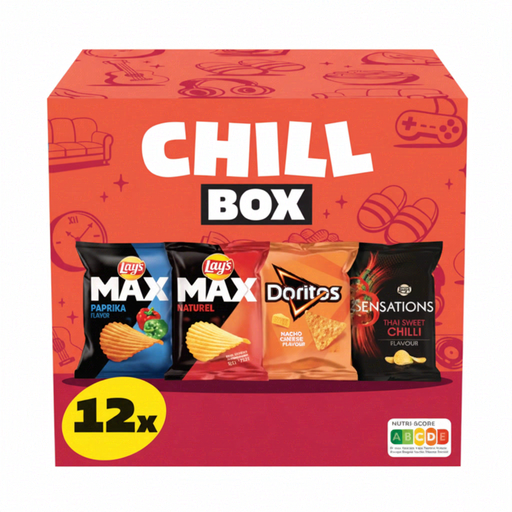 Image unavailable
A mixed box for lunch boxes where you want to offer a choice of snacks. The product name lists 12 items. Check the packaging for the contents and allergens of the individual snacks.
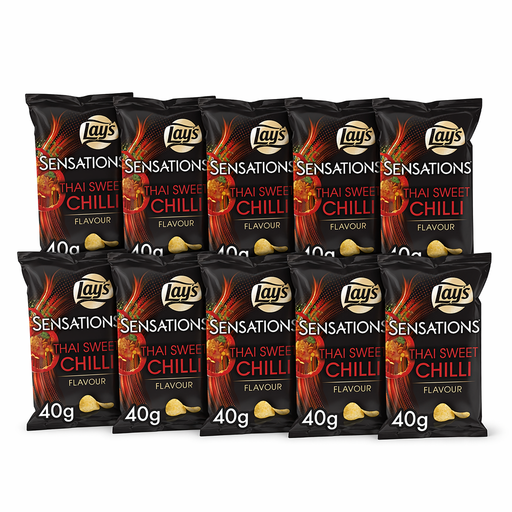 Image unavailable
For lunch boxes where you want to include the same flavour and portion size. The product name lists 10 bags of 40 g each. Check the ingredients and allergens on the packaging.
Allow one individually wrapped bag or one small tube per lunch box. Divide the number of lunch boxes you’re preparing by the number of individual packs in each box, then round up to the next whole box.
A variety box works well when colleagues want a choice of different snacks; identical bags make the contents of each lunch box more predictable. For a mixed box, check the ingredients for each type of snack too.
Read the allergen information on the specific packaging and, for a mixed box, check every type of snack it contains. The Netherlands Food and Consumer Product Safety Authority explains the mandatory allergen information on labels of pre-packed foods; don’t assume one ingredients list applies to all the different snacks in a box.
No. Averages don’t replace the nutritional information for the products you’ve chosen. Compare the values for the specific varieties on the same basis, for example per 100 g, and take the weight of each pack into account when serving individual portions.