
Counting carbs on the go
You want to know how many carbohydrates are in the amount of crisps you actually eat. The weight of an individual bag helps you work this out, as long as you also check the nutritional information for the right variety.


A small bag of crisps can help you decide on a portion in advance, but it doesn’t automatically make crisps suitable for people with diabetes. If you count carbohydrates, check how much you actually eat and calculate the carbohydrates using the value per 100 g on the label. You can also compare similar crisps for fibre, salt and saturated fat.
You want to know how many carbohydrates are in the amount of crisps you actually eat. The weight of an individual bag helps you work this out, as long as you also check the nutritional information for the right variety.
You’d rather take one small bag with you than a large sharing bag. This lets you choose an amount in advance; the packaging itself says nothing about the nutritional value of the crisps.
You want to compare similar crisps side by side, looking at carbohydrates, fibre, salt and saturated fat per 100 g. Then you can work out what those values mean for the amount you plan to eat.
If you’re considering small packs of crisps to take with you when you have diabetes, first decide how much you want to take and eat. Then use the nutritional information for the flavour you’ve chosen to assess that amount.
| What to consider | What to check before buying | Who it matters to |
|---|---|---|
| Carbohydrates in the amount you eat | Check the carbohydrates per 100 g and the weight of each bag. Calculate the amount you actually eat. | If I count carbohydrates when I’m out and about, I want to know what’s in the amount I eat. This is the main priority for around 42% of these consumers. |
| Taking a portion with you | Check how many individual packs there are and how much each contains. If it’s a variety pack, check the label for each flavour. | I want to be able to take one bag with me instead of measuring out a portion from a large bag while I’m out. Choosing an amount in advance is the main priority for around 33% of these consumers. |
| Comparing nutritional values | Compare similar crisps per 100 g for carbohydrates, fibre, salt and saturated fat. | If I do choose crisps, I want to be able to assess the differences between flavours and products. Comparing labels is the main priority for around 25% of these consumers. |
A smaller pack doesn’t change the amount of carbohydrates, fibre, salt or fat per 100 g. It only helps you choose a portion in advance.
Read the nutritional information for the specific crisps and consider the amount you plan to eat, not just the size of the bag.
The reference serving shown may be smaller than the pack. Pringles gives nutritional values for Original per 30 g, while the brand also lists a 40 g pack.
Check both weights. Compare products per 100 g, then calculate the values for the amount you actually eat.
A term such as ‘diabetes-friendly’ or a claim about one nutrient doesn’t describe a product’s full nutritional profile.
Check the nutrition table, ingredients and allergens for the variety you’ve chosen before deciding.
Jumbo lists Lay's Original as a multipack of 20 individual 40 g bags.
Pringles lists a 40 g size for Original, among other options. When checking the nutritional information, note the difference between the tube contents and the stated 30 g reference serving.
Jumbo lists an own-label multipack of 15 individual 25 g bags in paprika and Original flavours.
The range shown by Albert Heijn includes 40 g packs of Pringles Original and Lay's Original, among other products.
Lidl describes a multipack containing a mix of 15 bags of crisps.
These Pringles tubes and Lay's bags are listed as containing 40 g per pack. They may suit you if you want to take one pack with you; compare the nutritional values for each flavour and calculate them based on what you actually eat.
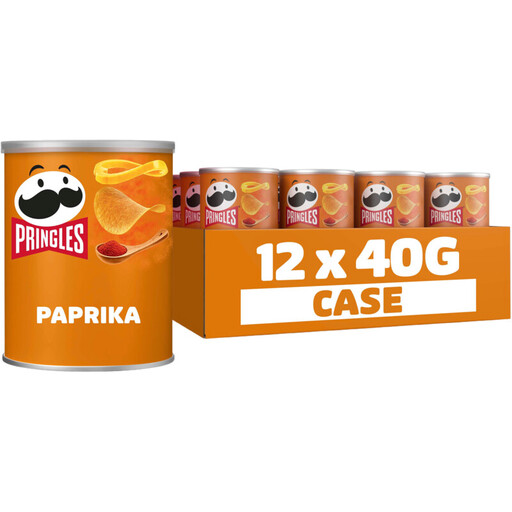 No image available
For anyone who wants to take an individual pack with them. Check the carbohydrates per 100 g for this flavour and calculate them based on the amount you eat.
Pack size: 12 × 40 g. Also check the ingredients and allergens on the current label.
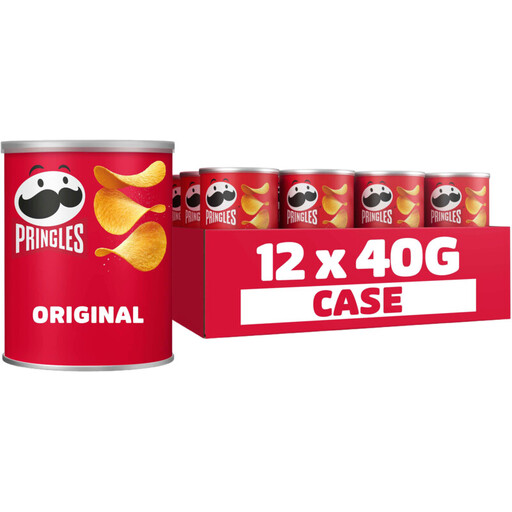 No image available
For anyone who wants to take a tube with a clearly stated contents weight. Pringles lists a 30 g reference serving for Original, so a 40 g tube is not the same amount.
Pack size: 12 × 40 g. Calculate the nutritional values for the amount you actually eat and check the current label for allergens.
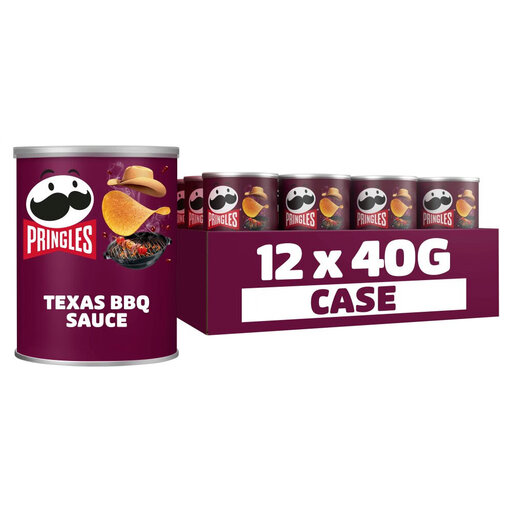 No image available
For anyone looking for individual packs for several snack breaks. Use the nutritional information for Texas BBQ Sauce to assess the amount you eat, not the information for another flavour.
Pack size: 12 × 40 g. Check the ingredients and allergens on the current label.
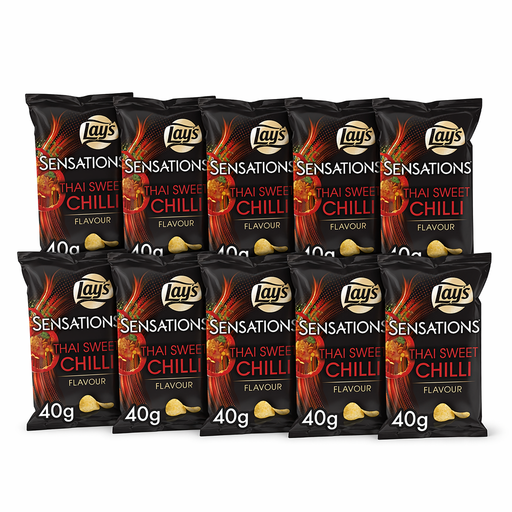 No image available
For anyone who wants to choose one bag of crisps to take with them. Calculate the carbohydrates using the label for Thai Sweet Chili and the amount you eat.
Pack size: 10 bags of 40 g. Check the current label for fibre, ingredients and allergens too.
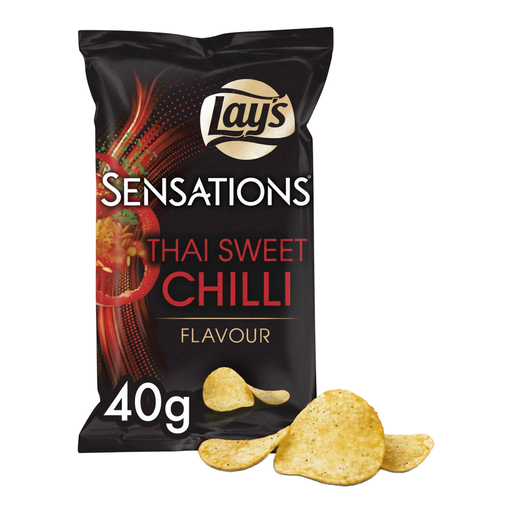 No image available
For anyone who wants to take one 40 g bag rather than a multipack. Check the label to see how many carbohydrates are in the amount you actually eat.
If you’re comparing these with other crisps, also check the fibre, ingredients and allergens on this pack.
Not automatically: a small bag limits the amount in the pack, but it doesn’t change the nutritional value of the crisps. Check the carbohydrates in the amount you actually eat, and also compare fibre, salt and saturated fat using the current label.
Multiply the carbohydrates per 100 g on the label by the number of grams you eat, then divide by 100. The Voedingscentrum lists 21,2 g of carbohydrates for 40 g of crisps in various flavours; for a specific flavour, use the value on its own pack.
Not necessarily: Pringles lists a 30 g reference serving for Original and also offers a 40 g size. Check which amount the nutritional values refer to, and calculate them for a different amount if you eat more or less.
Check the weight of each bag, nutritional information, ingredients and allergens for every flavour. The different varieties in a multipack may not all have the same nutritional profile.
First compare similar crisps per 100 g for carbohydrates, fibre, salt and saturated fat. Then use the weight of the bag to calculate the values for the amount you plan to eat, and check the ingredients and allergens for the variety you’ve chosen.