
Anyone fitting carbohydrates into an eating plan
Compare the carbohydrates per 100 g with those in the portion you plan to eat. Diabetes.nl says there’s no single amount of carbohydrates that’s best for everyone with diabetes.


When comparing crisps if you have diabetes, check the total carbohydrates per 100 g and per portion you plan to eat. Also check the salt, saturated fat, ingredients and allergens that matter to you. Labels such as gluten-free, no added salt or oven-baked don’t, on their own, tell you whether a product fits your personal eating plan.
Compare the carbohydrates per 100 g with those in the portion you plan to eat. Diabetes.nl says there’s no single amount of carbohydrates that’s best for everyone with diabetes.
Check the ingredients and allergens for the flavour and pack you’ve chosen. A gluten-free label doesn’t automatically answer questions about other allergens.
As well as checking claims such as no added salt or oven-baked, look at the full nutrition information. The amount you eat determines how much carbohydrate, salt and fat you get from that portion.
Start with the nutrition information for your own portion. Then check the allergens that matter to you and compare the salt and saturated fat in the specific products you’re considering.
| What to consider | What to check before buying | Who it matters to |
|---|---|---|
| Carbohydrates | Check the total carbohydrates per 100 g and work out the amount for the portion you plan to eat; don’t look at sugars alone. | If I want to fit crisps into my eating plan, I need to know how many carbohydrates are in the portion I’ve chosen. Around 36% of consumers make carbohydrate planning their top priority. |
| Allergens and gluten-free status | Read the up-to-date ingredients list, highlighted allergens and relevant warnings for the exact product variant. | If I have a confirmed allergy or need gluten-free food, I want to check the product against my specific requirements. This is the top priority for around 29% of consumers. |
| Salt, saturated fat and portion size | Compare the salt and saturated fat per 100 g and in the portion you plan to eat. | If I’m mainly watching my salt or saturated fat intake, I want to know what I’ll get from my usual portion. This is the most important consideration for around 21% of consumers. |
| Product and label | Check that the nutrition information and ingredients are for the flavour and pack you’ve chosen. | When comparing ranges, I want to assess the information for the exact product. This is the first priority for around 14% of consumers. |
Albert Heijn lists Boerderij Pure crisps with no added salt as containing 0 g of salt, but also 55 g of carbohydrates per 100 g. So a no-added-salt label tells you nothing about the carbohydrate content.
Compare the carbohydrate and salt content of the variant you’ve chosen separately, and work out both amounts for your portion.
The ‘of which sugars’ line doesn’t show the total amount of carbohydrates. So a low sugar value isn’t a substitute for checking the carbohydrates line.
Use the stated total carbohydrates per 100 g to assess the portion you’ve chosen.
A range of gluten-free crisps and savoury snacks can help you find options, but it doesn’t tell you whether a particular variant also meets your requirements for other allergens.
Check the ingredients and relevant allergens on the current packaging for the exact variant.
According to the Voedingscentrum, an average 40 g bowl of crisps contains 20,9 g of carbohydrates and 0,53 g of salt. If you eat a different amount, the values change too.
Choose the amount you plan to eat and work out the nutritional values using the label on your product.
Lay's offers standard potato crisps as well as its Oven Baked range.
Pringles offers tube crisps in a range of flavours; Jumbo lists Pringles Original in its plain crisps range.
The product page for Boerderij Pure crisps with no added salt shows why one nutritional feature doesn’t tell you everything you need to know.
Jumbo has separate online ranges for plain crisps and gluten-free crisps and savoury snacks.
Jumbo lists products including Schär Curvies Paprika Gluten Free and Salinis Gluten Free in its gluten-free range.
These potato sticks and oven-baked crisps are options to compare by ingredients and nutrition information. For each product, consider the portion you’ve chosen and the allergens that matter to you.
 Image unavailable
For anyone comparing potato sticks with crisps. Check the carbohydrates in your own portion and the current ingredients and allergen information.
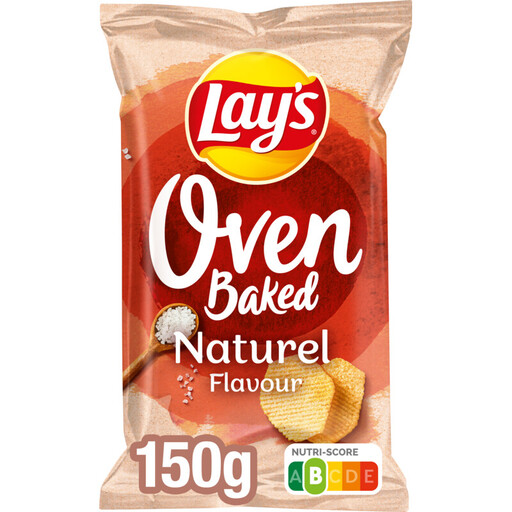 Image unavailable
For anyone comparing an oven-baked option with regular crisps. For this Natural variant, compare the fat and carbohydrates on the same basis, then work out the amounts for the portion you’ve chosen.
No. Sugar-free doesn’t tell you how many carbohydrates the crisps contain overall. Compare the carbohydrates per 100 g and work out the amount for the portion you plan to eat.
No. Diabetes.nl says there’s no single amount of carbohydrates that’s best for everyone with diabetes. Consider the portion as part of your personal eating plan. If you take diabetes medication, talk to your healthcare professional before making major changes to your carbohydrate intake.
Read the current ingredients list for the exact flavour and pack, and check the allergens that matter to you. According to the European Commission, the 14 main allergens are highlighted in the ingredients list. A gluten-free label doesn’t automatically answer questions about other allergens.